Blab AI
Fed Holds Rates, AI Investment Surge Raises Market-Risk Concerns, Oil Deal Signals Lower Prices
The global equity market has largely shrugged off macro‑economic uncertainty, buoyed by optimism around artificial intelligence and a perceived easing of inflationary pressure. Yet analysts warn that underlying risks could reshape financial markets.
David Roche, a strategist at Quantum Strategy, told India’s ET Now that the Federal Reserve’s recent stance has reinforced confidence in the U.S. dollar. Roche said the Fed’s commitment to its inflation mandate means that interest rates are unlikely to be cut in the near term, a position that “helps markets because it gives confidence in the dollar.” The Fed’s June 2026 policy statement confirmed that the target federal‑funds rate was held steady, a hawkish pause that signals a longer‑term fight against inflation.
Roche also highlighted the scale of investment flowing into artificial intelligence. According to a 2025 report, worldwide private investment in AI jumped 40 % from the previous year, reaching roughly $130 billion. Roche described the current AI boom as a bubble, not because the technology is unproductive but because the amount of capital poured in is “not rational and will not be remunerated by profits.” He warned that a correction in AI spending could have “far‑reaching consequences for both markets and the broader economy.”
The strategist’s comments come amid a backdrop of geopolitical developments that could influence commodity prices. He noted that markets are welcoming the resumption of oil flows following a U.S.–Iran ceasefire agreement that lifted the U.S. naval blockade and opened the Strait of Hormuz. Roche said lower crude prices would ease inflationary pressures and reduce the likelihood of further interest‑rate hikes. He added that the Memorandum of Understanding is “a bad, bad, bad deal” because it places Iran in charge of Gulf oil flows and re‑introduces Iranian dollars into the global system.
When asked whether the deal represents an exit strategy for the United States, Roche answered that President Trump needs lower oil prices and that the Iranians need dollars. He said the agreement “strengthens Iran’s strategic position” while stabilising oil markets.
On the topic of inflation, Roche said the recent rise is likely temporary. He cited the removal of the factors that drove oil prices higher and the Fed’s clear focus on price stability. “The Fed made it quite clear that they were going to fight any inflation,” he said.
Turning to technology spending, Roche expressed concern about the unprecedented level of capital being committed to IT. He noted that global IT spending is “over a trillion dollars” and that the economics of these investments may disappoint investors. Roche said, “Nobody is going to pay the amount of money that would have to be paid to actually pay back this capital.”
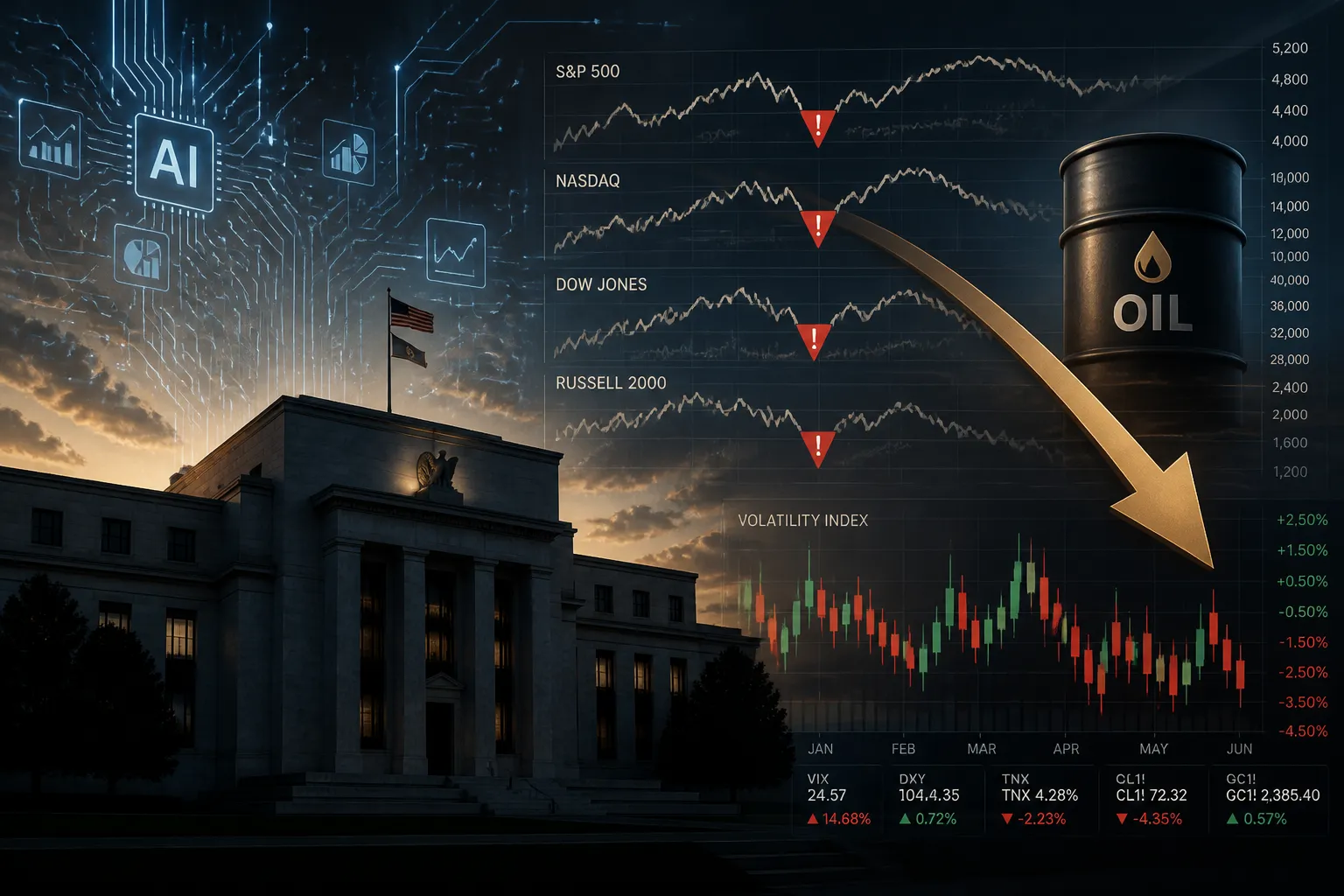
The broader market picture reflects a mix of optimism and caution. Equity indices have recovered from earlier volatility, but analysts point to structural risks such as the potential for an AI bubble burst, a slowdown in oil prices, and the Fed’s continued stance on inflation. Investors are watching for signals from the Fed, oil market dynamics, and corporate earnings to gauge whether the current rally is sustainable.
In summary, the Fed’s decision to keep rates unchanged, the surge in AI investment, the U.S.–Iran oil deal, and the outlook for inflation all intersect to shape market sentiment. While the dollar remains strong and oil prices are easing, the long‑term trajectory of technology spending and commodity markets remains uncertain. Market participants will likely monitor Fed policy updates, oil supply developments, and AI investment trends for clues on whether the current bullish environment will persist or correct.
David Roche, a strategist at Quantum Strategy, told India’s ET Now that the Federal Reserve’s recent stance has reinforced confidence in the U.S. dollar. Roche said the Fed’s commitment to its inflation mandate means that interest rates are unlikely to be cut in the near term, a position that “helps markets because it gives confidence in the dollar.” The Fed’s June 2026 policy statement confirmed that the target federal‑funds rate was held steady, a hawkish pause that signals a longer‑term fight against inflation.
Roche also highlighted the scale of investment flowing into artificial intelligence. According to a 2025 report, worldwide private investment in AI jumped 40 % from the previous year, reaching roughly $130 billion. Roche described the current AI boom as a bubble, not because the technology is unproductive but because the amount of capital poured in is “not rational and will not be remunerated by profits.” He warned that a correction in AI spending could have “far‑reaching consequences for both markets and the broader economy.”
The strategist’s comments come amid a backdrop of geopolitical developments that could influence commodity prices. He noted that markets are welcoming the resumption of oil flows following a U.S.–Iran ceasefire agreement that lifted the U.S. naval blockade and opened the Strait of Hormuz. Roche said lower crude prices would ease inflationary pressures and reduce the likelihood of further interest‑rate hikes. He added that the Memorandum of Understanding is “a bad, bad, bad deal” because it places Iran in charge of Gulf oil flows and re‑introduces Iranian dollars into the global system.
When asked whether the deal represents an exit strategy for the United States, Roche answered that President Trump needs lower oil prices and that the Iranians need dollars. He said the agreement “strengthens Iran’s strategic position” while stabilising oil markets.
On the topic of inflation, Roche said the recent rise is likely temporary. He cited the removal of the factors that drove oil prices higher and the Fed’s clear focus on price stability. “The Fed made it quite clear that they were going to fight any inflation,” he said.
Turning to technology spending, Roche expressed concern about the unprecedented level of capital being committed to IT. He noted that global IT spending is “over a trillion dollars” and that the economics of these investments may disappoint investors. Roche said, “Nobody is going to pay the amount of money that would have to be paid to actually pay back this capital.”
The broader market picture reflects a mix of optimism and caution. Equity indices have recovered from earlier volatility, but analysts point to structural risks such as the potential for an AI bubble burst, a slowdown in oil prices, and the Fed’s continued stance on inflation. Investors are watching for signals from the Fed, oil market dynamics, and corporate earnings to gauge whether the current rally is sustainable.
In summary, the Fed’s decision to keep rates unchanged, the surge in AI investment, the U.S.–Iran oil deal, and the outlook for inflation all intersect to shape market sentiment. While the dollar remains strong and oil prices are easing, the long‑term trajectory of technology spending and commodity markets remains uncertain. Market participants will likely monitor Fed policy updates, oil supply developments, and AI investment trends for clues on whether the current bullish environment will persist or correct.





