Blab AI
Aptiv Launches First Camera-Only Occupant Detection System, Cutting Costs by 40%
On June 8 2026, Aptiv PLC (NYSE:APTV) revealed its Advanced Occupancy Classification (AOC) system, the first occupant‑detection solution in the industry that depends exclusively on an in‑cabin camera.
The AOC system harnesses artificial‑intelligence algorithms and computer‑vision techniques to spot vehicle occupants and estimate their height, weight, and body position. By doing away with the pressure‑sensing hardware that has traditionally lived in seat cushions, the camera‑only architecture trims the automotive bill‑of‑materials (BOM) cost by as much as 40 %. The company said the leaner design also shortens assembly time and boosts scalability across different vehicle platforms.
During a press release, Aptiv reported that AOC achieved a 100 % accuracy rate in federal regulatory testing under the Federal Motor Vehicle Safety Standard 208 (FMVSS 208), the U.S. rule that governs occupant crash protection. FMVSS 208 requires restraint systems to perform reliably in frontal‑crash scenarios, and the AOC system met all test criteria.
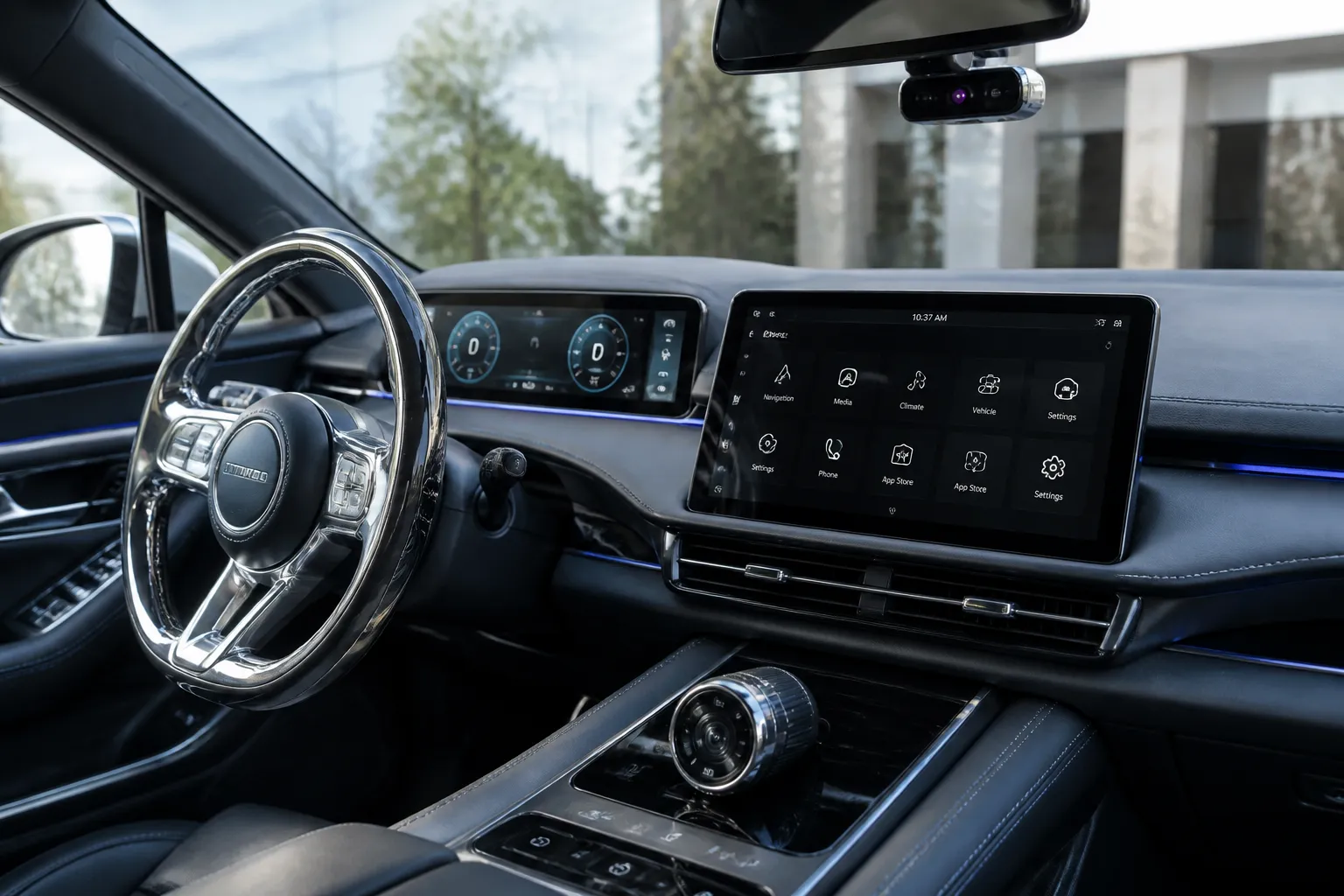
Beyond occupant classification, the single interior camera can power more than fifteen additional cabin‑safety and comfort functions. The system can track driver attention, verify whether a driver’s hands are on the wheel, and monitor seat‑belt status. Aptiv highlighted that all of these features are delivered through software, enabling over‑the‑air (OTA) updates. OTA capability means that automakers can adapt the system to evolving safety regulations without adding new hardware or rewiring the vehicle.
Aptiv’s announcement comes ahead of a live vehicle demonstration at InCabin USA 2026, scheduled for June 9‑11 at Huntington Place in Detroit. The event will showcase the AOC system in a production‑grade vehicle and demonstrate its integration with other cabin‑intelligence modules.
Aptiv is organized into two main business segments: Signal & Power Solutions and Advanced Safety & User Experience. The Advanced Safety & User Experience segment develops and sells components that support active safety, driver‑assist, and user‑experience technologies for automotive and commercial vehicles.
The move to a camera‑only occupant‑detection platform reflects a broader industry trend toward vision‑based sensing. While other suppliers have explored camera‑only architectures for driver‑assist systems, Aptiv’s AOC is the first to deliver full regulatory‑grade occupant classification without any pressure sensors.
The AOC system’s cost savings and OTA flexibility are expected to appeal to automakers looking to reduce complexity amid tightening safety standards and rising component costs. By removing the need for pressure bladders and associated wiring, manufacturers can lower both material and labor expenses.
Aptiv’s launch has attracted attention from investors and analysts. Hedge funds have named Aptiv among the top ten electric‑ and autonomous‑driving stocks to buy, citing the company’s advanced safety portfolio and the potential for AOC to become a standard component in future vehicle platforms.
While the company has not yet disclosed commercial deployment timelines, it indicated that the AOC system is ready for integration in upcoming vehicle models. Automakers will likely evaluate the technology in the context of their own safety‑compliance roadmaps.
The AOC system also aligns with regulatory trends that favor software‑driven safety solutions. As governments worldwide consider updates to occupant‑safety standards, a camera‑only approach that can be upgraded OTA offers a flexible path for compliance.
In summary, Aptiv’s Advanced Occupancy Classification system represents a significant step toward camera‑only cabin sensing. By delivering regulatory‑grade occupant detection without pressure sensors, the solution reduces BOM cost, simplifies vehicle architecture, and provides OTA upgradeability for future safety requirements.
The company will continue to monitor regulatory developments and engage with automakers to support the adoption of its camera‑only safety platform. As the automotive industry moves toward higher levels of automation, solutions like AOC that combine AI, computer vision, and cost efficiency are likely to play an increasingly important role.
The AOC system harnesses artificial‑intelligence algorithms and computer‑vision techniques to spot vehicle occupants and estimate their height, weight, and body position. By doing away with the pressure‑sensing hardware that has traditionally lived in seat cushions, the camera‑only architecture trims the automotive bill‑of‑materials (BOM) cost by as much as 40 %. The company said the leaner design also shortens assembly time and boosts scalability across different vehicle platforms.
During a press release, Aptiv reported that AOC achieved a 100 % accuracy rate in federal regulatory testing under the Federal Motor Vehicle Safety Standard 208 (FMVSS 208), the U.S. rule that governs occupant crash protection. FMVSS 208 requires restraint systems to perform reliably in frontal‑crash scenarios, and the AOC system met all test criteria.
Beyond occupant classification, the single interior camera can power more than fifteen additional cabin‑safety and comfort functions. The system can track driver attention, verify whether a driver’s hands are on the wheel, and monitor seat‑belt status. Aptiv highlighted that all of these features are delivered through software, enabling over‑the‑air (OTA) updates. OTA capability means that automakers can adapt the system to evolving safety regulations without adding new hardware or rewiring the vehicle.
Aptiv’s announcement comes ahead of a live vehicle demonstration at InCabin USA 2026, scheduled for June 9‑11 at Huntington Place in Detroit. The event will showcase the AOC system in a production‑grade vehicle and demonstrate its integration with other cabin‑intelligence modules.
Aptiv is organized into two main business segments: Signal & Power Solutions and Advanced Safety & User Experience. The Advanced Safety & User Experience segment develops and sells components that support active safety, driver‑assist, and user‑experience technologies for automotive and commercial vehicles.
The move to a camera‑only occupant‑detection platform reflects a broader industry trend toward vision‑based sensing. While other suppliers have explored camera‑only architectures for driver‑assist systems, Aptiv’s AOC is the first to deliver full regulatory‑grade occupant classification without any pressure sensors.
The AOC system’s cost savings and OTA flexibility are expected to appeal to automakers looking to reduce complexity amid tightening safety standards and rising component costs. By removing the need for pressure bladders and associated wiring, manufacturers can lower both material and labor expenses.
Aptiv’s launch has attracted attention from investors and analysts. Hedge funds have named Aptiv among the top ten electric‑ and autonomous‑driving stocks to buy, citing the company’s advanced safety portfolio and the potential for AOC to become a standard component in future vehicle platforms.
While the company has not yet disclosed commercial deployment timelines, it indicated that the AOC system is ready for integration in upcoming vehicle models. Automakers will likely evaluate the technology in the context of their own safety‑compliance roadmaps.
The AOC system also aligns with regulatory trends that favor software‑driven safety solutions. As governments worldwide consider updates to occupant‑safety standards, a camera‑only approach that can be upgraded OTA offers a flexible path for compliance.
In summary, Aptiv’s Advanced Occupancy Classification system represents a significant step toward camera‑only cabin sensing. By delivering regulatory‑grade occupant detection without pressure sensors, the solution reduces BOM cost, simplifies vehicle architecture, and provides OTA upgradeability for future safety requirements.
The company will continue to monitor regulatory developments and engage with automakers to support the adoption of its camera‑only safety platform. As the automotive industry moves toward higher levels of automation, solutions like AOC that combine AI, computer vision, and cost efficiency are likely to play an increasingly important role.





