Blab AI
Telanganas AI-Driven Agriculture Wins Global Spotlight at FAO in Rome
On 18 June 2026, Rome’s historic Palazzo della Civiltà Italiana became the backdrop for a breakthrough in digital farming when the Food and Agriculture Organization (FAO) convened the inaugural meeting of its Global Initiative on AI for Agrifood Systems. Telangana’s Agriculture Commissioner, Surendra Mohan, took the stage to deliver the keynote address, announcing that the state’s blend of information technology (IT) and artificial intelligence (AI) had earned a seat at this elite global forum.
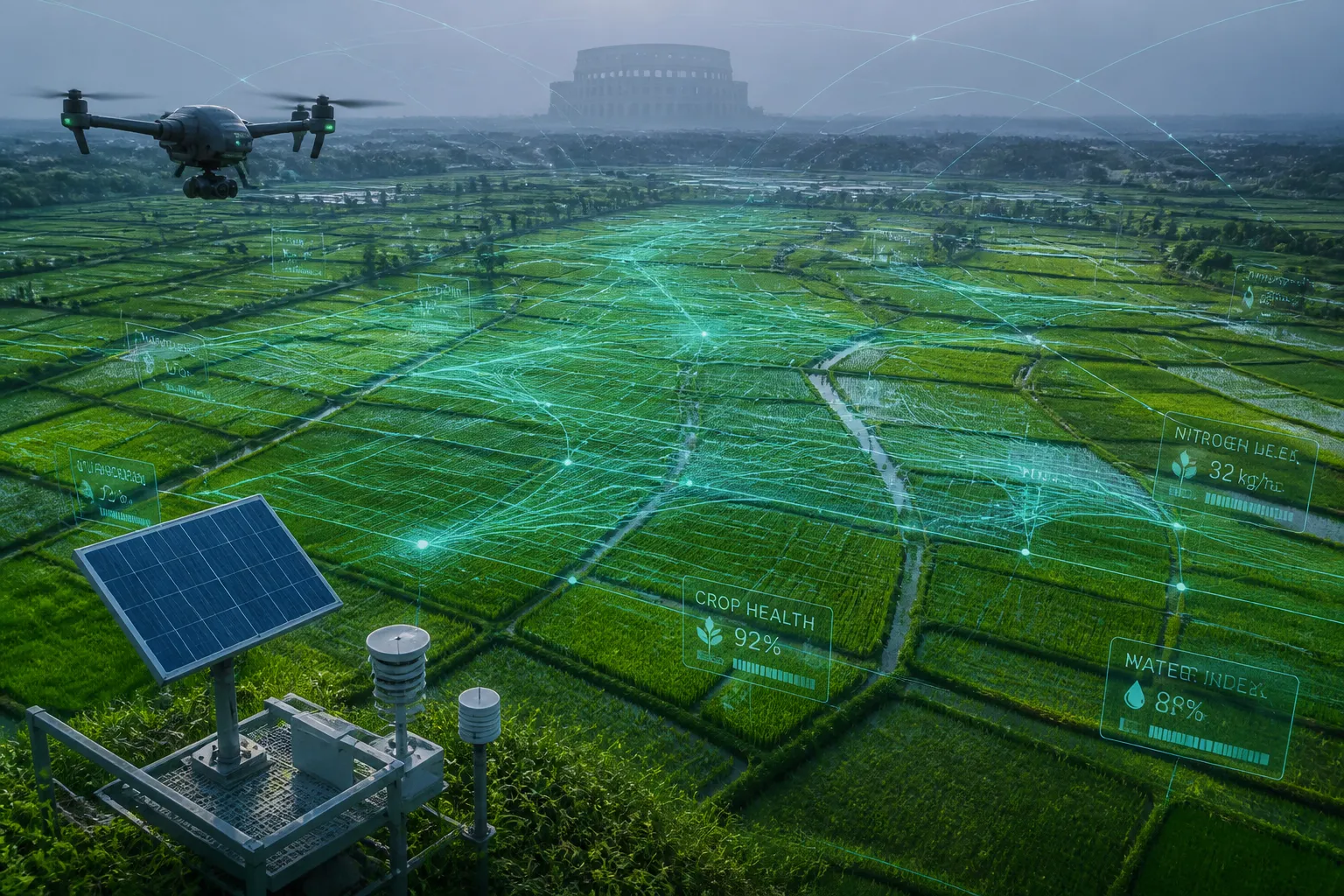
For the first time, a sub‑national Indian government was invited to participate in the FAO’s high‑profile gathering. According to the FAO release, Telangana was the sole Indian state selected to showcase its AI‑enabled agricultural model. Mohan highlighted how digital tools—from satellite imagery to machine‑learning algorithms—have been woven into extension services, crop monitoring, and supply‑chain management, transforming data‑driven decision making at every level of the state’s farming sector.
Telangana’s agricultural agenda has long been a cornerstone of state policy. While the economy is diversified, farming remains a vital contributor, especially in rural districts. The government launched the “Mana Telangana – Mana Vyavasayam” (MT‑MV) scheme in 2015, offering holistic training to farmers and mobilizing officers from multiple departments. More recently, the state announced a program to train 30 000 farmers as soil‑volunteers, a community‑led initiative aimed at improving soil health and resilience.
These initiatives sit within a broader strategy to monetize agricultural data. A draft policy released in 2022 outlined plans to promote digital agriculture and the adoption of emerging technologies such as AI, machine learning, the Internet of Things, drones, and satellite imagery. The policy seeks to create a framework for data sharing and monetization while safeguarding farmer privacy.
The FAO’s Global Initiative on AI for Agrifood Systems brings together experts from AI/ML, digital agriculture, food‑systems science, and related fields to share best practices and explore collaborative research. Telangana’s presentation demonstrated concrete applications of AI to real‑world farming challenges, including pest detection, yield prediction, and precision irrigation—areas that can dramatically increase productivity and reduce waste.
FAO officials noted that Telangana’s experience could serve as a model for other Indian states. The state’s digital transformation is frequently cited in discussions about public‑private partnerships (PPPs) for high‑tech agriculture services, and the World Economic Forum has highlighted Telangana’s work as a case study for digital agriculture in emerging economies.
The event also underscored gaps that remain. The FAO report stressed the need for robust data‑governance frameworks and continued investment in rural connectivity. Telangana’s own data‑management policy, still in draft form, is expected to address these concerns.
Looking ahead, the state government plans to roll out additional AI‑driven tools, including predictive analytics for crop disease and market‑price forecasting. The FAO’s roadmap for digital agriculture and AI, released earlier this year, calls for coordinated action among governments, innovators, researchers, and funders. Telangana’s participation in the Rome forum positions it to influence that roadmap.
In summary, Telangana’s AI‑enabled agricultural initiatives have earned international recognition. The state’s integration of digital technologies into farm management, extension services, and data analytics serves as a model for other regions. Upcoming policy finalization, continued investment in rural digital infrastructure, and ongoing collaboration with global bodies like the FAO will shape the next phase of Telangana’s agrifood transformation.
For the first time, a sub‑national Indian government was invited to participate in the FAO’s high‑profile gathering. According to the FAO release, Telangana was the sole Indian state selected to showcase its AI‑enabled agricultural model. Mohan highlighted how digital tools—from satellite imagery to machine‑learning algorithms—have been woven into extension services, crop monitoring, and supply‑chain management, transforming data‑driven decision making at every level of the state’s farming sector.
Telangana’s agricultural agenda has long been a cornerstone of state policy. While the economy is diversified, farming remains a vital contributor, especially in rural districts. The government launched the “Mana Telangana – Mana Vyavasayam” (MT‑MV) scheme in 2015, offering holistic training to farmers and mobilizing officers from multiple departments. More recently, the state announced a program to train 30 000 farmers as soil‑volunteers, a community‑led initiative aimed at improving soil health and resilience.
These initiatives sit within a broader strategy to monetize agricultural data. A draft policy released in 2022 outlined plans to promote digital agriculture and the adoption of emerging technologies such as AI, machine learning, the Internet of Things, drones, and satellite imagery. The policy seeks to create a framework for data sharing and monetization while safeguarding farmer privacy.
The FAO’s Global Initiative on AI for Agrifood Systems brings together experts from AI/ML, digital agriculture, food‑systems science, and related fields to share best practices and explore collaborative research. Telangana’s presentation demonstrated concrete applications of AI to real‑world farming challenges, including pest detection, yield prediction, and precision irrigation—areas that can dramatically increase productivity and reduce waste.
FAO officials noted that Telangana’s experience could serve as a model for other Indian states. The state’s digital transformation is frequently cited in discussions about public‑private partnerships (PPPs) for high‑tech agriculture services, and the World Economic Forum has highlighted Telangana’s work as a case study for digital agriculture in emerging economies.
The event also underscored gaps that remain. The FAO report stressed the need for robust data‑governance frameworks and continued investment in rural connectivity. Telangana’s own data‑management policy, still in draft form, is expected to address these concerns.
Looking ahead, the state government plans to roll out additional AI‑driven tools, including predictive analytics for crop disease and market‑price forecasting. The FAO’s roadmap for digital agriculture and AI, released earlier this year, calls for coordinated action among governments, innovators, researchers, and funders. Telangana’s participation in the Rome forum positions it to influence that roadmap.
In summary, Telangana’s AI‑enabled agricultural initiatives have earned international recognition. The state’s integration of digital technologies into farm management, extension services, and data analytics serves as a model for other regions. Upcoming policy finalization, continued investment in rural digital infrastructure, and ongoing collaboration with global bodies like the FAO will shape the next phase of Telangana’s agrifood transformation.





