Blab AI
Pakistans Higher Education Commission Mandates AI Course for All Public Universities
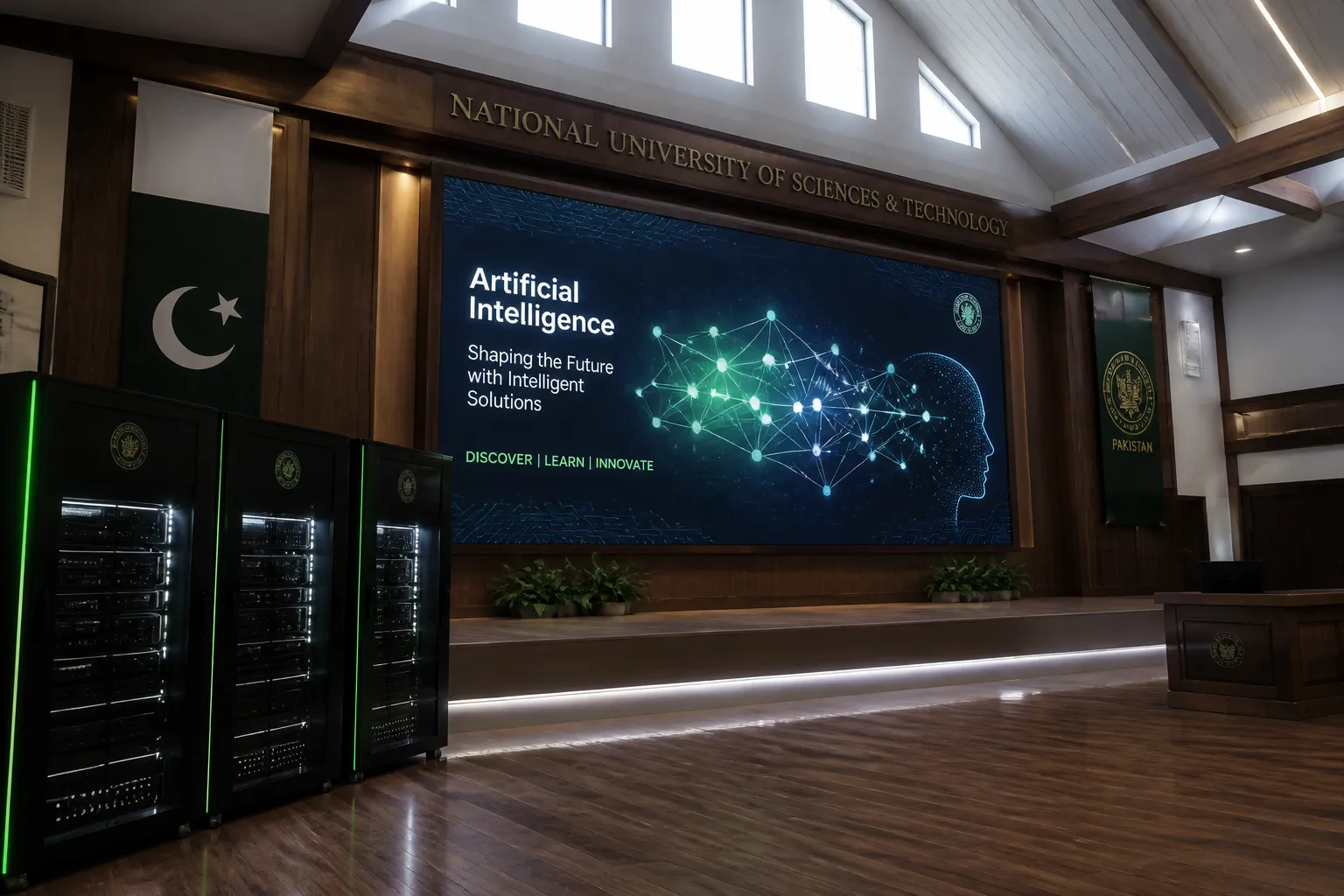
The Higher Education Commission (HEC) of Pakistan has approved a new policy that will make a three‑credit‑hour course on Artificial Intelligence mandatory for students in all public‑sector universities. The course, titled Introduction to Artificial Intelligence, will be added to relevant degree programmes across the country, with implementation to begin immediately and roll out in phases.
The decision was endorsed during a consultative meeting of vice‑chancellors that gathered to discuss curriculum reforms. HEC officials said the move is intended to equip students with basic knowledge of AI, machine learning, and data‑driven technologies, and to prepare graduates for the digital demands of the modern workforce. The policy is part of a broader strategy to modernise higher education, strengthen digital literacy, and keep Pakistani graduates competitive in a technology‑focused economy.
To support the initiative, the Information Technology University (ITU) in Lahore has developed three proposed course modules. The outlines were approved at the 45th meeting of the HEC and have since been shared with public universities for adoption. The modules cover foundational concepts, practical applications, and industry case studies, providing a structured framework that universities can integrate into existing curricula.
In addition to the national directive, a formal notification has been issued to public‑sector universities in Punjab, encouraging institutions in the province to accelerate the integration of AI education. Punjab has already introduced AI curricula at the school level and is working on a provincial AI roadmap, indicating a coordinated effort across education tiers.
The introduction of a standardized AI course is expected to stimulate interest in emerging technologies and support the development of a skilled workforce that can contribute to Pakistan’s digital transformation and innovation ecosystem. While the policy focuses on public universities, it aligns with other national initiatives such as the free AI Seekho 2026 program backed by Google and the AI EdTech Summit held in Islamabad, which aim to broaden AI literacy across the country.
Implementation will be monitored by HEC, which will provide guidance on curriculum design and assessment standards. Universities are expected to adopt the course in relevant disciplines—engineering, computer science, business, and health sciences—ensuring that students receive a consistent foundational understanding of AI principles and their real‑world applications.
The policy does not yet specify a timeline for full rollout, but HEC has indicated that the course should be available to students by the next academic year. The commission will likely issue further guidance on accreditation, faculty training, and resource allocation as the program progresses.
In summary, Pakistan’s HEC has taken a decisive step to embed AI education into the national university system. The mandatory three‑credit course, supported by ITU’s module proposals and reinforced by provincial notifications, aims to build digital skills, promote industry relevance, and align Pakistani higher education with global technological trends. The policy’s success will depend on timely implementation, faculty readiness, and ongoing support from government and industry partners.
The decision was endorsed during a consultative meeting of vice‑chancellors that gathered to discuss curriculum reforms. HEC officials said the move is intended to equip students with basic knowledge of AI, machine learning, and data‑driven technologies, and to prepare graduates for the digital demands of the modern workforce. The policy is part of a broader strategy to modernise higher education, strengthen digital literacy, and keep Pakistani graduates competitive in a technology‑focused economy.
To support the initiative, the Information Technology University (ITU) in Lahore has developed three proposed course modules. The outlines were approved at the 45th meeting of the HEC and have since been shared with public universities for adoption. The modules cover foundational concepts, practical applications, and industry case studies, providing a structured framework that universities can integrate into existing curricula.
In addition to the national directive, a formal notification has been issued to public‑sector universities in Punjab, encouraging institutions in the province to accelerate the integration of AI education. Punjab has already introduced AI curricula at the school level and is working on a provincial AI roadmap, indicating a coordinated effort across education tiers.
The introduction of a standardized AI course is expected to stimulate interest in emerging technologies and support the development of a skilled workforce that can contribute to Pakistan’s digital transformation and innovation ecosystem. While the policy focuses on public universities, it aligns with other national initiatives such as the free AI Seekho 2026 program backed by Google and the AI EdTech Summit held in Islamabad, which aim to broaden AI literacy across the country.
Implementation will be monitored by HEC, which will provide guidance on curriculum design and assessment standards. Universities are expected to adopt the course in relevant disciplines—engineering, computer science, business, and health sciences—ensuring that students receive a consistent foundational understanding of AI principles and their real‑world applications.
The policy does not yet specify a timeline for full rollout, but HEC has indicated that the course should be available to students by the next academic year. The commission will likely issue further guidance on accreditation, faculty training, and resource allocation as the program progresses.
In summary, Pakistan’s HEC has taken a decisive step to embed AI education into the national university system. The mandatory three‑credit course, supported by ITU’s module proposals and reinforced by provincial notifications, aims to build digital skills, promote industry relevance, and align Pakistani higher education with global technological trends. The policy’s success will depend on timely implementation, faculty readiness, and ongoing support from government and industry partners.





