Blab AI
Anthropic Faces U.S. Export Controls as It Pushes Korean Expansion
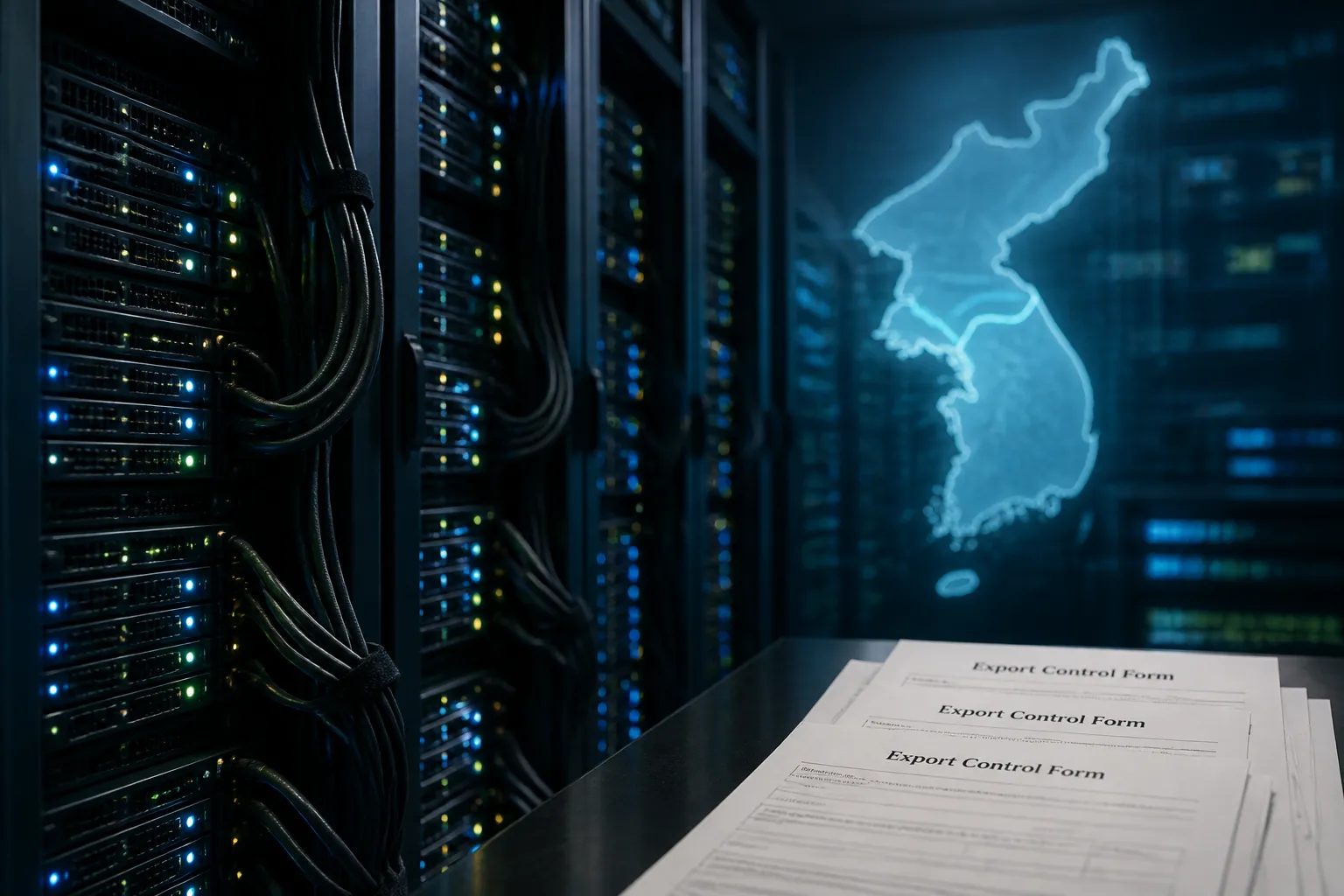
Anthropic, the San Francisco‑based AI startup behind the Claude series of large language models, has announced that U.S. export‑control guidance issued on June 12 will temporarily restrict access to its newest models, Claude Mythos 5 and Fable 5, for non‑U.S. persons. The directive, which took effect the day after the models were released, limits use of Mythos 5 and Fable 5 to U.S. persons only.
The move comes as the company prepares to launch a dedicated office in Seoul and deepen ties with Korean enterprises and developers. Anthropic’s Korea unit, established earlier this year, had scheduled a press briefing for June 15, but co‑founder and Chief Compute Officer Tom Brown was pulled from the event to focus on negotiations in Washington. Instead, Chris Ciauri, Anthropic’s Managing Director of International, represented the company.
During the briefing on June 17, Ciauri said the company expects the export‑control issue to be resolved soon. "We will continue discussions with the U.S. government to address this issue, and we believe it will be resolved soon," he told reporters. "We do not expect any long‑term impact." He added that Korea is one of Anthropic’s fastest‑growing markets, ranking 12th in Claude usage among the 166 countries where the model is available and likely to enter the top 10.
Anthropic highlighted strong momentum in Korea’s developer community, noting that the country has one of the most active Claude user bases, especially among software developers. The company has already launched its Claude for Startups program in Korea, offering free accounts to up to 60 researchers affiliated with the National AI Research Lab (NAIRL) consortium, which includes KAIST, Korea University and Yonsei University. The initiative aims to support research in AI safety, model evaluation, alignment and robustness.
Enterprise adoption is also accelerating. Naver, Nexon and LG CNS are among the Korean customers using Claude Code, Anthropic’s AI coding tool. Naver deployed Claude Code across its engineering organization, enabling thousands of developers to diversify coding tools and improve productivity. The company described the rollout as one of the largest enterprise deployments in Asia. Nexon’s engineering teams use Claude Code for software development, code review and deployment tasks that support live‑service games played by millions worldwide. LG CNS is gradually providing Claude to thousands of employees for software development and customer‑facing technology solutions, with plans to expand adoption across the broader LG Group. Samsung Electronics also uses Claude Cowork and Claude Code to improve daily operations, agent‑based workflows and software development activities.
To mark the opening of its Seoul office, Anthropic and BASS Ventures hosted a Claude Build Day event on June 16. More than 100 startup founders and developers participated in hands‑on sessions with Anthropic engineers and product leaders to build products and test new ideas. During the briefing, KiYoung Choi outlined Anthropic Korea’s go‑to‑market strategy, built around four pillars: enterprise sales, partner ecosystems, developer communities and long‑term research. "Korean companies and institutions want both innovation and safety," Choi said. "The opening of our Seoul office represents a long‑term commitment to collaborating with those shaping Korea’s AI leadership."
The export‑control guidance arrives at a sensitive time for Anthropic, which has recently reported strong growth in paid users, a valuation that has surpassed OpenAI in some market estimates and signs of IPO‑related preparations. The sudden restriction on Mythos 5 and Fable 5 raises concerns among customers about the reliability of advanced AI models for critical workflows. While the guidance currently applies only to the newly released models, industry observers note that similar actions could affect other models in the future depending on government decisions.
The issue has also intensified discussions around technological sovereignty, particularly in Europe, where policymakers argue that dependence on foreign frontier AI providers creates strategic risks. According to Axios, Anthropic is arguing that the current export‑control approach could ultimately harm both U.S. national interests and the competitiveness of the U.S. AI industry. The company maintains that the vulnerability cited by regulators is not unique to Anthropic and exists across multiple frontier AI systems. If the same standard were broadly applied, it could delay or block the release of many advanced AI models.
Anthropic is reportedly seeking a framework that would clearly define the conditions under which AI models become subject to export controls and establish transparent procedures for lifting those restrictions once specified safety requirements are met. The company’s next steps include continued dialogue with U.S. authorities, monitoring the impact on its Korean operations, and maintaining engagement with Korean enterprises and research institutions.
In summary, Anthropic’s expansion into Korea is proceeding amid an unresolved U.S. export‑control directive that temporarily limits access to its newest models. The company is actively negotiating with Washington, reinforcing its Korean presence through enterprise deployments, developer programs and research collaborations, and preparing for future regulatory clarity.
The move comes as the company prepares to launch a dedicated office in Seoul and deepen ties with Korean enterprises and developers. Anthropic’s Korea unit, established earlier this year, had scheduled a press briefing for June 15, but co‑founder and Chief Compute Officer Tom Brown was pulled from the event to focus on negotiations in Washington. Instead, Chris Ciauri, Anthropic’s Managing Director of International, represented the company.
During the briefing on June 17, Ciauri said the company expects the export‑control issue to be resolved soon. "We will continue discussions with the U.S. government to address this issue, and we believe it will be resolved soon," he told reporters. "We do not expect any long‑term impact." He added that Korea is one of Anthropic’s fastest‑growing markets, ranking 12th in Claude usage among the 166 countries where the model is available and likely to enter the top 10.
Anthropic highlighted strong momentum in Korea’s developer community, noting that the country has one of the most active Claude user bases, especially among software developers. The company has already launched its Claude for Startups program in Korea, offering free accounts to up to 60 researchers affiliated with the National AI Research Lab (NAIRL) consortium, which includes KAIST, Korea University and Yonsei University. The initiative aims to support research in AI safety, model evaluation, alignment and robustness.
Enterprise adoption is also accelerating. Naver, Nexon and LG CNS are among the Korean customers using Claude Code, Anthropic’s AI coding tool. Naver deployed Claude Code across its engineering organization, enabling thousands of developers to diversify coding tools and improve productivity. The company described the rollout as one of the largest enterprise deployments in Asia. Nexon’s engineering teams use Claude Code for software development, code review and deployment tasks that support live‑service games played by millions worldwide. LG CNS is gradually providing Claude to thousands of employees for software development and customer‑facing technology solutions, with plans to expand adoption across the broader LG Group. Samsung Electronics also uses Claude Cowork and Claude Code to improve daily operations, agent‑based workflows and software development activities.
To mark the opening of its Seoul office, Anthropic and BASS Ventures hosted a Claude Build Day event on June 16. More than 100 startup founders and developers participated in hands‑on sessions with Anthropic engineers and product leaders to build products and test new ideas. During the briefing, KiYoung Choi outlined Anthropic Korea’s go‑to‑market strategy, built around four pillars: enterprise sales, partner ecosystems, developer communities and long‑term research. "Korean companies and institutions want both innovation and safety," Choi said. "The opening of our Seoul office represents a long‑term commitment to collaborating with those shaping Korea’s AI leadership."
The export‑control guidance arrives at a sensitive time for Anthropic, which has recently reported strong growth in paid users, a valuation that has surpassed OpenAI in some market estimates and signs of IPO‑related preparations. The sudden restriction on Mythos 5 and Fable 5 raises concerns among customers about the reliability of advanced AI models for critical workflows. While the guidance currently applies only to the newly released models, industry observers note that similar actions could affect other models in the future depending on government decisions.
The issue has also intensified discussions around technological sovereignty, particularly in Europe, where policymakers argue that dependence on foreign frontier AI providers creates strategic risks. According to Axios, Anthropic is arguing that the current export‑control approach could ultimately harm both U.S. national interests and the competitiveness of the U.S. AI industry. The company maintains that the vulnerability cited by regulators is not unique to Anthropic and exists across multiple frontier AI systems. If the same standard were broadly applied, it could delay or block the release of many advanced AI models.
Anthropic is reportedly seeking a framework that would clearly define the conditions under which AI models become subject to export controls and establish transparent procedures for lifting those restrictions once specified safety requirements are met. The company’s next steps include continued dialogue with U.S. authorities, monitoring the impact on its Korean operations, and maintaining engagement with Korean enterprises and research institutions.
In summary, Anthropic’s expansion into Korea is proceeding amid an unresolved U.S. export‑control directive that temporarily limits access to its newest models. The company is actively negotiating with Washington, reinforcing its Korean presence through enterprise deployments, developer programs and research collaborations, and preparing for future regulatory clarity.





