Blab AI
Penn Vet Launches Dat-AI-Lab to Harness AI for Swine and Dairy Animal Care
On 16 June 2026, the University of Pennsylvania School of Veterinary Medicine (Penn Vet) announced the launch of Dat‑AI‑Lab, a new research initiative that combines Penn Vet scientists with Philadelphia‑based agri‑tech firm AgriGates. The lab will use artificial intelligence to analyze animal behavior data collected at Penn Vet’s New Bolton Center and its Swine Teaching and Research Center.
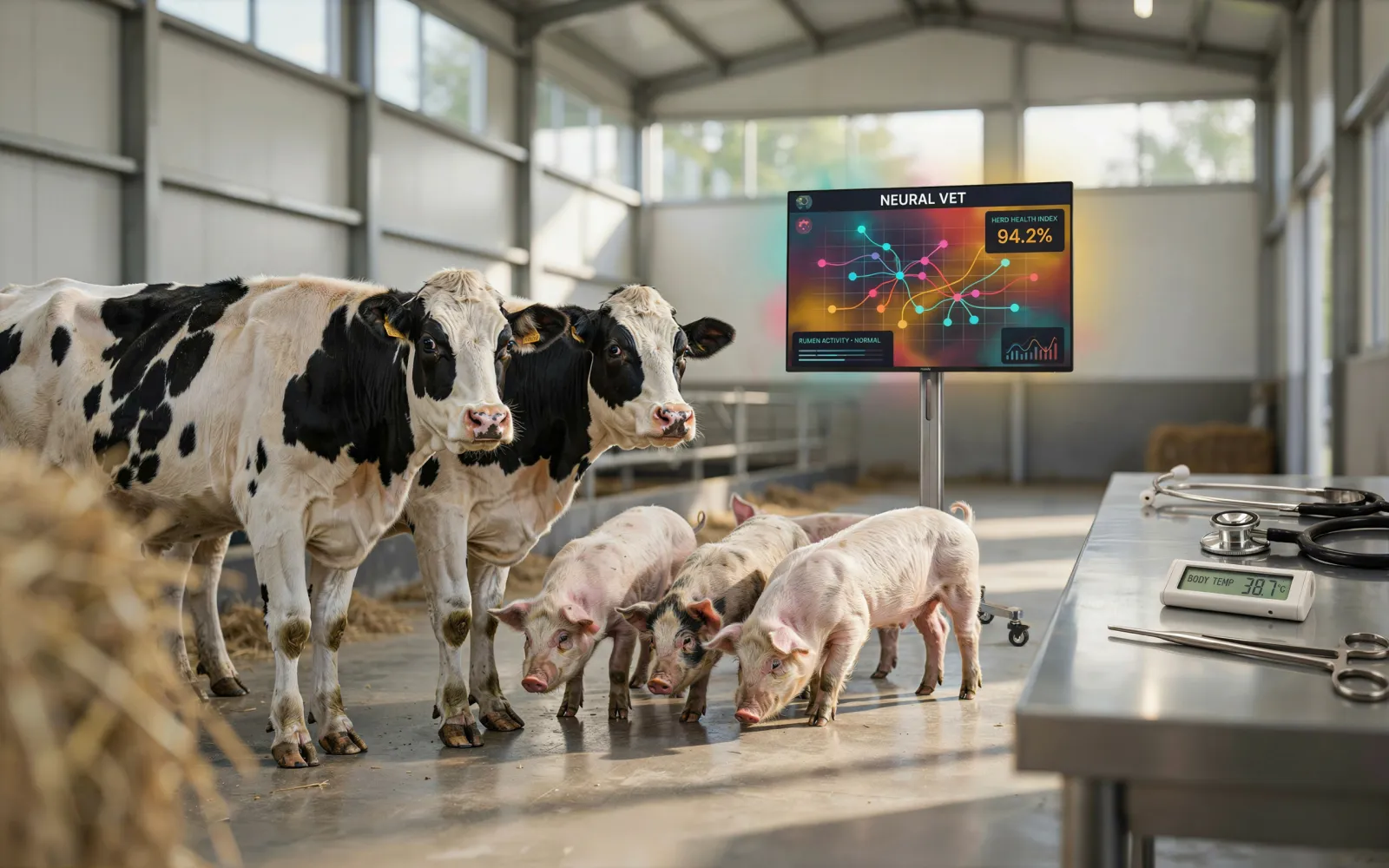
The initiative is already gathering data from the swine herd at the Swine Teaching and Research Center and from the dairy herd at New Bolton Center. The goal is to develop databases that capture species‑specific behavior patterns, which researchers believe can serve as early indicators of health and welfare issues in livestock. The project is part of a broader effort to improve livestock management in Pennsylvania, a state with a large agricultural sector.
Penn Vet’s Gilbert S. Kahn Dean, Andrew Hoffman, said the lab represents a “new chapter” in the swine center’s 25‑year history. He emphasized the potential for AI to complement human observation, which remains the gold standard for large‑animal care but is limited by labor constraints.
AgriGates, the private partner, received a grant from Pennsylvania’s first $10 million round of Agriculture Innovation Grants. Co‑founder Daniel Foy noted that the grant helped launch Dat‑AI‑Lab. In addition, the Pennsylvania Center for Poultry Livestock Excellence has contributed more than $200 000 over the past three years to support the development of the AI and machine‑learning technology used in the lab.
Foy highlighted that animal behavior is an underappreciated economic indicator for detecting clinical problems early. He said the lab’s work will “give us tools—digital eyes and ears—for diagnostic and predictive capabilities.” The initiative is positioned to address a workforce shortage in agriculture by providing technology that can collect and analyze large volumes of data.
Thomas D. Parsons, who directs both the Swine Teaching and Research Center and the Center for Stewardship Agriculture and Food Security, said the lab will build on the center’s history of improving animal welfare. Parsons noted that the lab’s focus on AI will make the study of behavior more efficient, freeing researchers to focus on interpretation and application.
Dat‑AI‑Lab’s first phase will concentrate on swine and dairy animals. However, the lab has already attracted interest from research institutions in the United States and Europe that are interested in applying the same approach to other species.
The project is supported by a series of sponsorships, including a 8 June 2026 Livestock Management sponsorship by MetaFarms, a 6 May 2026 Livestock Management sponsorship by USDA‑APHIS, and earlier sponsorships in April 2026 by Ann Hess for Farming Business Management.
The lab’s work aligns with state and federal priorities to modernize agriculture through technology. By creating a repository of behavioral data, researchers hope to develop predictive models that can inform timely decisions about animal health, welfare, and productivity.
While the initiative is still in its early stages, the collaboration between a leading veterinary school and an agri‑tech company illustrates a growing trend of academia‑industry partnerships aimed at applying AI to livestock management. The outcome of Dat‑AI‑Lab could provide a framework for other universities and farms to adopt similar data‑driven approaches.
As the lab moves forward, its progress will be monitored through publications, data releases, and potential pilot deployments on farms. The broader agricultural community will be watching to see whether the AI‑based insights can translate into measurable improvements in animal care and farm efficiency.
In summary, Dat‑AI‑Lab represents a concrete step toward integrating AI into everyday livestock management. With backing from state grants, industry partners, and a robust research base, the initiative seeks to turn behavioral data into actionable knowledge that benefits Pennsylvania farmers and the wider agricultural sector.
The initiative is already gathering data from the swine herd at the Swine Teaching and Research Center and from the dairy herd at New Bolton Center. The goal is to develop databases that capture species‑specific behavior patterns, which researchers believe can serve as early indicators of health and welfare issues in livestock. The project is part of a broader effort to improve livestock management in Pennsylvania, a state with a large agricultural sector.
Penn Vet’s Gilbert S. Kahn Dean, Andrew Hoffman, said the lab represents a “new chapter” in the swine center’s 25‑year history. He emphasized the potential for AI to complement human observation, which remains the gold standard for large‑animal care but is limited by labor constraints.
AgriGates, the private partner, received a grant from Pennsylvania’s first $10 million round of Agriculture Innovation Grants. Co‑founder Daniel Foy noted that the grant helped launch Dat‑AI‑Lab. In addition, the Pennsylvania Center for Poultry Livestock Excellence has contributed more than $200 000 over the past three years to support the development of the AI and machine‑learning technology used in the lab.
Foy highlighted that animal behavior is an underappreciated economic indicator for detecting clinical problems early. He said the lab’s work will “give us tools—digital eyes and ears—for diagnostic and predictive capabilities.” The initiative is positioned to address a workforce shortage in agriculture by providing technology that can collect and analyze large volumes of data.
Thomas D. Parsons, who directs both the Swine Teaching and Research Center and the Center for Stewardship Agriculture and Food Security, said the lab will build on the center’s history of improving animal welfare. Parsons noted that the lab’s focus on AI will make the study of behavior more efficient, freeing researchers to focus on interpretation and application.
Dat‑AI‑Lab’s first phase will concentrate on swine and dairy animals. However, the lab has already attracted interest from research institutions in the United States and Europe that are interested in applying the same approach to other species.
The project is supported by a series of sponsorships, including a 8 June 2026 Livestock Management sponsorship by MetaFarms, a 6 May 2026 Livestock Management sponsorship by USDA‑APHIS, and earlier sponsorships in April 2026 by Ann Hess for Farming Business Management.
The lab’s work aligns with state and federal priorities to modernize agriculture through technology. By creating a repository of behavioral data, researchers hope to develop predictive models that can inform timely decisions about animal health, welfare, and productivity.
While the initiative is still in its early stages, the collaboration between a leading veterinary school and an agri‑tech company illustrates a growing trend of academia‑industry partnerships aimed at applying AI to livestock management. The outcome of Dat‑AI‑Lab could provide a framework for other universities and farms to adopt similar data‑driven approaches.
As the lab moves forward, its progress will be monitored through publications, data releases, and potential pilot deployments on farms. The broader agricultural community will be watching to see whether the AI‑based insights can translate into measurable improvements in animal care and farm efficiency.
In summary, Dat‑AI‑Lab represents a concrete step toward integrating AI into everyday livestock management. With backing from state grants, industry partners, and a robust research base, the initiative seeks to turn behavioral data into actionable knowledge that benefits Pennsylvania farmers and the wider agricultural sector.





