Blab AI
Bosch Charts AI Transformation Through Strategic Partnerships, Emphasizing Mobility, Manufacturing, and Sensor Innovation
On June 16, 2026, Bosch unveiled a sweeping AI roadmap that could reshape how cars drive, factories run, and robots sense the world. The company’s latest public statement outlines a comprehensive strategy to embed artificial intelligence across its core business areas—mobility, manufacturing, and sensor technology—while emphasizing the need for collaborative partnerships, especially with Microsoft, to accelerate development, improve safety, and sustain a competitive edge.
Stefan Hartung, chairman of the board of management at Robert Bosch GmbH, framed the current AI wave as the third technological revolution, following agriculture and the scientific age. He warned that AI’s influence stretches beyond product features into fundamental questions about human uniqueness and societal direction. According to Hartung, Bosch’s role is to steer this era toward a “life‑affirming, liberal direction” by acting quickly and strategically.
Mobility sits at the heart of the plan. Bosch has been testing Level 3 autonomous driving functions on Chinese roads for several weeks. These functions allow drivers to disengage from steering and visual monitoring while the vehicle maintains control at speeds up to 120 km/h. The system relies on AI integrated into all software modules and a redundant safety architecture that fuses sensor data, control units, and vehicle computers. Hartung stressed that AI, coupled with Bosch’s advanced sensors, transforms conventional vehicles into safer, more personalized, and more convenient mobility solutions.
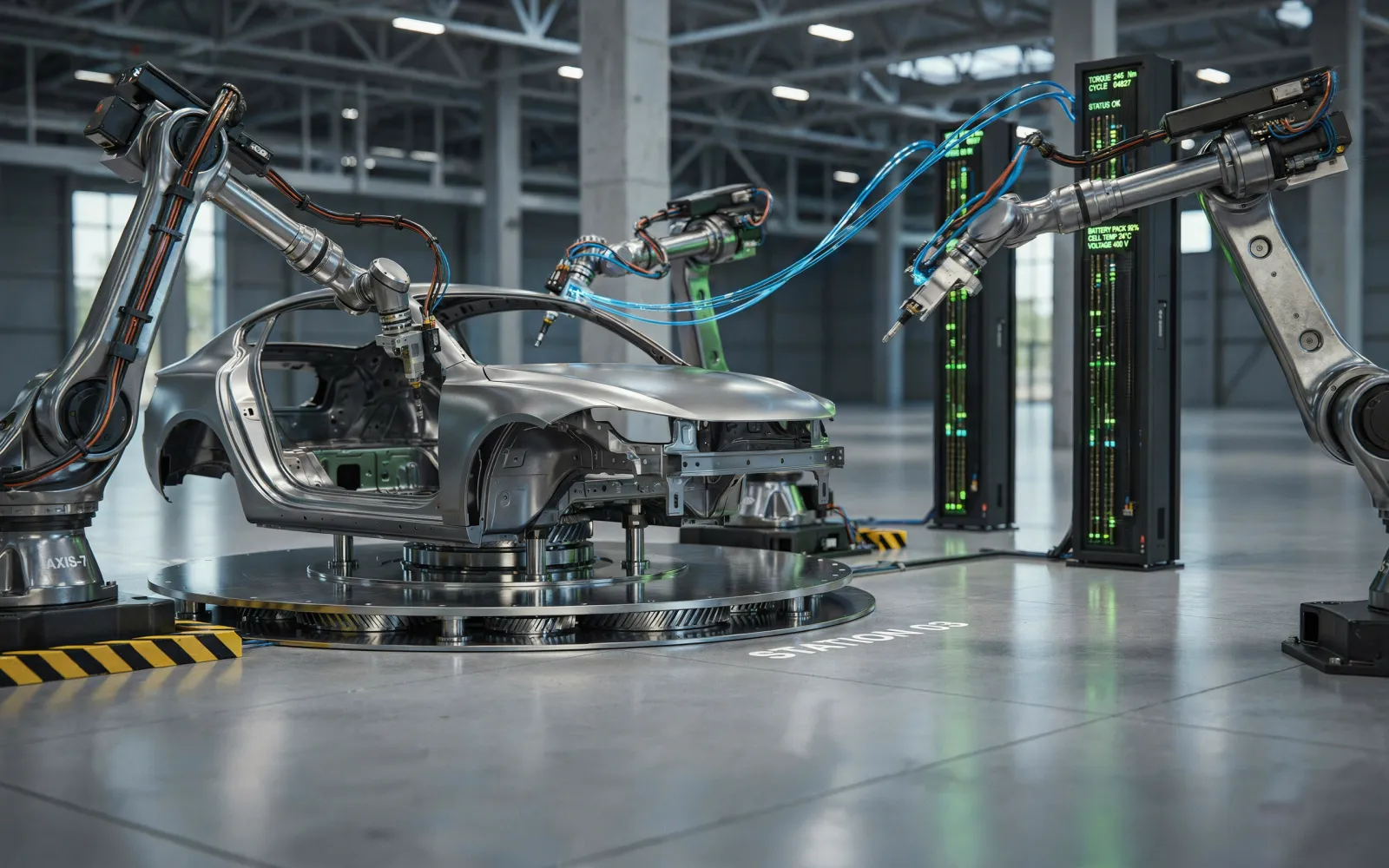
In manufacturing, Bosch’s subsidiary, Bosch Connected Industry, is expanding its Manufacturing Co‑Intelligence platform—a generative AI solution that detects production errors early and reduces downtime. Already deployed in Bosch’s own factories, the platform can increase productivity by up to 15 % and cut costs by up to 30 % in certain applications. The company views the platform as a step beyond Industry 4.0 toward a self‑optimizing factory that can manage complexity, detect correlations, and adjust processes in real time.
Sensor technology underpins both mobility and robotics initiatives. Bosch’s MEMS (micro‑electromechanical systems) sensors measure light, pressure, and motion with high precision, enabling robots to perceive touch at a sensitivity comparable to a mosquito’s leg. The company claims that such sensors allow humanoid robots to learn from experience and replicate human sensory capabilities. MEMS sensors also play a critical role in automotive safety systems, with Bosch producing billions of units for vehicles and consumer electronics.
Partnerships are presented as essential to realizing these ambitions. Bosch’s long history of collaboration—dating back to the early 1900s—has helped it launch innovations such as leak‑proof washing machines and braking systems. The current strategy includes a close relationship with Microsoft. The partnership leverages Microsoft’s hyperscale cloud infrastructure to shorten development cycles and supports joint work on mobility AI, including an AI‑powered cockpit and ADAS functions. In January 2026, Bosch announced a joint effort with Microsoft to enhance the Manufacturing Co‑Intelligence system, aiming to “revolutionize production through agentic artificial intelligence.”
Regulatory considerations also feature prominently. Hartung expressed concern that overly restrictive European regulations could hinder AI progress while noting that AI’s societal impact demands foresight and responsibility. He urged that Europe maintain a balanced approach, ensuring that its AI capabilities remain competitive on a global scale.
In summary, Bosch’s 2026 strategy positions the company to lead in AI‑enabled mobility, manufacturing, and sensor technology through strategic partnerships, particularly with Microsoft. The initiatives aim to improve safety, efficiency, and personalization across product lines while navigating regulatory landscapes. Key unresolved questions remain: the pace of regulatory alignment in Europe, the scalability of generative AI in manufacturing, and the long‑term integration of MEMS sensors in autonomous systems.
Stefan Hartung, chairman of the board of management at Robert Bosch GmbH, framed the current AI wave as the third technological revolution, following agriculture and the scientific age. He warned that AI’s influence stretches beyond product features into fundamental questions about human uniqueness and societal direction. According to Hartung, Bosch’s role is to steer this era toward a “life‑affirming, liberal direction” by acting quickly and strategically.
Mobility sits at the heart of the plan. Bosch has been testing Level 3 autonomous driving functions on Chinese roads for several weeks. These functions allow drivers to disengage from steering and visual monitoring while the vehicle maintains control at speeds up to 120 km/h. The system relies on AI integrated into all software modules and a redundant safety architecture that fuses sensor data, control units, and vehicle computers. Hartung stressed that AI, coupled with Bosch’s advanced sensors, transforms conventional vehicles into safer, more personalized, and more convenient mobility solutions.
In manufacturing, Bosch’s subsidiary, Bosch Connected Industry, is expanding its Manufacturing Co‑Intelligence platform—a generative AI solution that detects production errors early and reduces downtime. Already deployed in Bosch’s own factories, the platform can increase productivity by up to 15 % and cut costs by up to 30 % in certain applications. The company views the platform as a step beyond Industry 4.0 toward a self‑optimizing factory that can manage complexity, detect correlations, and adjust processes in real time.
Sensor technology underpins both mobility and robotics initiatives. Bosch’s MEMS (micro‑electromechanical systems) sensors measure light, pressure, and motion with high precision, enabling robots to perceive touch at a sensitivity comparable to a mosquito’s leg. The company claims that such sensors allow humanoid robots to learn from experience and replicate human sensory capabilities. MEMS sensors also play a critical role in automotive safety systems, with Bosch producing billions of units for vehicles and consumer electronics.
Partnerships are presented as essential to realizing these ambitions. Bosch’s long history of collaboration—dating back to the early 1900s—has helped it launch innovations such as leak‑proof washing machines and braking systems. The current strategy includes a close relationship with Microsoft. The partnership leverages Microsoft’s hyperscale cloud infrastructure to shorten development cycles and supports joint work on mobility AI, including an AI‑powered cockpit and ADAS functions. In January 2026, Bosch announced a joint effort with Microsoft to enhance the Manufacturing Co‑Intelligence system, aiming to “revolutionize production through agentic artificial intelligence.”
Regulatory considerations also feature prominently. Hartung expressed concern that overly restrictive European regulations could hinder AI progress while noting that AI’s societal impact demands foresight and responsibility. He urged that Europe maintain a balanced approach, ensuring that its AI capabilities remain competitive on a global scale.
In summary, Bosch’s 2026 strategy positions the company to lead in AI‑enabled mobility, manufacturing, and sensor technology through strategic partnerships, particularly with Microsoft. The initiatives aim to improve safety, efficiency, and personalization across product lines while navigating regulatory landscapes. Key unresolved questions remain: the pace of regulatory alignment in Europe, the scalability of generative AI in manufacturing, and the long‑term integration of MEMS sensors in autonomous systems.





