Blab AI
FII Institute and Columbia Climate School Release AI Climate Risk Report Highlighting Proactive Resilience
On 15 June 2026, the Future Investment Initiative (FII) Institute announced the launch of a new report titled Artificial Intelligence for Climate Risk Prediction and Adaptation. The publication, co‑authored by Thomas Chandler and Joshua L. Devincenzo, was produced in partnership with the Columbia Climate School, a professional school at Columbia University that focuses on climate science and sustainability.
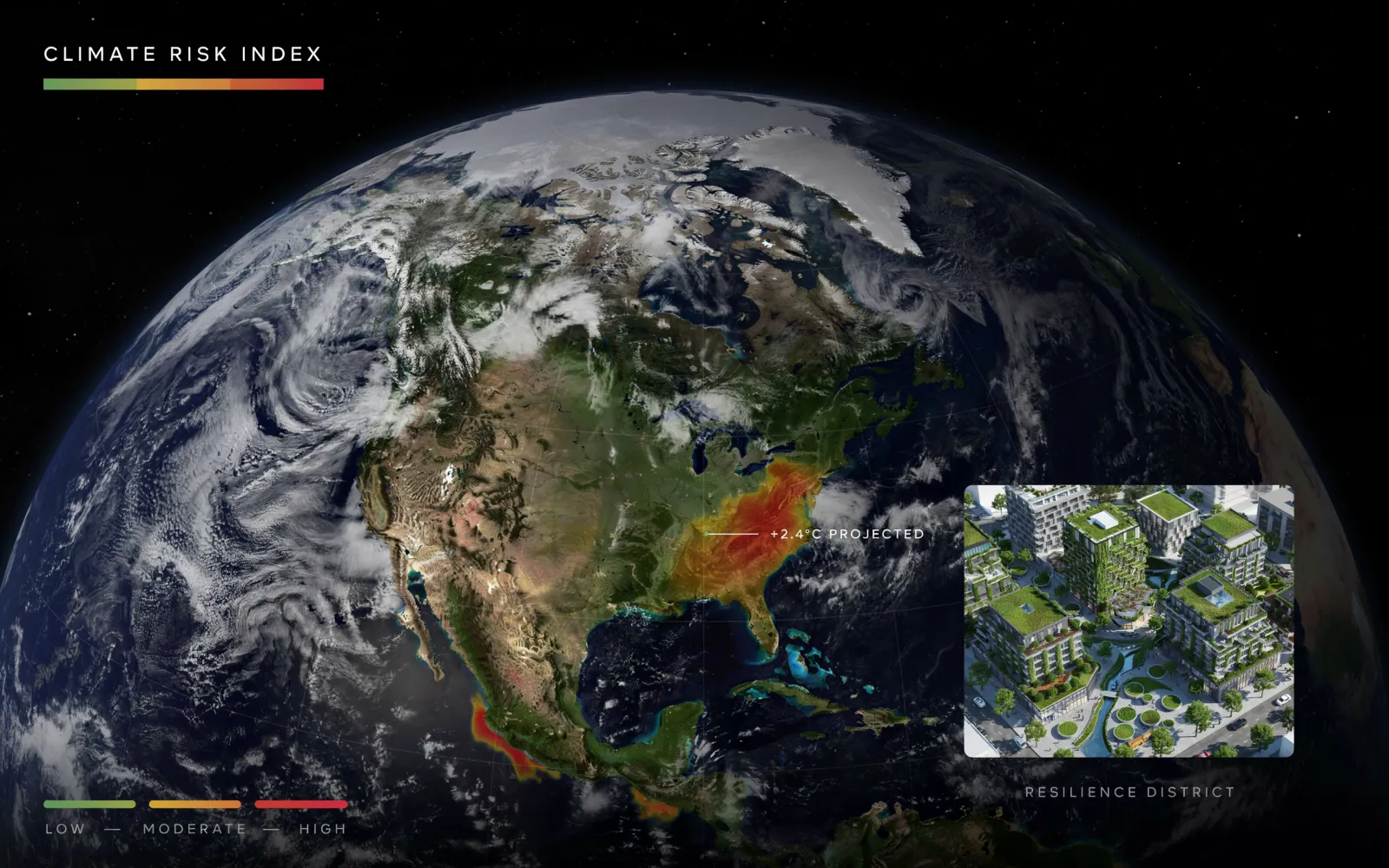
The report marks a shift in how societies approach climate‑related hazards. According to the authors, the focus moves from reactive disaster management—responding after an event has occurred—to proactive, AI‑enabled resilience. The authors argue that artificial intelligence can improve the accuracy and speed of predictions for floods, wildfires, and other extreme events, and can accelerate humanitarian response once a risk is identified.
The FII Institute, a non‑profit organization run by Saudi Arabia’s Public Investment Fund, has a long history of gathering and publishing insights on global priorities. Its annual Global Survey, known as the FII PRIORITY Compass, has collected data from more than 50,000 citizens in 24 countries. The survey’s findings are used to inform leaders about emerging concerns before they become mainstream policy topics. The climate‑risk report builds on this tradition by offering actionable intelligence for governments, investors, business leaders, and policymakers.
Key findings in the report emphasize that the greatest opportunity lies not only in the AI models themselves but also in the data infrastructure and human oversight required to translate predictions into equitable, measurable outcomes. The authors note that high‑quality, high‑resolution environmental data is essential for training effective models, and that governance frameworks must be in place to ensure that AI tools are used responsibly and transparently.
For stakeholders, the report offers a roadmap for integrating AI into climate adaptation strategies. Governments can use the insights to design early‑warning systems and to allocate resources more efficiently. Investors may identify sectors where AI can reduce exposure to climate risk, such as agriculture, insurance, and infrastructure. Business leaders are encouraged to adopt AI tools that can forecast supply‑chain disruptions caused by extreme weather. Policymakers are urged to consider regulatory measures that promote data sharing while protecting privacy and preventing bias.
The release of the report coincides with a broader trend of AI applications in climate science. Recent studies have demonstrated the use of machine‑learning models to predict rainfall patterns, sea‑level rise, and wildfire likelihood. However, the report stresses that technology alone is insufficient; coordinated investment in data collection, storage, and governance is required to realize the full potential of AI for climate resilience.
In summary, the FII Institute’s new report provides a timely assessment of how artificial intelligence can transform climate risk prediction and adaptation. By highlighting the need for robust data infrastructure and human oversight, the authors offer a balanced view that acknowledges both the promise and the challenges of AI in this critical domain. The report is available through the FII Institute’s publication archive and is intended to guide decision‑makers as they prepare for increasingly severe climate events.
The report marks a shift in how societies approach climate‑related hazards. According to the authors, the focus moves from reactive disaster management—responding after an event has occurred—to proactive, AI‑enabled resilience. The authors argue that artificial intelligence can improve the accuracy and speed of predictions for floods, wildfires, and other extreme events, and can accelerate humanitarian response once a risk is identified.
The FII Institute, a non‑profit organization run by Saudi Arabia’s Public Investment Fund, has a long history of gathering and publishing insights on global priorities. Its annual Global Survey, known as the FII PRIORITY Compass, has collected data from more than 50,000 citizens in 24 countries. The survey’s findings are used to inform leaders about emerging concerns before they become mainstream policy topics. The climate‑risk report builds on this tradition by offering actionable intelligence for governments, investors, business leaders, and policymakers.
Key findings in the report emphasize that the greatest opportunity lies not only in the AI models themselves but also in the data infrastructure and human oversight required to translate predictions into equitable, measurable outcomes. The authors note that high‑quality, high‑resolution environmental data is essential for training effective models, and that governance frameworks must be in place to ensure that AI tools are used responsibly and transparently.
For stakeholders, the report offers a roadmap for integrating AI into climate adaptation strategies. Governments can use the insights to design early‑warning systems and to allocate resources more efficiently. Investors may identify sectors where AI can reduce exposure to climate risk, such as agriculture, insurance, and infrastructure. Business leaders are encouraged to adopt AI tools that can forecast supply‑chain disruptions caused by extreme weather. Policymakers are urged to consider regulatory measures that promote data sharing while protecting privacy and preventing bias.
The release of the report coincides with a broader trend of AI applications in climate science. Recent studies have demonstrated the use of machine‑learning models to predict rainfall patterns, sea‑level rise, and wildfire likelihood. However, the report stresses that technology alone is insufficient; coordinated investment in data collection, storage, and governance is required to realize the full potential of AI for climate resilience.
In summary, the FII Institute’s new report provides a timely assessment of how artificial intelligence can transform climate risk prediction and adaptation. By highlighting the need for robust data infrastructure and human oversight, the authors offer a balanced view that acknowledges both the promise and the challenges of AI in this critical domain. The report is available through the FII Institute’s publication archive and is intended to guide decision‑makers as they prepare for increasingly severe climate events.





