Blab AI
AI-Powered Private Schools Face Scrutiny Over Lesson Quality and Learning Outcomes
Imagine a classroom where the teacher is a screen and the lesson plan is written by a machine. That vision is the reality for Alpha School, a private K‑12 network founded in 2014 by MacKenzie Price and Joseph Liemandt. With more than a dozen campuses across major cities—including Austin, New York, and Miami—Alpha charges tuition ranging from about US$10,000 in smaller markets to US$75,000 in its New York and Bay Area locations.
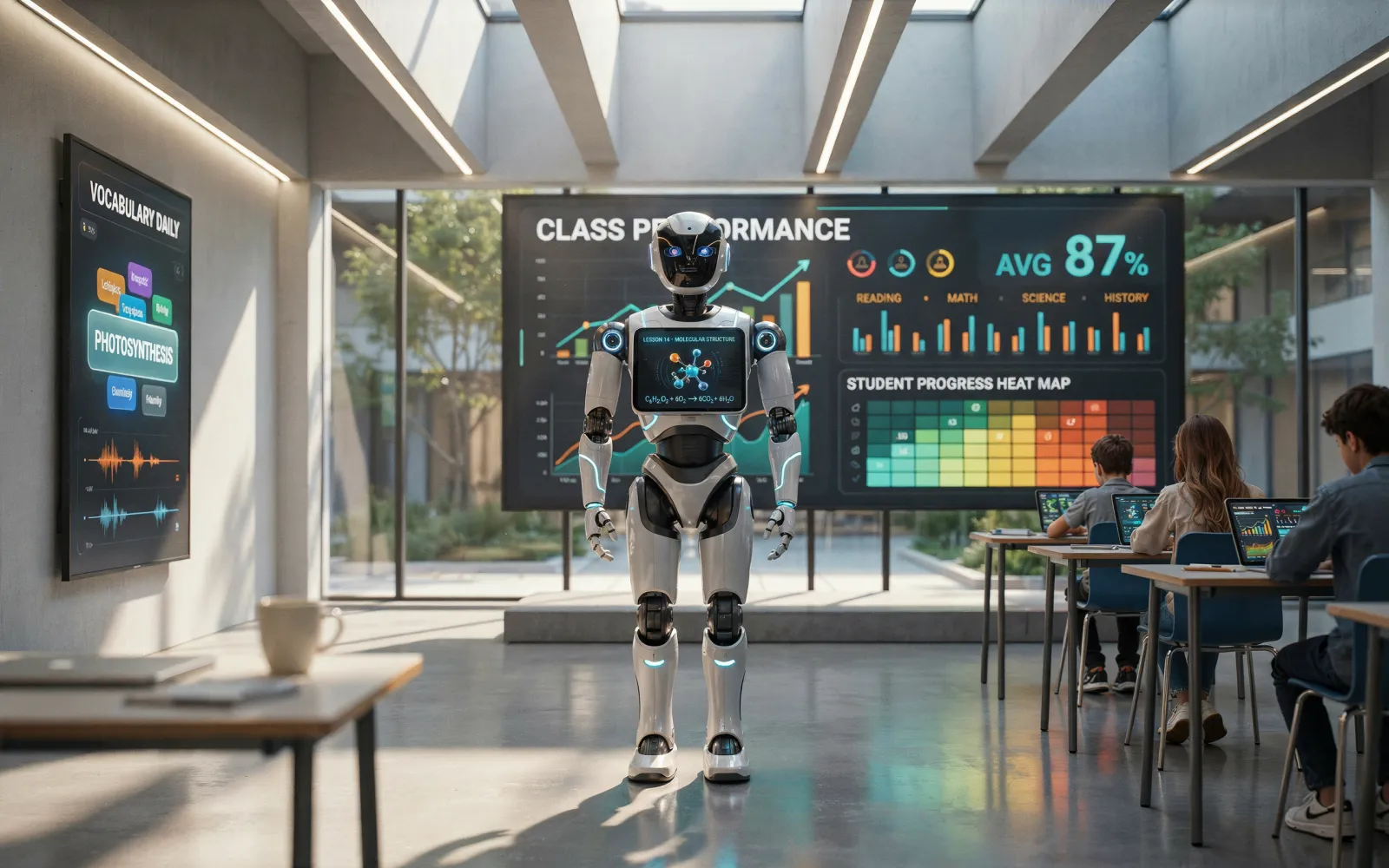
Alpha’s instructional philosophy, dubbed 2‑Hour Learning, replaces traditional teachers with adult "guides" and relies on adaptive software to deliver core subjects—math, reading, science, and social studies—for one to two hours a day. After the screen‑based block, students shift to workshops in public speaking, coding, outdoor education, and other projects, where the guides are present.
The school claims that its students outperform peers on standardized tests, citing internal data that has not been independently verified. A 2026 investigation by the independent news organization 404 Media, however, revealed that the AI‑generated lesson plans were poorly constructed and often illogical, with some content that could "do more harm than good," according to internal documents accessed by the reporters.
Alpha is not alone. Unbound Academy, a tuition‑free Arizona charter, and Novatio, a virtual private school, follow a similar model and share overlapping leadership and online programs, though they operate under different legal structures.
The debate over AI‑driven instruction extends beyond Alpha. In 2023, Khan Academy launched Khanmigo, an AI chatbot designed to coach students toward understanding rather than simply provide answers. Khan Academy now describes Khanmigo as a tool that should be used with adult supervision, acknowledging that a chatbot can prompt and explain but cannot replace the human teacher’s ability to read a student’s confusion.
Educational psychologists remind us that learning thrives on struggle, conflict, and frustration. Research by cognitive psychologist Robert Bjork and developmental psychologist Jean Piaget shows that attempts to recall information before receiving an answer strengthen memory. Social psychologist Lev Vygotsky argues that learning is fundamentally social, occurring through collaboration with teachers and peers.
Alpha’s model confines the academic portion of learning to solitary screen time, with most interaction occurring during the two‑hour AI lesson block. While adult guides are present during workshops, critics argue that the presence of an adult does not equate to meaningful participation or the social dynamics that foster identity development and resilience.
The concerns raised by 404 Media are not limited to lesson quality. The Alpha network’s governance structure has attracted scrutiny for its interconnected for‑profit vendors and for the fact that several affiliated organizations have submitted cyber‑charter school applications that were denied in multiple states.
In 2025, Education Secretary Linda McMahon toured Alpha’s Austin campus, and in 2026 First Lady Melania Trump invited an Alpha student to the State of the Union address. These high‑profile visits have amplified public attention on the school’s model.
The broader question for policymakers and parents is what trade‑offs are acceptable when a school’s curriculum is largely delivered by software. While AI can offer personalized pacing and instant feedback, the current evidence suggests that it may not fully support the social, emotional, and identity‑forming aspects of schooling that traditional classroom settings provide.
As AI‑based education continues to expand, independent verification of academic outcomes, transparent lesson design, and clear governance structures will be essential to ensure that the promise of personalized learning does not come at the expense of holistic child development.
Alpha’s instructional philosophy, dubbed 2‑Hour Learning, replaces traditional teachers with adult "guides" and relies on adaptive software to deliver core subjects—math, reading, science, and social studies—for one to two hours a day. After the screen‑based block, students shift to workshops in public speaking, coding, outdoor education, and other projects, where the guides are present.
The school claims that its students outperform peers on standardized tests, citing internal data that has not been independently verified. A 2026 investigation by the independent news organization 404 Media, however, revealed that the AI‑generated lesson plans were poorly constructed and often illogical, with some content that could "do more harm than good," according to internal documents accessed by the reporters.
Alpha is not alone. Unbound Academy, a tuition‑free Arizona charter, and Novatio, a virtual private school, follow a similar model and share overlapping leadership and online programs, though they operate under different legal structures.
The debate over AI‑driven instruction extends beyond Alpha. In 2023, Khan Academy launched Khanmigo, an AI chatbot designed to coach students toward understanding rather than simply provide answers. Khan Academy now describes Khanmigo as a tool that should be used with adult supervision, acknowledging that a chatbot can prompt and explain but cannot replace the human teacher’s ability to read a student’s confusion.
Educational psychologists remind us that learning thrives on struggle, conflict, and frustration. Research by cognitive psychologist Robert Bjork and developmental psychologist Jean Piaget shows that attempts to recall information before receiving an answer strengthen memory. Social psychologist Lev Vygotsky argues that learning is fundamentally social, occurring through collaboration with teachers and peers.
Alpha’s model confines the academic portion of learning to solitary screen time, with most interaction occurring during the two‑hour AI lesson block. While adult guides are present during workshops, critics argue that the presence of an adult does not equate to meaningful participation or the social dynamics that foster identity development and resilience.
The concerns raised by 404 Media are not limited to lesson quality. The Alpha network’s governance structure has attracted scrutiny for its interconnected for‑profit vendors and for the fact that several affiliated organizations have submitted cyber‑charter school applications that were denied in multiple states.
In 2025, Education Secretary Linda McMahon toured Alpha’s Austin campus, and in 2026 First Lady Melania Trump invited an Alpha student to the State of the Union address. These high‑profile visits have amplified public attention on the school’s model.
The broader question for policymakers and parents is what trade‑offs are acceptable when a school’s curriculum is largely delivered by software. While AI can offer personalized pacing and instant feedback, the current evidence suggests that it may not fully support the social, emotional, and identity‑forming aspects of schooling that traditional classroom settings provide.
As AI‑based education continues to expand, independent verification of academic outcomes, transparent lesson design, and clear governance structures will be essential to ensure that the promise of personalized learning does not come at the expense of holistic child development.





