Blab AI
TSMC Accelerates Capacity Expansion as Insider Buying and Analyst Optimism Surge
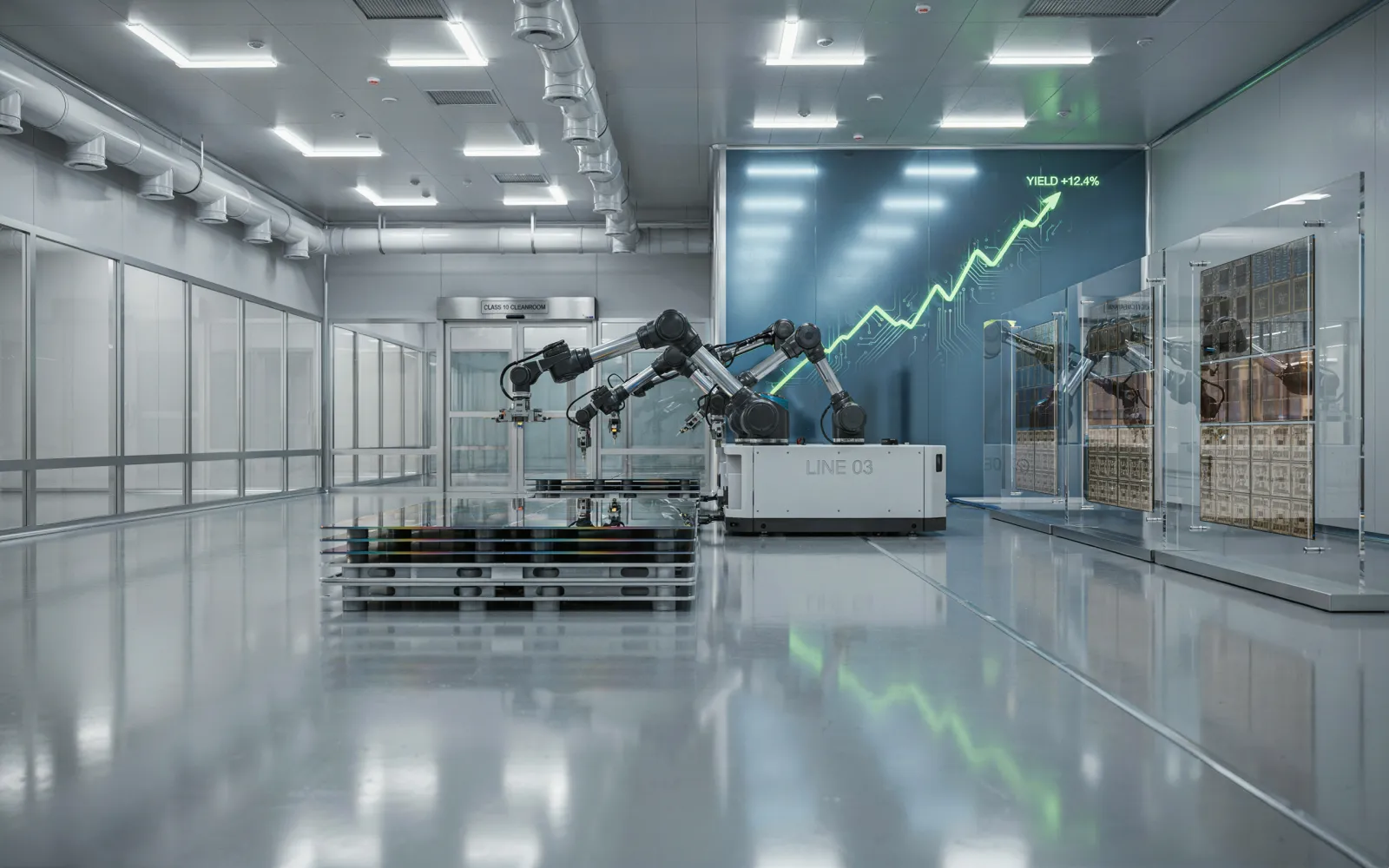
TSMC is accelerating its fabrication and packaging build‑out to keep pace with surging demand for AI‑centric chips. The company’s public guidance and market data point to a six‑figure monthly wafer output by 2029, while its Arizona facility remains fully booked through 2027. These moves arrive amid a 30 % sales rise for the current year and a wave of insider and institutional buying that has caught analyst attention.
TSMC’s expansion roadmap is anchored in a series of milestones. The firm said its 3 nm production capacity will climb from roughly 120 000–130 000 wafers per month at the end of 2025 to about 180 000 wafers by the end of 2026, a year‑on‑year increase of more than 40 %. The 2 nm node is slated for 2028, and a sub‑1 nm process is expected to enter trial production in 2029 with an initial target of 5 000 wafers per month. The Arizona plant, which began 4 nm production in 2024, is projected to host 3 nm and 2 nm manufacturing and is already booked through 2027.
Demand‑side pressure is unmistakable. The Arizona facility is fully booked through 2027, and large technology customers continue to place orders that exceed current production capacity. The supply squeeze helped drive a 30.1 % jump in May revenue, according to the company’s earnings release, and analysts have revised TSMC’s full‑year sales guidance upward.
TSMC’s market position reinforces its importance to the AI ecosystem. As one of the world’s largest non‑U.S. companies by market capitalisation, it supplies advanced chips to leading AI hardware makers such as Nvidia, Apple, and Qualcomm. The company’s role as a bottleneck in the supply chain has prompted attention from regulators and investors alike.
Insider activity in the last six months shows a strong buying bias. Executives and senior managers made 74 trades, of which 73 were purchases and only one was a sale. The largest purchase was a sale of 200 000 shares by VP TZU‑SOU CHUANG, valued at approximately $13.97 million. Other notable purchases include 1 000 shares by VP URSULA M BURNS ($322 k), 5 104 shares by VP SHYUE‑SHYH LIN ($282 k), and 3 149 shares by VP BOR‑ZEN TIEN ($218 k). All other listed insiders made purchases ranging from 40 to 1 123 shares, with total estimated values between $3 000 and $64 k.
Members of Congress have also traded TSMC stock. Eight trades were recorded in the past six months, with seven purchases and one sale. Representative CLEO FIELDS made two purchases totaling up to $30 k, Representative GILBERT RAY CISNEROS, JR. made three purchases up to $280 k and one sale of up to $15 k, and Representatives RICK W. ALLEN and JULIA LETLOW each made a single purchase of up to $15 k.
Institutional investors have been active as well. In the most recent quarter, 1 625 hedge funds added shares of TSMC while 1 411 reduced positions. The largest net additions came from Capital Research Global Investors (6 774 319 shares, $2.21 billion) and Capital World Investors (5 482 648 shares, $1.79 billion). Capital International Investors removed 14 352 008 shares, a $4.68 billion outflow. UBS Group AG added 3 719 110 shares ($1.21 billion), and UBS AM added 3 689 825 shares ($1.20 billion). SUSQUEHANNA INTERNATIONAL GROUP added 3 620 153 shares ($1.18 billion).
Analyst coverage has been largely positive. Needham issued a “Buy” rating on 15 January 2026, and no sell ratings have been recorded. Four analysts set price targets for the stock in the last six months, with a median target of $460. The highest target was $480 by Charles Shi of Needham (16 April 2026), the lowest was $370 by Krish Sankar of TD Cowen (16 January 2026), and Barclays’ Simon Coles set a target of $470 on 22 April 2026.
In summary, TSMC is executing an aggressive capacity expansion to meet AI chip demand, while its stock has attracted significant insider and institutional buying and positive analyst sentiment. The company’s Arizona plant remains booked, and sales growth is expected to continue. Key questions for the coming months include how quickly the new fabs will come online, whether supply constraints will ease, and how regulatory developments—particularly export controls—might affect the company’s customer mix.
TSMC’s expansion roadmap is anchored in a series of milestones. The firm said its 3 nm production capacity will climb from roughly 120 000–130 000 wafers per month at the end of 2025 to about 180 000 wafers by the end of 2026, a year‑on‑year increase of more than 40 %. The 2 nm node is slated for 2028, and a sub‑1 nm process is expected to enter trial production in 2029 with an initial target of 5 000 wafers per month. The Arizona plant, which began 4 nm production in 2024, is projected to host 3 nm and 2 nm manufacturing and is already booked through 2027.
Demand‑side pressure is unmistakable. The Arizona facility is fully booked through 2027, and large technology customers continue to place orders that exceed current production capacity. The supply squeeze helped drive a 30.1 % jump in May revenue, according to the company’s earnings release, and analysts have revised TSMC’s full‑year sales guidance upward.
TSMC’s market position reinforces its importance to the AI ecosystem. As one of the world’s largest non‑U.S. companies by market capitalisation, it supplies advanced chips to leading AI hardware makers such as Nvidia, Apple, and Qualcomm. The company’s role as a bottleneck in the supply chain has prompted attention from regulators and investors alike.
Insider activity in the last six months shows a strong buying bias. Executives and senior managers made 74 trades, of which 73 were purchases and only one was a sale. The largest purchase was a sale of 200 000 shares by VP TZU‑SOU CHUANG, valued at approximately $13.97 million. Other notable purchases include 1 000 shares by VP URSULA M BURNS ($322 k), 5 104 shares by VP SHYUE‑SHYH LIN ($282 k), and 3 149 shares by VP BOR‑ZEN TIEN ($218 k). All other listed insiders made purchases ranging from 40 to 1 123 shares, with total estimated values between $3 000 and $64 k.
Members of Congress have also traded TSMC stock. Eight trades were recorded in the past six months, with seven purchases and one sale. Representative CLEO FIELDS made two purchases totaling up to $30 k, Representative GILBERT RAY CISNEROS, JR. made three purchases up to $280 k and one sale of up to $15 k, and Representatives RICK W. ALLEN and JULIA LETLOW each made a single purchase of up to $15 k.
Institutional investors have been active as well. In the most recent quarter, 1 625 hedge funds added shares of TSMC while 1 411 reduced positions. The largest net additions came from Capital Research Global Investors (6 774 319 shares, $2.21 billion) and Capital World Investors (5 482 648 shares, $1.79 billion). Capital International Investors removed 14 352 008 shares, a $4.68 billion outflow. UBS Group AG added 3 719 110 shares ($1.21 billion), and UBS AM added 3 689 825 shares ($1.20 billion). SUSQUEHANNA INTERNATIONAL GROUP added 3 620 153 shares ($1.18 billion).
Analyst coverage has been largely positive. Needham issued a “Buy” rating on 15 January 2026, and no sell ratings have been recorded. Four analysts set price targets for the stock in the last six months, with a median target of $460. The highest target was $480 by Charles Shi of Needham (16 April 2026), the lowest was $370 by Krish Sankar of TD Cowen (16 January 2026), and Barclays’ Simon Coles set a target of $470 on 22 April 2026.
In summary, TSMC is executing an aggressive capacity expansion to meet AI chip demand, while its stock has attracted significant insider and institutional buying and positive analyst sentiment. The company’s Arizona plant remains booked, and sales growth is expected to continue. Key questions for the coming months include how quickly the new fabs will come online, whether supply constraints will ease, and how regulatory developments—particularly export controls—might affect the company’s customer mix.





