Blab AI
Programmable Nanobiology and AI Poised to Shape the Fifth Industrial Revolution
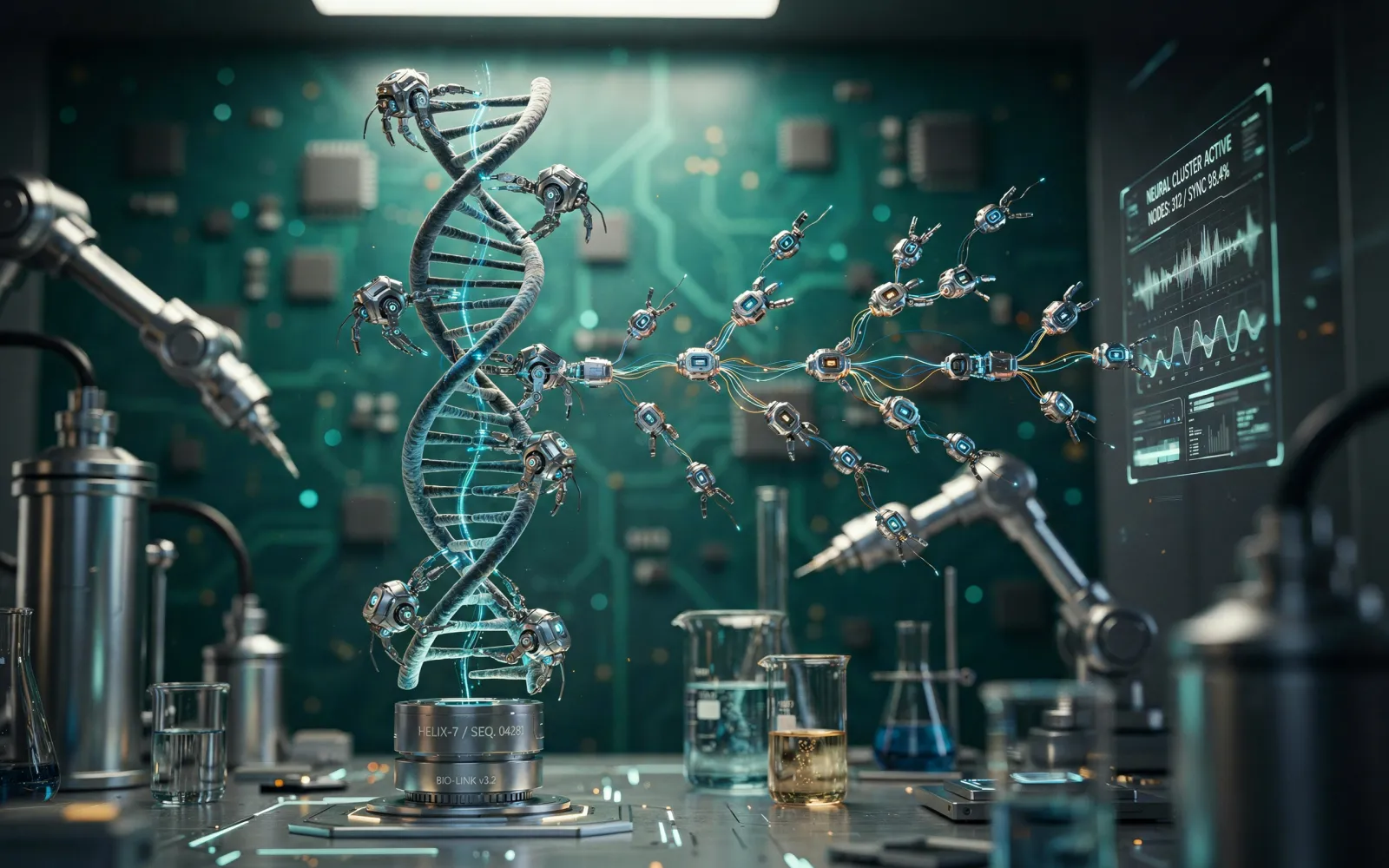
Imagine a swarm of microscopic robots, guided by artificial intelligence, delivering chemotherapy directly to a tumor—precise, efficient, and with fewer side effects. That vision is the focus of Professor Jonathan Heddle’s recent analysis, which argues that programmable nanobiology, when coupled with AI, will become a cornerstone of the emerging Fifth Industrial Revolution.
Nanobiology blends biology and nanotechnology, a relationship that Wikipedia describes as the merger of biological research with nanotech disciplines such as nanodevices, nanoparticles, and nanoscale phenomena. The discipline seeks to apply nanotools to medical and biological problems, refine existing applications, and create new ones like peptoid nanosheets. Recent progress includes microorganisms engineered to synthesize functional nanoparticles under environmentally benign conditions, a development that aligns with the sustainability goals of the Fifth Industrial Revolution.
The most tangible example of programmable nanobiology is the design of nanobots that can navigate the human body and release drugs at precise locations. Review articles detail DNA nanobots and micro‑ or nanorobotic systems that combine controllable transport, targeted delivery, and imaging functions. One study highlights that nanobot activation can be reversible, allowing drug release to be switched on and off on command. Such capabilities could dramatically reduce side effects and improve the efficacy of treatments like chemotherapy, which traditionally suffer from poor targeting.
Artificial intelligence is increasingly woven into these biological systems. A 2024 review on AI in vaccine development shows how machine‑learning models predict epitopes, optimize antigen design, and streamline clinical testing. A 2025 umbrella review consolidates evidence that AI contributes to vaccine discovery, supply‑chain logistics, and public acceptance. AI‑driven protein design, a subfield of computational biology, enables the rapid creation of novel proteins that can serve as vaccine antigens or therapeutic agents. Together, these advances suggest that AI can shorten the time from pathogen discovery to vaccine deployment.
Academic programs are expanding to support this interdisciplinary research. The joint BSc Nanobiology degree offered by TU Delft and Erasmus University Rotterdam, as well as the MSc Nanobiology (Research) program at Erasmus, train students in physics, nanophysics, biology, and medical research. These curricula reflect the growing demand for professionals who can navigate both biological and nanoscale engineering.
The commercial impact of programmable nanobiology is already evident. Nanomedicine sales reached $16 billion in 2015, and the global market was valued at $189.55 billion in 2023, with forecasts that it will exceed $500 billion in the next decade. Companies such as Bristol‑Myers Squibb, Moderna, Nanobiotix, Generation Bio, and Jazz Pharmaceuticals are investing in nanomedical research and drug delivery systems. The industry faces challenges, including toxicity concerns, environmental impact, and the need for regulatory harmonization.
Regulatory bodies are beginning to address these issues. The U.S. National Institutes of Health Common Fund supports nanomedicine development centers, and the National Nanotechnology Initiative encourages the creation of new commercial applications in pharmaceuticals. However, the field still lacks comprehensive guidelines for the safe deployment of nanobots and AI‑generated therapeutics.
In summary, programmable nanobiology and AI are converging to offer precise drug delivery and accelerated vaccine development. The integration of nanotechnology, biology, and machine learning aligns with the sustainability and human‑centered focus of the Fifth Industrial Revolution. While the technology shows promise, unresolved questions remain about safety, regulation, and large‑scale manufacturing. Continued research, cross‑disciplinary education, and coordinated regulatory efforts will determine how quickly these innovations move from laboratory to clinic.
Nanobiology blends biology and nanotechnology, a relationship that Wikipedia describes as the merger of biological research with nanotech disciplines such as nanodevices, nanoparticles, and nanoscale phenomena. The discipline seeks to apply nanotools to medical and biological problems, refine existing applications, and create new ones like peptoid nanosheets. Recent progress includes microorganisms engineered to synthesize functional nanoparticles under environmentally benign conditions, a development that aligns with the sustainability goals of the Fifth Industrial Revolution.
The most tangible example of programmable nanobiology is the design of nanobots that can navigate the human body and release drugs at precise locations. Review articles detail DNA nanobots and micro‑ or nanorobotic systems that combine controllable transport, targeted delivery, and imaging functions. One study highlights that nanobot activation can be reversible, allowing drug release to be switched on and off on command. Such capabilities could dramatically reduce side effects and improve the efficacy of treatments like chemotherapy, which traditionally suffer from poor targeting.
Artificial intelligence is increasingly woven into these biological systems. A 2024 review on AI in vaccine development shows how machine‑learning models predict epitopes, optimize antigen design, and streamline clinical testing. A 2025 umbrella review consolidates evidence that AI contributes to vaccine discovery, supply‑chain logistics, and public acceptance. AI‑driven protein design, a subfield of computational biology, enables the rapid creation of novel proteins that can serve as vaccine antigens or therapeutic agents. Together, these advances suggest that AI can shorten the time from pathogen discovery to vaccine deployment.
Academic programs are expanding to support this interdisciplinary research. The joint BSc Nanobiology degree offered by TU Delft and Erasmus University Rotterdam, as well as the MSc Nanobiology (Research) program at Erasmus, train students in physics, nanophysics, biology, and medical research. These curricula reflect the growing demand for professionals who can navigate both biological and nanoscale engineering.
The commercial impact of programmable nanobiology is already evident. Nanomedicine sales reached $16 billion in 2015, and the global market was valued at $189.55 billion in 2023, with forecasts that it will exceed $500 billion in the next decade. Companies such as Bristol‑Myers Squibb, Moderna, Nanobiotix, Generation Bio, and Jazz Pharmaceuticals are investing in nanomedical research and drug delivery systems. The industry faces challenges, including toxicity concerns, environmental impact, and the need for regulatory harmonization.
Regulatory bodies are beginning to address these issues. The U.S. National Institutes of Health Common Fund supports nanomedicine development centers, and the National Nanotechnology Initiative encourages the creation of new commercial applications in pharmaceuticals. However, the field still lacks comprehensive guidelines for the safe deployment of nanobots and AI‑generated therapeutics.
In summary, programmable nanobiology and AI are converging to offer precise drug delivery and accelerated vaccine development. The integration of nanotechnology, biology, and machine learning aligns with the sustainability and human‑centered focus of the Fifth Industrial Revolution. While the technology shows promise, unresolved questions remain about safety, regulation, and large‑scale manufacturing. Continued research, cross‑disciplinary education, and coordinated regulatory efforts will determine how quickly these innovations move from laboratory to clinic.





