Blab AI
HoYoverse Announces $14.6 B Investment in In-House AI Infrastructure Ahead of Pocket Gamer Connects Barcelona
HoYoverse, the Singapore‑based publisher that manages the global releases of games originally developed by MiHoYo, has announced a $14.6 billion commitment to build its own generative artificial‑intelligence (AI) infrastructure over the next three years. The announcement was made during a private briefing in Beijing and comes as the mobile‑gaming industry prepares for the Pocket Gamer Connects (PGC) conference in Barcelona.
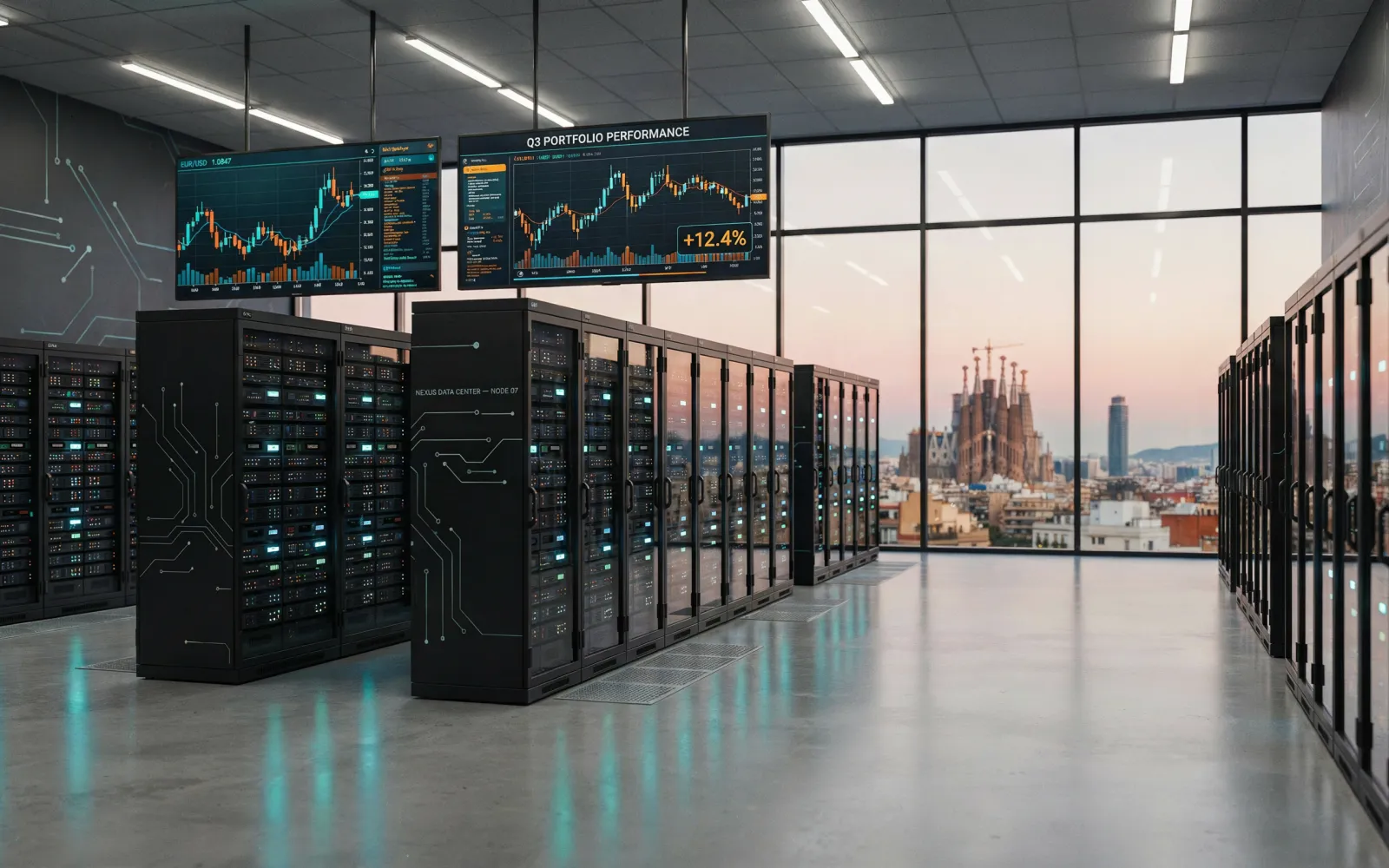
The investment focuses on vertical integration. Rather than licensing large‑language models (LLMs) from commercial providers, HoYoverse will construct proprietary graphics‑processing‑unit (GPU) clusters and develop custom training frameworks for its live‑service titles. The company said the new system will automate coding pipelines and enable real‑time content personalization.
The first game to use the new pipeline is Petit Planet, a life‑simulation title that recently finished a closed beta on mobile and PC. Traditional life‑simulation games use hard‑coded dialogue trees that loop once exhausted. HoYoverse plans to embed its own natural‑language‑processing models directly into the game logic, allowing non‑player characters to engage in unscripted, dynamic conversations. The models will analyze player choices and environmental changes on each planetoid and adapt NPC routines and verbal responses on the fly.
HoYoverse’s co‑founder Liu Wei told doctoral students in Beijing that the project represents a “high‑stakes gamble on long‑term player retention and infrastructure independence.” He added that if the pipeline fails to meet its goals, the studio will view the capital loss as an elaborate fireworks display.
The scale of the investment sets a new baseline for live‑service backend spending. Industry observers note that the move separates HoYoverse from competitors that use automated tools only to reduce production overhead. The company’s decision to build its own AI ecosystem reflects a broader shift in the mobile‑gaming sector toward more sophisticated, data‑driven content creation.
HoYoverse’s history provides context for the investment. The company was founded in 2022 as Cognosphere, a global publishing brand that manages MiHoYo’s content outside China. MiHoYo, established in 2012 in Shanghai, is best known for gacha titles such as Genshin Impact, Hon‑kai: Star Rail, and Tears of Themis. HoYoverse has offices in Singapore, Montreal, Los Angeles, Tokyo, and Seoul.
The announcement comes at a time when live‑service games are pushing infrastructure limits. For example, Wuthering Waves, a free‑to‑play open‑world gacha action RPG released in May 2024, reached nearly 50,000 concurrent players on Steam during a crossover event. The event also tested the limits of mobile hardware, highlighting the need for scalable backend solutions.
While the exact technical details of HoYoverse’s GPU clusters and training frameworks remain undisclosed, the company’s focus on in‑house development signals a commitment to long‑term control over its AI capabilities. The move also underscores the growing importance of AI in game design, from automated content generation to real‑time player personalization.
As the PGC Barcelona conference begins, industry analysts will watch how HoYoverse’s investment translates into product releases and player experiences. The company has not yet announced a launch date for Petit Planet or the full deployment of its AI infrastructure.
In summary, HoYoverse’s $14.6 billion investment in proprietary AI infrastructure marks a significant shift toward vertical integration in the mobile‑gaming sector. The company aims to use the new system to automate coding, personalize content, and improve live‑service scalability, with Petit Planet as the first public test.
The investment focuses on vertical integration. Rather than licensing large‑language models (LLMs) from commercial providers, HoYoverse will construct proprietary graphics‑processing‑unit (GPU) clusters and develop custom training frameworks for its live‑service titles. The company said the new system will automate coding pipelines and enable real‑time content personalization.
The first game to use the new pipeline is Petit Planet, a life‑simulation title that recently finished a closed beta on mobile and PC. Traditional life‑simulation games use hard‑coded dialogue trees that loop once exhausted. HoYoverse plans to embed its own natural‑language‑processing models directly into the game logic, allowing non‑player characters to engage in unscripted, dynamic conversations. The models will analyze player choices and environmental changes on each planetoid and adapt NPC routines and verbal responses on the fly.
HoYoverse’s co‑founder Liu Wei told doctoral students in Beijing that the project represents a “high‑stakes gamble on long‑term player retention and infrastructure independence.” He added that if the pipeline fails to meet its goals, the studio will view the capital loss as an elaborate fireworks display.
The scale of the investment sets a new baseline for live‑service backend spending. Industry observers note that the move separates HoYoverse from competitors that use automated tools only to reduce production overhead. The company’s decision to build its own AI ecosystem reflects a broader shift in the mobile‑gaming sector toward more sophisticated, data‑driven content creation.
HoYoverse’s history provides context for the investment. The company was founded in 2022 as Cognosphere, a global publishing brand that manages MiHoYo’s content outside China. MiHoYo, established in 2012 in Shanghai, is best known for gacha titles such as Genshin Impact, Hon‑kai: Star Rail, and Tears of Themis. HoYoverse has offices in Singapore, Montreal, Los Angeles, Tokyo, and Seoul.
The announcement comes at a time when live‑service games are pushing infrastructure limits. For example, Wuthering Waves, a free‑to‑play open‑world gacha action RPG released in May 2024, reached nearly 50,000 concurrent players on Steam during a crossover event. The event also tested the limits of mobile hardware, highlighting the need for scalable backend solutions.
While the exact technical details of HoYoverse’s GPU clusters and training frameworks remain undisclosed, the company’s focus on in‑house development signals a commitment to long‑term control over its AI capabilities. The move also underscores the growing importance of AI in game design, from automated content generation to real‑time player personalization.
As the PGC Barcelona conference begins, industry analysts will watch how HoYoverse’s investment translates into product releases and player experiences. The company has not yet announced a launch date for Petit Planet or the full deployment of its AI infrastructure.
In summary, HoYoverse’s $14.6 billion investment in proprietary AI infrastructure marks a significant shift toward vertical integration in the mobile‑gaming sector. The company aims to use the new system to automate coding, personalize content, and improve live‑service scalability, with Petit Planet as the first public test.





