Blab AI
AI Drives Higher Recycling Rates as Cities Adopt Smart Sorting and Collection Systems
In mid‑June 2026, the city of Decatur made a decisive move toward smarter waste management, approving a $2.5 million investment in an AI‑powered baler for its recycling facility. Recycling Director Wanda Tyler said the new system will modernize operations and recover more recyclable materials. “The AI system identifies materials much faster than manual sorting,” Tyler explained.
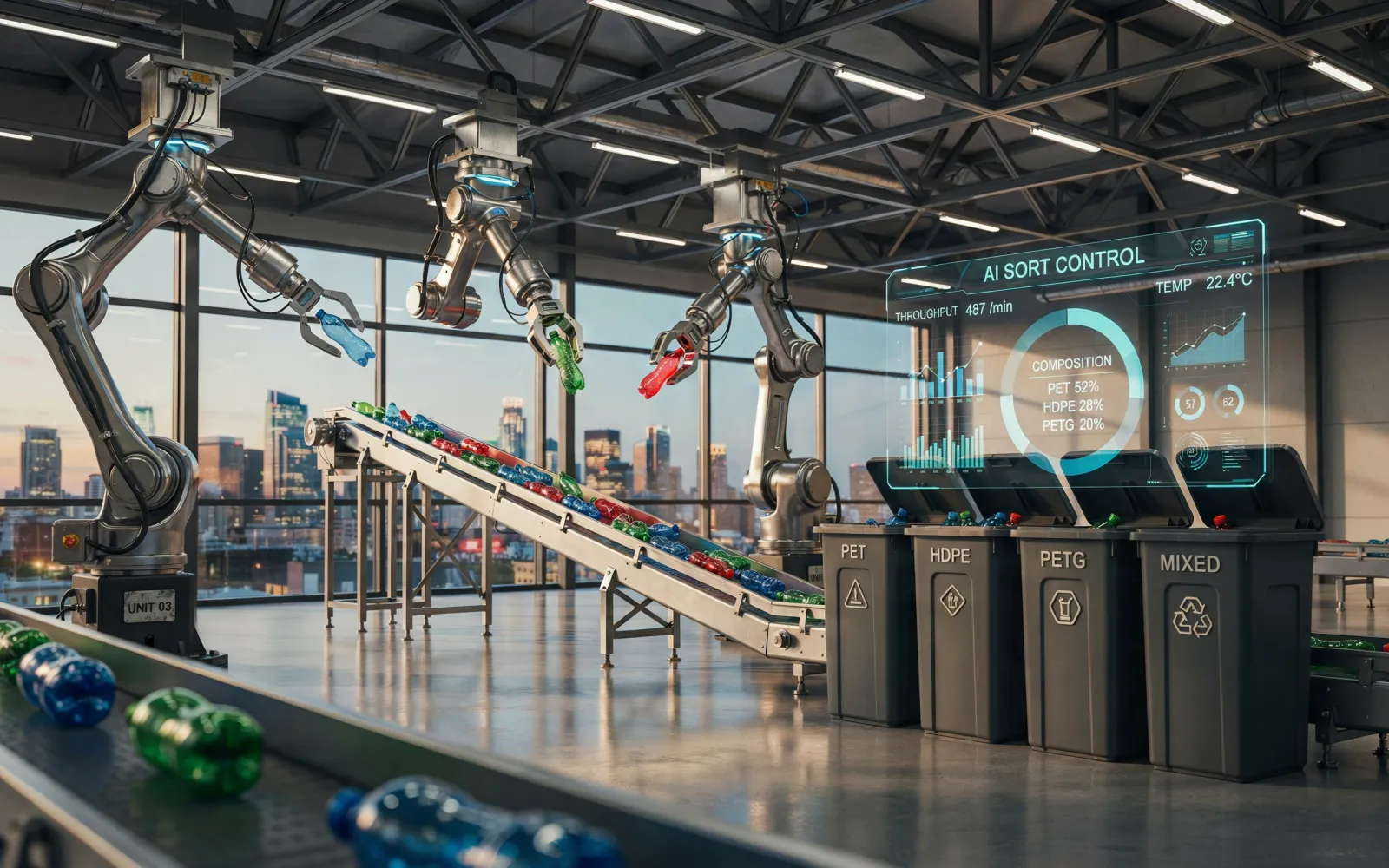
This local upgrade reflects a wider municipal trend of partnering with technology firms to automate waste streams. California‑based startup SortTech announced a collaboration with several city authorities to deploy AI‑enhanced optical sorters that use image‑recognition sensors to separate plastics, glass, and metals. Its solution also includes smart bins that report fullness levels in real time, allowing municipalities to adjust collection schedules.
In the private sector, a LinkedIn post by Felix Hottenstein highlighted the launch of MSS Vivid AI, a product that blends MSS’s optical sorters with research and engineering teams at Recycleye. The system relies on near‑infrared spectroscopy and machine‑learning models to identify a wide range of recyclable materials.
Industry analysts note that AI‑driven sorting can outperform human sorters. A 2026 market report on AI in the recycling industry states that AI systems achieve near‑perfect accuracy across materials while cutting costs and emissions. The same report projects the AI recycling market to reach $20.2 billion by 2026.
Aluminum recycling has been a focus for AI startups. A May 2026 TechCrunch article reported that aluminum prices were up 20 percent and that only about 20 percent of aluminum is currently recovered in the United States. Startups argue that AI can raise recovery rates by identifying aluminum in mixed waste streams more reliably than manual inspection.
Beyond sorting, AI is also being used to optimize collection logistics. Vivatech’s 2026 coverage of smart waste management describes how sensors and AI algorithms can create dynamic routing plans that reduce fuel consumption and lower greenhouse‑gas emissions. The same technology can predict maintenance needs for collection trucks, further cutting downtime.
Several AI‑based solution providers are expanding their offerings. Tracxn’s January 2026 list of robotic waste‑sorting companies includes firms that provide object‑recognition enabled smart bins, waste‑composition monitoring, and software‑controlled robotic arms for automated sorting.
The Environmental Protection Agency’s 2026 recycling‑technology roundup notes that smart collection systems and AI‑enhanced sorting are now being deployed in more than 30 U.S. cities. The report highlights that these technologies are helping municipalities meet stricter waste‑management regulations and sustainability targets.
While the technology shows promise, challenges remain. Data privacy concerns arise when cameras and sensors capture images of private property. Some municipalities have expressed hesitation about the upfront capital required for AI systems, though many point to long‑term savings in labor and fuel costs.
The trend toward AI‑enabled recycling is part of a larger shift toward a circular economy. According to a Medium article on AI‑powered recycling, the technology can create new markets for recycled materials, reduce the need for virgin resources, and improve overall recycling rates.
In summary, AI is becoming a key tool for improving recycling outcomes. From city‑wide smart bins to high‑speed optical sorters, the technology is already delivering higher recovery rates, lower operating costs, and reduced emissions. As more municipalities and private firms adopt AI solutions, the recycling industry is poised for significant growth, with the market expected to exceed $20 billion by the end of 2026.
This local upgrade reflects a wider municipal trend of partnering with technology firms to automate waste streams. California‑based startup SortTech announced a collaboration with several city authorities to deploy AI‑enhanced optical sorters that use image‑recognition sensors to separate plastics, glass, and metals. Its solution also includes smart bins that report fullness levels in real time, allowing municipalities to adjust collection schedules.
In the private sector, a LinkedIn post by Felix Hottenstein highlighted the launch of MSS Vivid AI, a product that blends MSS’s optical sorters with research and engineering teams at Recycleye. The system relies on near‑infrared spectroscopy and machine‑learning models to identify a wide range of recyclable materials.
Industry analysts note that AI‑driven sorting can outperform human sorters. A 2026 market report on AI in the recycling industry states that AI systems achieve near‑perfect accuracy across materials while cutting costs and emissions. The same report projects the AI recycling market to reach $20.2 billion by 2026.
Aluminum recycling has been a focus for AI startups. A May 2026 TechCrunch article reported that aluminum prices were up 20 percent and that only about 20 percent of aluminum is currently recovered in the United States. Startups argue that AI can raise recovery rates by identifying aluminum in mixed waste streams more reliably than manual inspection.
Beyond sorting, AI is also being used to optimize collection logistics. Vivatech’s 2026 coverage of smart waste management describes how sensors and AI algorithms can create dynamic routing plans that reduce fuel consumption and lower greenhouse‑gas emissions. The same technology can predict maintenance needs for collection trucks, further cutting downtime.
Several AI‑based solution providers are expanding their offerings. Tracxn’s January 2026 list of robotic waste‑sorting companies includes firms that provide object‑recognition enabled smart bins, waste‑composition monitoring, and software‑controlled robotic arms for automated sorting.
The Environmental Protection Agency’s 2026 recycling‑technology roundup notes that smart collection systems and AI‑enhanced sorting are now being deployed in more than 30 U.S. cities. The report highlights that these technologies are helping municipalities meet stricter waste‑management regulations and sustainability targets.
While the technology shows promise, challenges remain. Data privacy concerns arise when cameras and sensors capture images of private property. Some municipalities have expressed hesitation about the upfront capital required for AI systems, though many point to long‑term savings in labor and fuel costs.
The trend toward AI‑enabled recycling is part of a larger shift toward a circular economy. According to a Medium article on AI‑powered recycling, the technology can create new markets for recycled materials, reduce the need for virgin resources, and improve overall recycling rates.
In summary, AI is becoming a key tool for improving recycling outcomes. From city‑wide smart bins to high‑speed optical sorters, the technology is already delivering higher recovery rates, lower operating costs, and reduced emissions. As more municipalities and private firms adopt AI solutions, the recycling industry is poised for significant growth, with the market expected to exceed $20 billion by the end of 2026.





