Blab AI
Oregon Department of Forestry Deploys AI-Powered Sound Sensors to Monitor Threatened Birds
In Oregon’s towering old‑growth forests, a quiet revolution is underway—AI‑powered microphones are replacing human observers and promising a more efficient way to count the state’s most vulnerable birds.
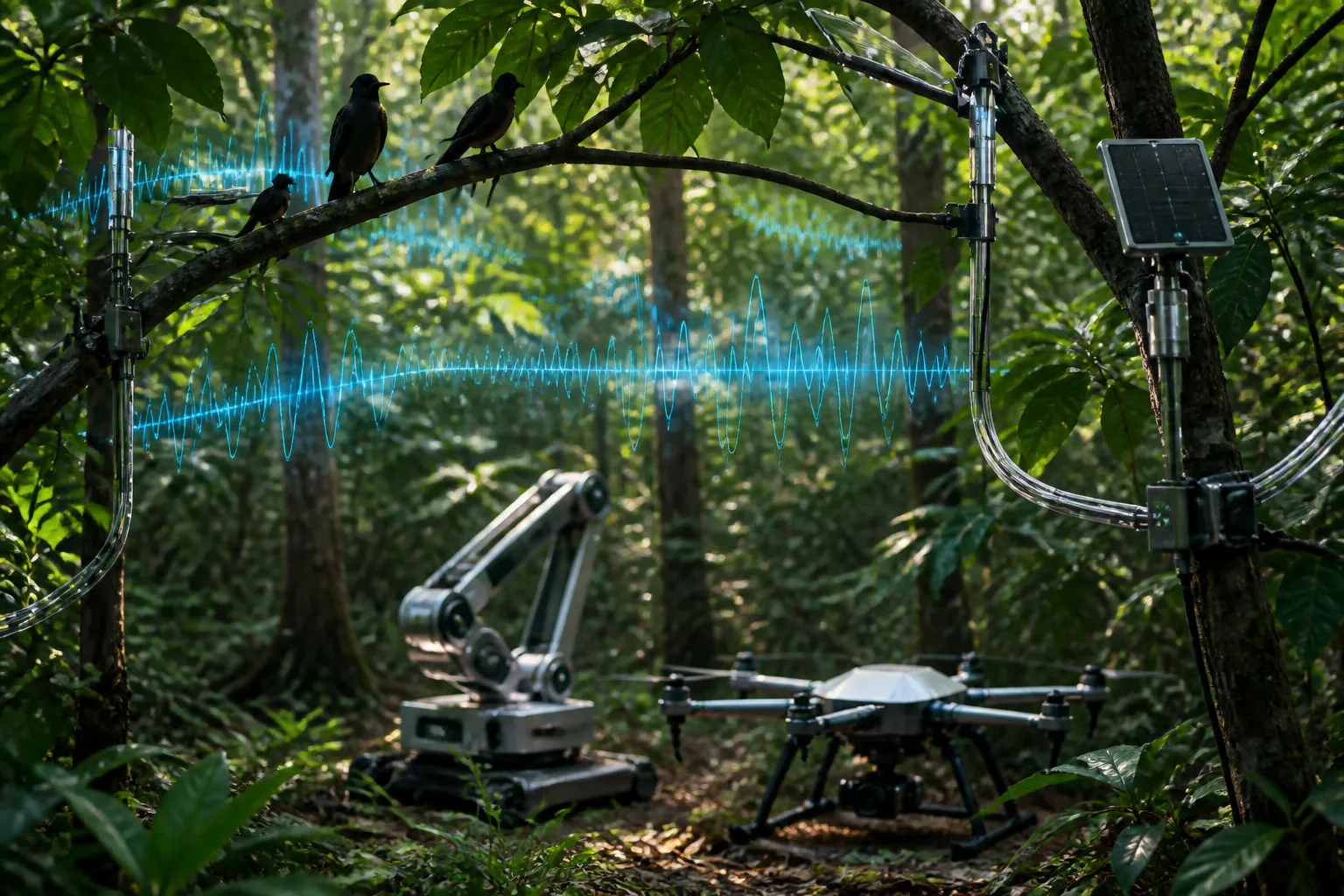
According to a report by OPB’s Kristian Foden‑Vencil, the Oregon Department of Forestry (ODF) is now using autonomous recording units (ARUs) that collect audio data in the wild and feed the recordings into machine‑learning algorithms that identify bird calls. The initiative targets species listed as threatened, notably the northern spotted owl and the marbled murrelet, whose presence signals healthy old‑growth habitat.
A single ARU costs between $600 and $700, according to ODF biologist Corey Grinnell. Each unit is equipped with rechargeable batteries, memory cards, and the software needed to store and transmit data. The department currently spends millions of dollars on callback surveys, in which biologists travel to field sites and mimic bird calls to count responses. By automating the recording process, the ARU‑based approach is expected to cut labor costs and increase the amount of data collected.
ARUs have long been a staple of ecological research. Studies published in 2015 and 2018 demonstrated that these devices can record sound in a variety of environments and are increasingly used for acoustic surveys of birds. One paper noted that ARUs can save up to 44 work days for researchers by automating data collection. The ODF’s use of AI to analyze the recordings builds on this foundation, allowing the department to process large volumes of audio quickly and to identify species with high precision.
The AI system compares recorded sounds to a library of known bird calls. When a match is found, the system logs the species and the time of the call. Repeated detections in a given area can be used to estimate population density and to track changes over time. While the department has not released specific performance metrics for its AI model, the approach aligns with best practices in bioacoustic monitoring.
Beyond bird monitoring, the ODF has deployed AI‑equipped aircraft and drones for wildfire detection and forest health surveys. Those systems use thermal imaging, infrared cameras, and augmented‑reality mapping to locate fires and monitor pest damage. The sound‑based wildlife program is part of a broader effort to integrate AI into forest management.
The move to AI‑driven monitoring is significant for several reasons. First, it reduces the need for costly field trips and callback surveys. Second, it provides continuous data streams that can capture seasonal variations in bird activity. Finally, it offers a scalable solution that can be expanded to other species and regions.
Biologist Corey Grinnell said the technology will help the agency meet its mandate to protect Oregon’s forest ecosystems. The ODF has not yet announced a public release date for the AI system, but it is expected to become operational in the next 12 months.
In the meantime, the ODF continues to monitor its threatened species through a combination of traditional fieldwork and new technology. The department’s use of autonomous recording units and AI represents a step toward more efficient, data‑driven conservation in Oregon’s forests. The initiative illustrates how AI can support environmental stewardship by providing reliable, high‑volume data that would be difficult to obtain through manual methods alone. As the department moves forward, it will likely share its findings with other agencies and researchers interested in applying similar techniques to wildlife monitoring.
The ODF’s AI‑based wildlife monitoring program is a clear example of how technology can enhance conservation efforts. By reducing labor costs and increasing data coverage, the department is better positioned to protect species like the northern spotted owl and the marbled murrelet for future generations.
According to a report by OPB’s Kristian Foden‑Vencil, the Oregon Department of Forestry (ODF) is now using autonomous recording units (ARUs) that collect audio data in the wild and feed the recordings into machine‑learning algorithms that identify bird calls. The initiative targets species listed as threatened, notably the northern spotted owl and the marbled murrelet, whose presence signals healthy old‑growth habitat.
A single ARU costs between $600 and $700, according to ODF biologist Corey Grinnell. Each unit is equipped with rechargeable batteries, memory cards, and the software needed to store and transmit data. The department currently spends millions of dollars on callback surveys, in which biologists travel to field sites and mimic bird calls to count responses. By automating the recording process, the ARU‑based approach is expected to cut labor costs and increase the amount of data collected.
ARUs have long been a staple of ecological research. Studies published in 2015 and 2018 demonstrated that these devices can record sound in a variety of environments and are increasingly used for acoustic surveys of birds. One paper noted that ARUs can save up to 44 work days for researchers by automating data collection. The ODF’s use of AI to analyze the recordings builds on this foundation, allowing the department to process large volumes of audio quickly and to identify species with high precision.
The AI system compares recorded sounds to a library of known bird calls. When a match is found, the system logs the species and the time of the call. Repeated detections in a given area can be used to estimate population density and to track changes over time. While the department has not released specific performance metrics for its AI model, the approach aligns with best practices in bioacoustic monitoring.
Beyond bird monitoring, the ODF has deployed AI‑equipped aircraft and drones for wildfire detection and forest health surveys. Those systems use thermal imaging, infrared cameras, and augmented‑reality mapping to locate fires and monitor pest damage. The sound‑based wildlife program is part of a broader effort to integrate AI into forest management.
The move to AI‑driven monitoring is significant for several reasons. First, it reduces the need for costly field trips and callback surveys. Second, it provides continuous data streams that can capture seasonal variations in bird activity. Finally, it offers a scalable solution that can be expanded to other species and regions.
Biologist Corey Grinnell said the technology will help the agency meet its mandate to protect Oregon’s forest ecosystems. The ODF has not yet announced a public release date for the AI system, but it is expected to become operational in the next 12 months.
In the meantime, the ODF continues to monitor its threatened species through a combination of traditional fieldwork and new technology. The department’s use of autonomous recording units and AI represents a step toward more efficient, data‑driven conservation in Oregon’s forests. The initiative illustrates how AI can support environmental stewardship by providing reliable, high‑volume data that would be difficult to obtain through manual methods alone. As the department moves forward, it will likely share its findings with other agencies and researchers interested in applying similar techniques to wildlife monitoring.
The ODF’s AI‑based wildlife monitoring program is a clear example of how technology can enhance conservation efforts. By reducing labor costs and increasing data coverage, the department is better positioned to protect species like the northern spotted owl and the marbled murrelet for future generations.





