Blab AI
Arm Holdings Launches First In-House AGI CPU, Shifting from Licensing to AI Data Center Competition
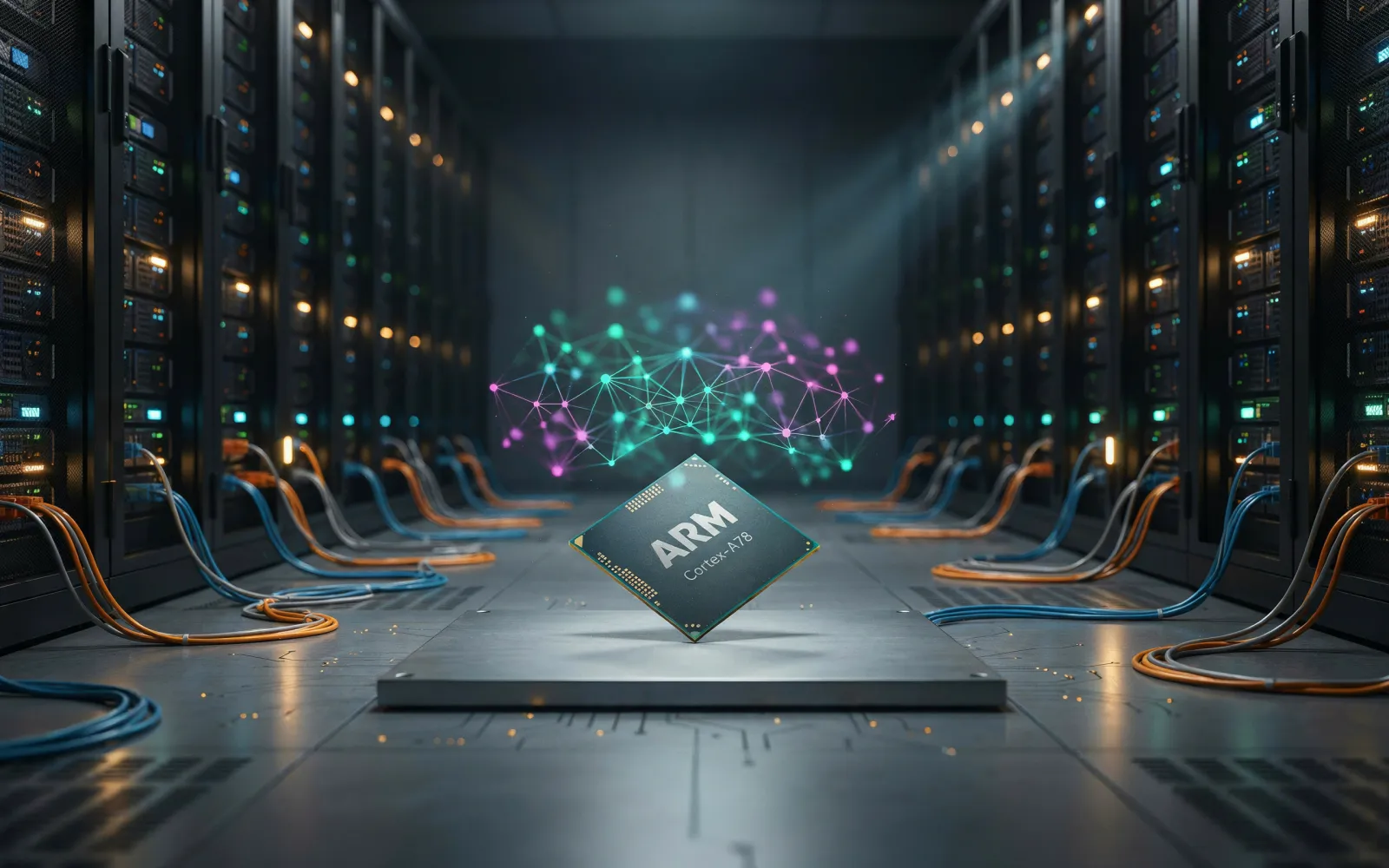
Arm Holdings plc, the British semiconductor and software design company based in Cambridge, announced on March 24 2026 the launch of its first in‑house chip, the Arm AGI CPU. The new processor is a production‑ready central processing unit designed specifically for inference workloads in AI data centers.
The AGI CPU marks a departure from Arm’s traditional business model of licensing CPU and GPU designs to other manufacturers. According to the company’s announcement, the chip was fabricated in Austin, Texas, on March 6 2026 and is the first silicon product Arm has produced in its 35‑year history.
Arm’s move comes as the company expands its compute platform into silicon products. The AGI CPU is intended to support AI agent infrastructure, a role that places it directly in the $70 billion data‑center processor market. In the same announcement, Arm said it had secured multi‑year commitments from hyperscalers Meta and Oracle that tie their server roadmaps to the AGI CPU platform.
The company’s shift has attracted attention from analysts. Following the announcement, several analysts raised their price targets for the stock and described Arm as a key player in next‑generation AI server infrastructure. The stock closed at $380.81 on the Nasdaq, up 11.0 % over the past seven days, 72.1 % over the past month, and 231.9 % year‑to‑date. Over the past year, the share price has risen 180.9 %, reflecting the market’s focus on the company’s new AI‑centric strategy.
Arm’s current price‑to‑earnings ratio is approximately 450, compared with an industry average of about 71. The company’s shares trade roughly 48 % above the analyst price‑target midpoint of $257.30. The high valuation reflects investor expectations that the AGI CPU will generate new revenue streams beyond licensing fees.
The AGI CPU launch also raises questions about how value is distributed across the chip stack. By embedding its CPU design directly into hyperscaler roadmaps, Arm is positioning itself alongside GPU vendors and cloud platforms in the AI server build‑out process. The long‑term agreements with Meta and Oracle suggest that the company’s architecture will become a core component of future AI data‑center designs.
Arm’s history has been dominated by licensing. The company designs CPU cores that implement the ARM instruction set architecture and sells those designs to other firms, which then manufacture the physical chips. Since 2016, Arm has been majority owned by SoftBank Group, and it completed an initial public offering on the Nasdaq in 2023, valuing the company at $54.5 billion.
The AGI CPU launch is the first time Arm has taken the step from design to silicon production. The company’s announcement highlighted that the chip is production‑ready and built for inference workloads, a key requirement for AI data‑center operators.
In summary, Arm’s AGI CPU launch signals a strategic pivot from a licensing‑only model to active participation in the AI data‑center processor market. The company has secured commitments from major hyperscalers, and the market has responded with significant stock price gains and revised analyst expectations. The next phase will involve monitoring how the AGI CPU is adopted in production environments, how it affects Arm’s revenue mix, and how the company’s role evolves relative to GPU vendors and cloud providers.
The company has not yet announced a specific production timeline for the AGI CPU, nor has it detailed the exact performance specifications. Investors and industry observers will be watching for further updates on deployment schedules, partnership expansions, and potential regulatory developments that could impact the AI hardware ecosystem.
The AGI CPU marks a departure from Arm’s traditional business model of licensing CPU and GPU designs to other manufacturers. According to the company’s announcement, the chip was fabricated in Austin, Texas, on March 6 2026 and is the first silicon product Arm has produced in its 35‑year history.
Arm’s move comes as the company expands its compute platform into silicon products. The AGI CPU is intended to support AI agent infrastructure, a role that places it directly in the $70 billion data‑center processor market. In the same announcement, Arm said it had secured multi‑year commitments from hyperscalers Meta and Oracle that tie their server roadmaps to the AGI CPU platform.
The company’s shift has attracted attention from analysts. Following the announcement, several analysts raised their price targets for the stock and described Arm as a key player in next‑generation AI server infrastructure. The stock closed at $380.81 on the Nasdaq, up 11.0 % over the past seven days, 72.1 % over the past month, and 231.9 % year‑to‑date. Over the past year, the share price has risen 180.9 %, reflecting the market’s focus on the company’s new AI‑centric strategy.
Arm’s current price‑to‑earnings ratio is approximately 450, compared with an industry average of about 71. The company’s shares trade roughly 48 % above the analyst price‑target midpoint of $257.30. The high valuation reflects investor expectations that the AGI CPU will generate new revenue streams beyond licensing fees.
The AGI CPU launch also raises questions about how value is distributed across the chip stack. By embedding its CPU design directly into hyperscaler roadmaps, Arm is positioning itself alongside GPU vendors and cloud platforms in the AI server build‑out process. The long‑term agreements with Meta and Oracle suggest that the company’s architecture will become a core component of future AI data‑center designs.
Arm’s history has been dominated by licensing. The company designs CPU cores that implement the ARM instruction set architecture and sells those designs to other firms, which then manufacture the physical chips. Since 2016, Arm has been majority owned by SoftBank Group, and it completed an initial public offering on the Nasdaq in 2023, valuing the company at $54.5 billion.
The AGI CPU launch is the first time Arm has taken the step from design to silicon production. The company’s announcement highlighted that the chip is production‑ready and built for inference workloads, a key requirement for AI data‑center operators.
In summary, Arm’s AGI CPU launch signals a strategic pivot from a licensing‑only model to active participation in the AI data‑center processor market. The company has secured commitments from major hyperscalers, and the market has responded with significant stock price gains and revised analyst expectations. The next phase will involve monitoring how the AGI CPU is adopted in production environments, how it affects Arm’s revenue mix, and how the company’s role evolves relative to GPU vendors and cloud providers.
The company has not yet announced a specific production timeline for the AGI CPU, nor has it detailed the exact performance specifications. Investors and industry observers will be watching for further updates on deployment schedules, partnership expansions, and potential regulatory developments that could impact the AI hardware ecosystem.





