Blab AI
AI and Robots Set to Transform European Auto Manufacturing by 2030, Industry Leaders Say
At the Automotive News Europe Congress in Brussels on June 10, senior manufacturing executives warned that artificial intelligence (AI) and robotics will overhaul assembly and design work across the continent’s auto sector.
The speakers projected that by 2030 humanoid robots will handle most standing tasks on factory floors, while existing industrial robots will receive AI‑powered programming that gives them unprecedented adaptability.
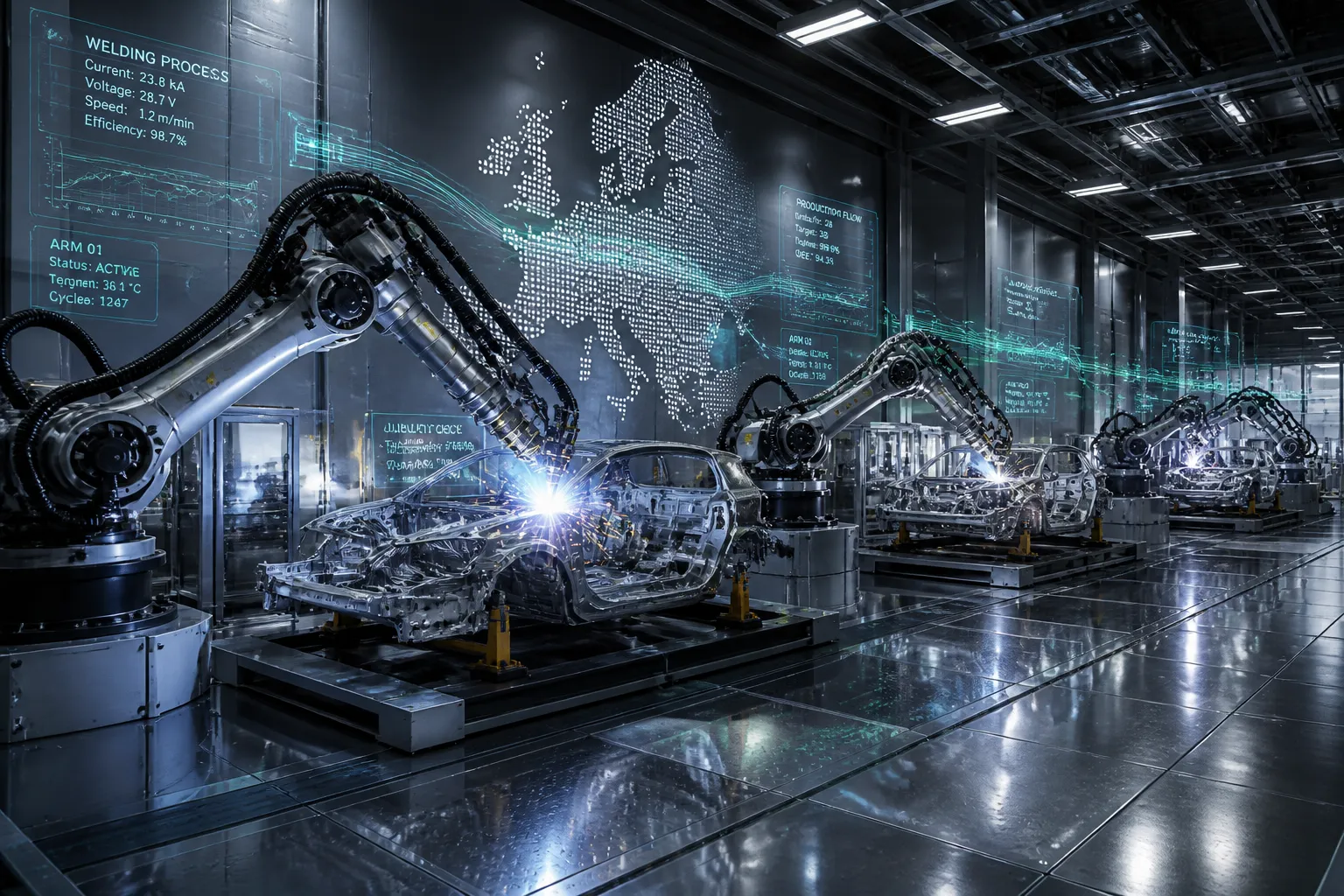
The conference highlighted a shift from hard‑coded machines to flexible, AI‑enabled systems. Older industrial robots—long used for welding, painting and pick‑and‑place—will gain software that lets them adjust to changing production requirements without manual re‑programming. Humanoid robots, designed to mimic human body geometry, are expected to take on tasks that benefit from a human‑like presence, such as quality inspection and light assembly.
AI’s influence extends beyond the shop floor. Peter Stechel, Audi’s head of data‑driven production and supply chain, said that AI will eventually dominate vehicle design, taking over nearly all drafting and simulation work. He added that AI will also refine existing equipment, enabling new techniques that teach older robots to work more efficiently.
Market competition also entered the discussion. Volvo Car’s chief commercial officer, Erik Severinson, urged European automakers to treat the rising presence of Chinese manufacturers as a learning opportunity. He noted that competition can drive improvement, a point underscored by Volvo’s ownership by China’s Geely Holding, which gives the Swedish brand access to technology and processes developed by its parent company.
The statements from the conference illustrate several key trends. First, AI integration into robotic systems is moving from niche research to mainstream industrial practice. Second, human workers are expected to shift from repetitive, standing tasks to supervisory and maintenance roles. Third, design processes are becoming increasingly data‑driven, reducing the need for manual drafting and simulation.
Industry analysts warned that adopting AI‑enabled robots will require significant investment in software, sensors and data infrastructure. Companies will need to train personnel to manage, maintain and interpret the data these systems generate. The transition may also raise questions about workforce displacement and the need for reskilling.
Volvo’s emphasis on competition from Chinese automakers reflects a broader concern among European manufacturers about market share and technology parity. The company’s connection to Geely could provide a strategic advantage, but it also highlights the complex relationships between global supply chains and national markets.
As of the conference, no specific timelines were announced for the rollout of humanoid robots or the full deployment of AI in design. Executives indicated that the 2030 horizon is an estimate based on current development trajectories. The industry remains in a phase of rapid experimentation, with pilot projects underway at several OEMs.
Key unresolved issues include the pace of regulatory approval for autonomous robotic systems, the development of standards for AI safety in manufacturing, and the economic impact on the labor market. Companies are also exploring how to integrate AI tools with existing legacy equipment without disrupting production.
In summary, the Automotive News Europe Congress underscored a forthcoming transformation in automotive manufacturing. AI and robotics are set to replace many standing assembly jobs and to take over vehicle design by 2030. The industry will need to address technical, economic and workforce challenges as it moves toward a more automated future.
The speakers projected that by 2030 humanoid robots will handle most standing tasks on factory floors, while existing industrial robots will receive AI‑powered programming that gives them unprecedented adaptability.
The conference highlighted a shift from hard‑coded machines to flexible, AI‑enabled systems. Older industrial robots—long used for welding, painting and pick‑and‑place—will gain software that lets them adjust to changing production requirements without manual re‑programming. Humanoid robots, designed to mimic human body geometry, are expected to take on tasks that benefit from a human‑like presence, such as quality inspection and light assembly.
AI’s influence extends beyond the shop floor. Peter Stechel, Audi’s head of data‑driven production and supply chain, said that AI will eventually dominate vehicle design, taking over nearly all drafting and simulation work. He added that AI will also refine existing equipment, enabling new techniques that teach older robots to work more efficiently.
Market competition also entered the discussion. Volvo Car’s chief commercial officer, Erik Severinson, urged European automakers to treat the rising presence of Chinese manufacturers as a learning opportunity. He noted that competition can drive improvement, a point underscored by Volvo’s ownership by China’s Geely Holding, which gives the Swedish brand access to technology and processes developed by its parent company.
The statements from the conference illustrate several key trends. First, AI integration into robotic systems is moving from niche research to mainstream industrial practice. Second, human workers are expected to shift from repetitive, standing tasks to supervisory and maintenance roles. Third, design processes are becoming increasingly data‑driven, reducing the need for manual drafting and simulation.
Industry analysts warned that adopting AI‑enabled robots will require significant investment in software, sensors and data infrastructure. Companies will need to train personnel to manage, maintain and interpret the data these systems generate. The transition may also raise questions about workforce displacement and the need for reskilling.
Volvo’s emphasis on competition from Chinese automakers reflects a broader concern among European manufacturers about market share and technology parity. The company’s connection to Geely could provide a strategic advantage, but it also highlights the complex relationships between global supply chains and national markets.
As of the conference, no specific timelines were announced for the rollout of humanoid robots or the full deployment of AI in design. Executives indicated that the 2030 horizon is an estimate based on current development trajectories. The industry remains in a phase of rapid experimentation, with pilot projects underway at several OEMs.
Key unresolved issues include the pace of regulatory approval for autonomous robotic systems, the development of standards for AI safety in manufacturing, and the economic impact on the labor market. Companies are also exploring how to integrate AI tools with existing legacy equipment without disrupting production.
In summary, the Automotive News Europe Congress underscored a forthcoming transformation in automotive manufacturing. AI and robotics are set to replace many standing assembly jobs and to take over vehicle design by 2030. The industry will need to address technical, economic and workforce challenges as it moves toward a more automated future.





