Blab AI
Palladyne AI and A.I. Automation Showcase Embodied AI for Hazard-Safe Surface Finishing at IMTS
At the International Manufacturing Technology Show (IMTS) in Chicago, a session on September 17 at 11:00 a.m. in room W192‑B highlighted how embodied artificial intelligence (AI) can transform surface preparation and finishing in hazardous manufacturing environments.
Manufacturers face a “great margin squeeze” as labor shortages, rising costs and volatile supply chains pressure productivity, quality and overall equipment effectiveness. Surface finishing, which often involves flammable vapors, combustible particulates and hazardous chemicals, adds safety risks that can stall production or trigger costly rework. The session, titled “Embodied AI for Surface Preparation and Finishing,” addressed these challenges.
Speakers Matthew Muta, President of Commercial and Industrial at Palladyne AI Corp, and Michael Kreps, Vice‑President of Operations at A.I. Automation LLC, presented how embodied AI enables robotic systems to perceive surface conditions, reason through real‑world variability and adapt motion strategies in real time. The goal is to eliminate the need for repeated reprogramming that can stall production or drive costly rework.
Palladyne AI’s software platform, Palladyne IQ, is designed to run on the edge and reduce the effort required to program and deploy industrial robots and collaborative robots (cobots). According to the company’s public statements, the platform allows robots to quickly achieve autonomous capabilities even in dynamic or complex environments.
A.I. Automation’s 20XP Explosion‑Proof Cobot, based on the Universal Robotics UR20, is the first collaborative robot certified for use in hazardous locations. The unit is designed for paint booths and other finishing environments where safety certification is mandatory.
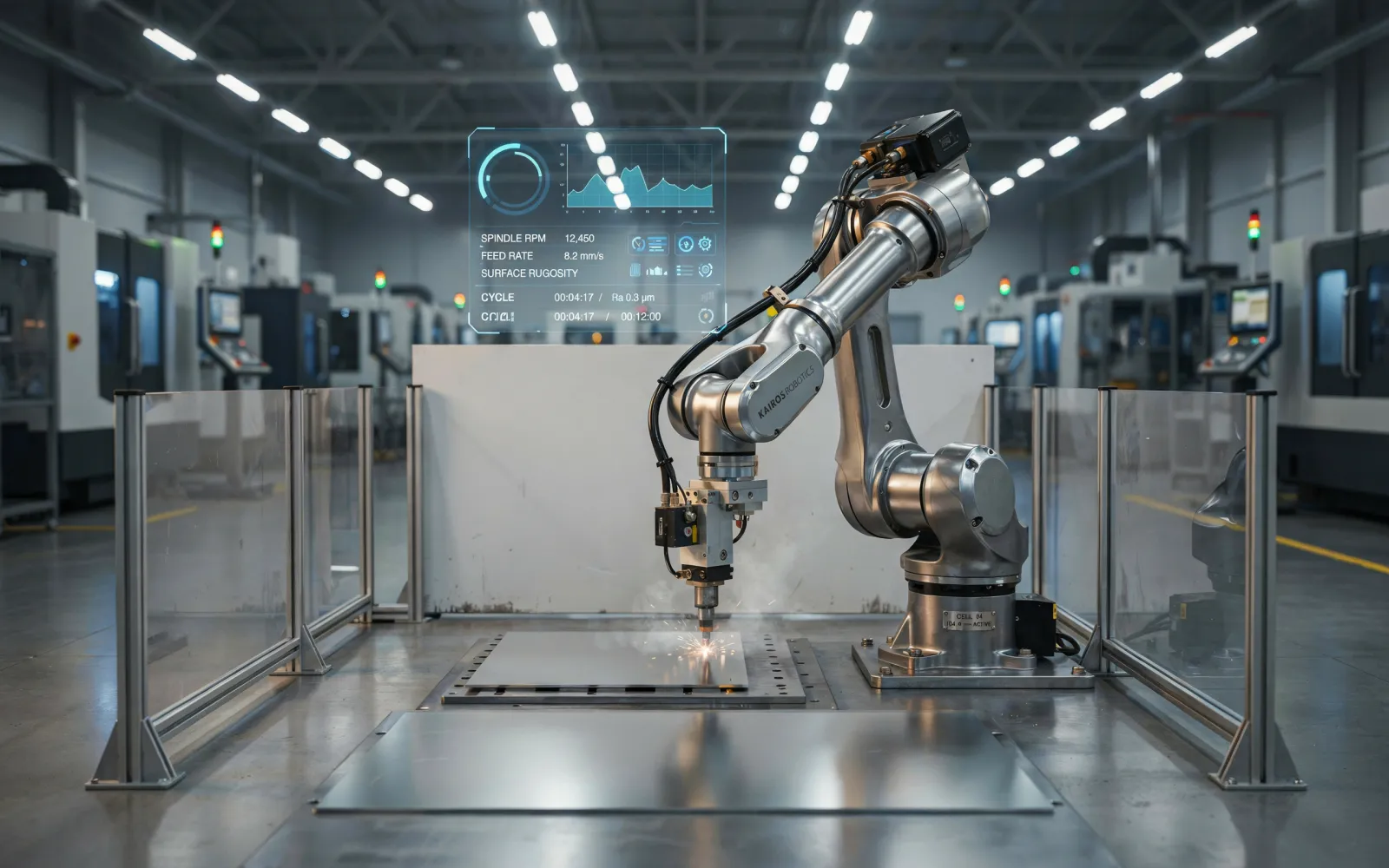
The speakers discussed how safety‑certified, explosion‑proof robotic systems can be enhanced with adaptive AI software to automate through variability while maintaining safety compliance. By combining certified robotics with closed‑loop intelligence, manufacturers can reduce worker exposure to hazardous conditions, shorten changeovers, improve first‑pass yield and stabilize high‑mix finishing operations.
Matt Muta, who joined Palladyne AI as President of Commercial and Industrial on March 2 2026, brings experience from Microsoft, Delta Air Lines and UnitedHealth Group. His background includes leading enterprise software adoption and managing high‑value customer deployments in regulated environments.
Michael Kreps, with A.I. Automation, highlighted the company’s focus on safety‑first robotics. The 20XP cobot’s explosion‑proof certification allows it to operate in environments that were previously off‑limits to conventional robots.
The session emphasized that embodied AI can transform surface finishing and cleaning into a scalable, resilient, and margin‑protecting manufacturing capability. Attendees were shown real‑world examples of how the technology works in paint booths and other hazardous finishing environments.
Palladyne AI has received additional funding from the U.S. Air Force for surface finishing projects, and the company has been working on extending high‑power autonomous surface blasting for advanced aircraft components. These projects demonstrate the broader applicability of embodied AI beyond commercial manufacturing.
The session concluded with a discussion of the practical steps manufacturers can take to adopt embodied AI in their finishing processes, including selecting safety‑certified hardware, integrating AI software, and establishing safety‑focused workflows.
The presentation at IMTS underscores the growing importance of combining safety certification with adaptive AI to meet the twin demands of productivity and worker safety in high‑risk manufacturing settings.
In summary, Palladyne AI and A.I. Automation are positioning embodied AI as a key enabler for safer, more efficient surface finishing. The technology promises to reduce labor costs, improve yield, and protect workers in hazardous environments, addressing the current margin squeeze that many manufacturers face.
Manufacturers face a “great margin squeeze” as labor shortages, rising costs and volatile supply chains pressure productivity, quality and overall equipment effectiveness. Surface finishing, which often involves flammable vapors, combustible particulates and hazardous chemicals, adds safety risks that can stall production or trigger costly rework. The session, titled “Embodied AI for Surface Preparation and Finishing,” addressed these challenges.
Speakers Matthew Muta, President of Commercial and Industrial at Palladyne AI Corp, and Michael Kreps, Vice‑President of Operations at A.I. Automation LLC, presented how embodied AI enables robotic systems to perceive surface conditions, reason through real‑world variability and adapt motion strategies in real time. The goal is to eliminate the need for repeated reprogramming that can stall production or drive costly rework.
Palladyne AI’s software platform, Palladyne IQ, is designed to run on the edge and reduce the effort required to program and deploy industrial robots and collaborative robots (cobots). According to the company’s public statements, the platform allows robots to quickly achieve autonomous capabilities even in dynamic or complex environments.
A.I. Automation’s 20XP Explosion‑Proof Cobot, based on the Universal Robotics UR20, is the first collaborative robot certified for use in hazardous locations. The unit is designed for paint booths and other finishing environments where safety certification is mandatory.
The speakers discussed how safety‑certified, explosion‑proof robotic systems can be enhanced with adaptive AI software to automate through variability while maintaining safety compliance. By combining certified robotics with closed‑loop intelligence, manufacturers can reduce worker exposure to hazardous conditions, shorten changeovers, improve first‑pass yield and stabilize high‑mix finishing operations.
Matt Muta, who joined Palladyne AI as President of Commercial and Industrial on March 2 2026, brings experience from Microsoft, Delta Air Lines and UnitedHealth Group. His background includes leading enterprise software adoption and managing high‑value customer deployments in regulated environments.
Michael Kreps, with A.I. Automation, highlighted the company’s focus on safety‑first robotics. The 20XP cobot’s explosion‑proof certification allows it to operate in environments that were previously off‑limits to conventional robots.
The session emphasized that embodied AI can transform surface finishing and cleaning into a scalable, resilient, and margin‑protecting manufacturing capability. Attendees were shown real‑world examples of how the technology works in paint booths and other hazardous finishing environments.
Palladyne AI has received additional funding from the U.S. Air Force for surface finishing projects, and the company has been working on extending high‑power autonomous surface blasting for advanced aircraft components. These projects demonstrate the broader applicability of embodied AI beyond commercial manufacturing.
The session concluded with a discussion of the practical steps manufacturers can take to adopt embodied AI in their finishing processes, including selecting safety‑certified hardware, integrating AI software, and establishing safety‑focused workflows.
The presentation at IMTS underscores the growing importance of combining safety certification with adaptive AI to meet the twin demands of productivity and worker safety in high‑risk manufacturing settings.
In summary, Palladyne AI and A.I. Automation are positioning embodied AI as a key enabler for safer, more efficient surface finishing. The technology promises to reduce labor costs, improve yield, and protect workers in hazardous environments, addressing the current margin squeeze that many manufacturers face.





