Blab AI
Red Lobster CEO Announces AI-Driven Turnaround Strategy After Bankruptcy Filing
After filing for Chapter 11 in May 2024, Red Lobster Hospitality LLC is turning a new page—this time powered by artificial intelligence. On The Black Money Tree Podcast, CEO Damola Adamolekun, who steered P.F. Chang’s to more than $1 billion in annual revenue, declared his ambition: "Red Lobster will become the most AI‑forward restaurant company that exists." The statement follows the chain’s closure of at least 99 restaurants and the securing of over $100 million in financing commitments from lenders.
Adamolekun acknowledged that many people fear or hesitate to engage with AI, yet he insisted the industry is changing "in a tremendous way." To stay competitive, he said the company must adopt AI at every level. The CEO’s remarks arrive as the new leadership team focuses on streamlining operations, cutting costs, and restoring profitability.
Chief Operating Officer Larry Konecny has already mapped a concrete use case. He described an AI‑generated performance deck that would arrive at a manager’s desk before a store visit, pulling all relevant metrics into a single view. "I want to give managers everything I need right there, instead of having my team pull it," Adamolekun quoted Konecny as saying. The approach would shave hours of manual reporting time and sharpen decision‑making.
Beyond the COO’s proposal, Adamolekun urged every department to hunt for practical AI applications. He highlighted human resources as a prime candidate: AI could assist with evaluations, calculations, presentations, and training materials. "AI learns from past data and improves accuracy over time," the CEO explained, emphasizing that technology would help employees perform better.
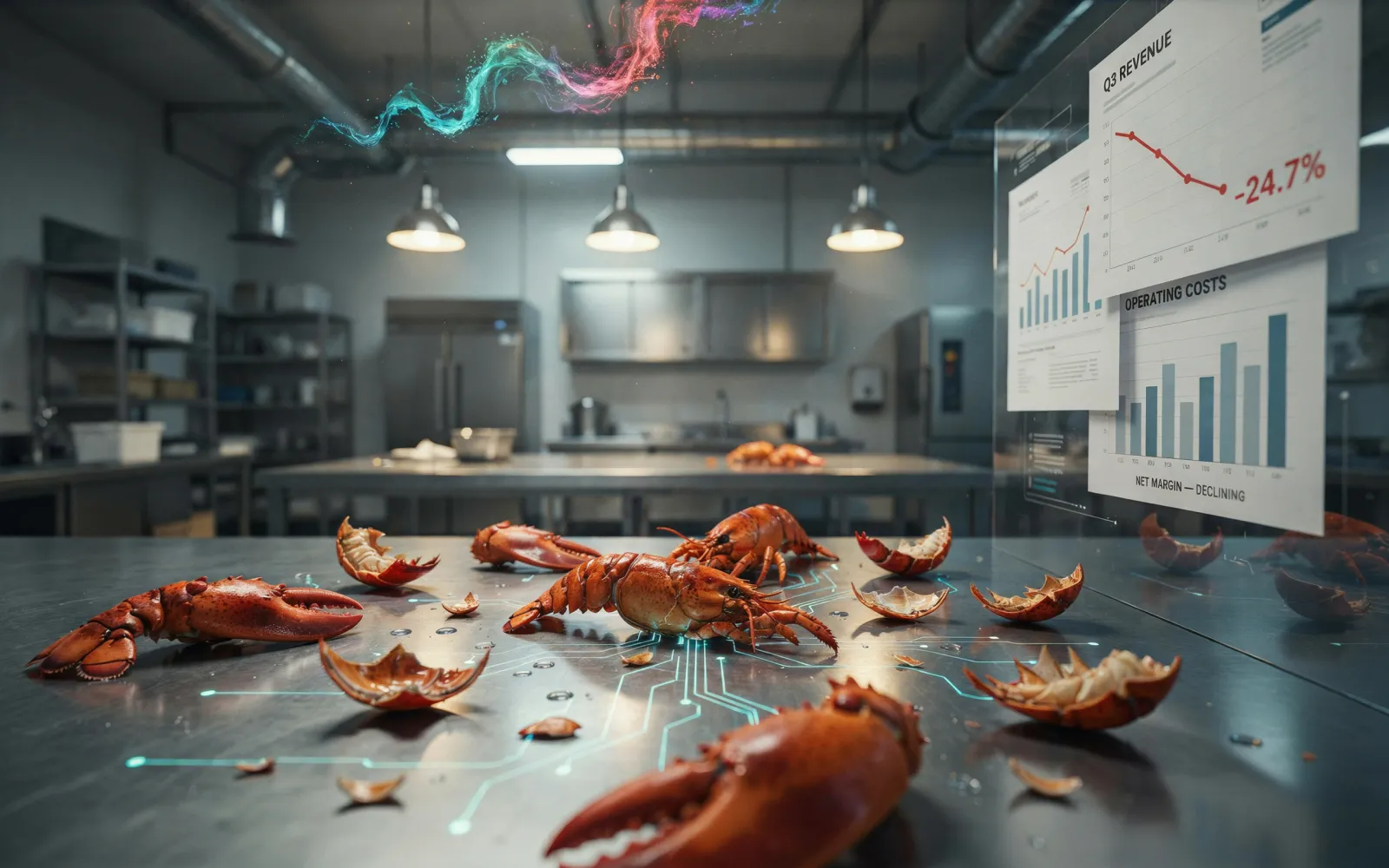
The CEO’s vision mirrors a broader trend in the restaurant sector. A 2025 Toast survey found that AI is increasingly employed for automation, benchmarking, and data‑driven insights. Restaurants now routinely use dashboards that visualize sales, labor, and margin data, and AI tools can generate reports in minutes that previously required hours of manual effort.
Red Lobster’s bankruptcy was a watershed moment for casual dining. The chain had long been a pioneer in bringing seafood to inland markets and had been owned by Golden Gate Capital since 2014. In 2016, Thai Union acquired a 25 % stake for $575 million, and in 2020 it bought the remaining shares. The May 2024 filing followed a period of rapid store closures and a restructuring plan that included a stalking‑horse sale agreement.
The new strategy signals a shift from cost cutting alone to technology‑driven operational efficiency. By embedding AI into performance reporting, human resources, and potentially inventory management or customer experience, Red Lobster aims to reduce manual labor and improve data accuracy. Industry reports suggest that AI adoption can help restaurants better understand customer preferences, optimize staffing, and streamline supply chains.
While the company has not yet announced specific vendors or platforms, its focus on data‑driven decision‑making implies that it will likely partner with AI solution providers that specialize in hospitality. Adamolekun’s public statements hint at a willingness to experiment across departments, which could accelerate rollout if the necessary infrastructure and talent are secured.
As Red Lobster navigates its Chapter 11 proceedings, the AI strategy remains central to its long‑term turnaround plan. Leadership is intent on leveraging technology to build a more efficient, innovative, and competitive business model. The next steps involve selecting AI platforms, training staff, and weaving new reporting tools into daily operations. The outcome will be closely watched by industry analysts, investors, and competitors who are also exploring AI as a means to revitalize legacy restaurant brands.
In summary, Red Lobster’s CEO has articulated a clear vision to embed AI across the organization as part of its recovery from bankruptcy. The plan includes AI‑generated performance reports, departmental experimentation, and a focus on improving employee effectiveness. The company’s progress will be measured by its ability to reduce manual reporting, increase operational efficiency, and ultimately restore profitability in a highly competitive casual dining market.
Adamolekun acknowledged that many people fear or hesitate to engage with AI, yet he insisted the industry is changing "in a tremendous way." To stay competitive, he said the company must adopt AI at every level. The CEO’s remarks arrive as the new leadership team focuses on streamlining operations, cutting costs, and restoring profitability.
Chief Operating Officer Larry Konecny has already mapped a concrete use case. He described an AI‑generated performance deck that would arrive at a manager’s desk before a store visit, pulling all relevant metrics into a single view. "I want to give managers everything I need right there, instead of having my team pull it," Adamolekun quoted Konecny as saying. The approach would shave hours of manual reporting time and sharpen decision‑making.
Beyond the COO’s proposal, Adamolekun urged every department to hunt for practical AI applications. He highlighted human resources as a prime candidate: AI could assist with evaluations, calculations, presentations, and training materials. "AI learns from past data and improves accuracy over time," the CEO explained, emphasizing that technology would help employees perform better.
The CEO’s vision mirrors a broader trend in the restaurant sector. A 2025 Toast survey found that AI is increasingly employed for automation, benchmarking, and data‑driven insights. Restaurants now routinely use dashboards that visualize sales, labor, and margin data, and AI tools can generate reports in minutes that previously required hours of manual effort.
Red Lobster’s bankruptcy was a watershed moment for casual dining. The chain had long been a pioneer in bringing seafood to inland markets and had been owned by Golden Gate Capital since 2014. In 2016, Thai Union acquired a 25 % stake for $575 million, and in 2020 it bought the remaining shares. The May 2024 filing followed a period of rapid store closures and a restructuring plan that included a stalking‑horse sale agreement.
The new strategy signals a shift from cost cutting alone to technology‑driven operational efficiency. By embedding AI into performance reporting, human resources, and potentially inventory management or customer experience, Red Lobster aims to reduce manual labor and improve data accuracy. Industry reports suggest that AI adoption can help restaurants better understand customer preferences, optimize staffing, and streamline supply chains.
While the company has not yet announced specific vendors or platforms, its focus on data‑driven decision‑making implies that it will likely partner with AI solution providers that specialize in hospitality. Adamolekun’s public statements hint at a willingness to experiment across departments, which could accelerate rollout if the necessary infrastructure and talent are secured.
As Red Lobster navigates its Chapter 11 proceedings, the AI strategy remains central to its long‑term turnaround plan. Leadership is intent on leveraging technology to build a more efficient, innovative, and competitive business model. The next steps involve selecting AI platforms, training staff, and weaving new reporting tools into daily operations. The outcome will be closely watched by industry analysts, investors, and competitors who are also exploring AI as a means to revitalize legacy restaurant brands.
In summary, Red Lobster’s CEO has articulated a clear vision to embed AI across the organization as part of its recovery from bankruptcy. The plan includes AI‑generated performance reports, departmental experimentation, and a focus on improving employee effectiveness. The company’s progress will be measured by its ability to reduce manual reporting, increase operational efficiency, and ultimately restore profitability in a highly competitive casual dining market.





