Blab AI
India Launches AI-Assisted Diabetic Retinopathy Screening Pilot in Three Government Hospitals
On 10 June 2026, the Department of Health, Medical Education and Family Welfare opened a new chapter in public‑sector eye care by launching a pilot that employs artificial intelligence to spot diabetic retinopathy. The first screening site is the Government General Hospital in Guntur, with plans to add the Regional Hospital in Kurnool on 13 June and the Government Regional Eye Hospital in Visakhapatnam on 16 June.
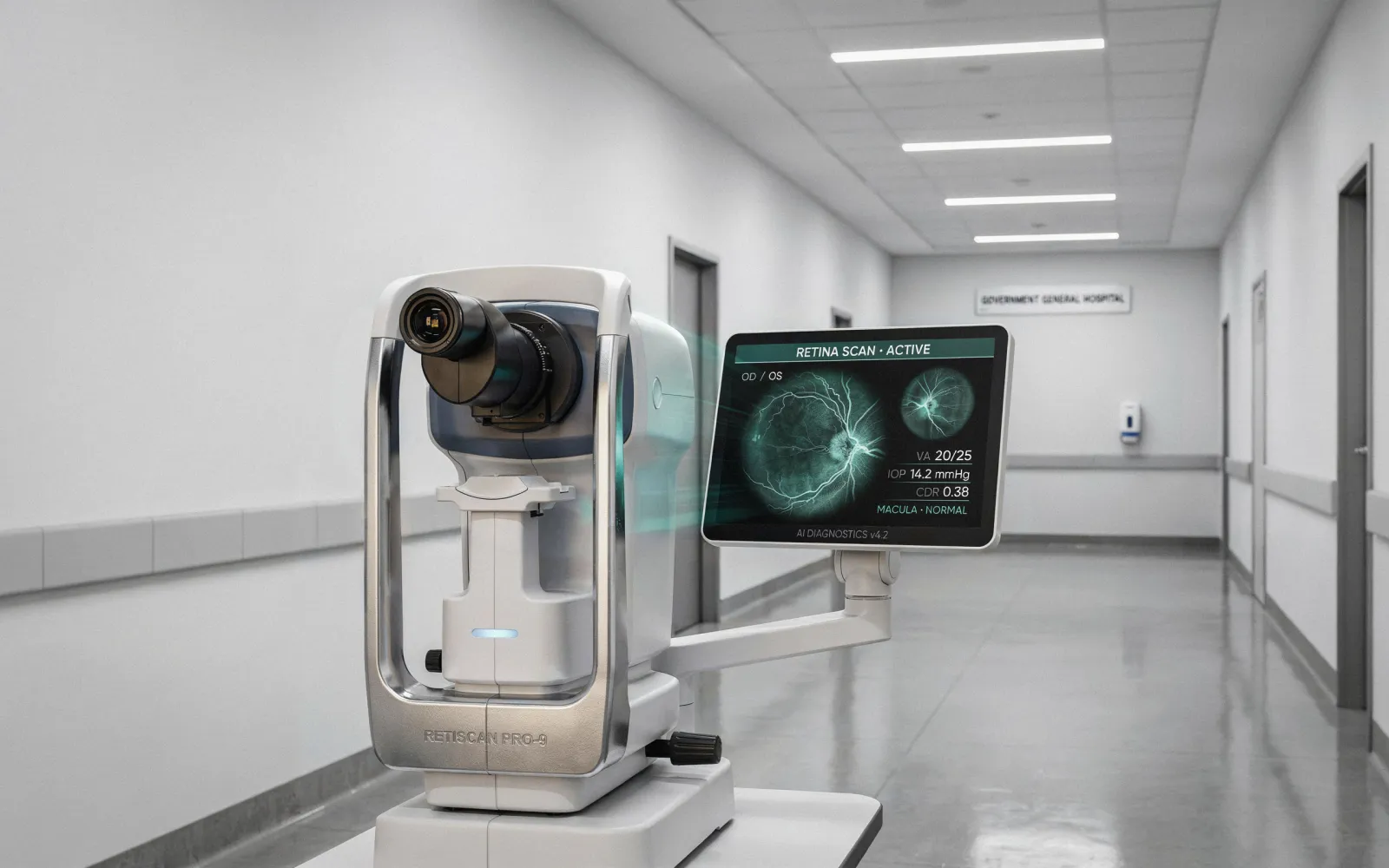
The pilot centers on a software system that evaluates retinal images taken with standard fundus cameras. By assigning a severity score and flagging the need for specialist intervention, the AI tool lets an optometrist perform a rapid, reliable assessment without a retinal specialist on hand. Images are uploaded to the Madhunetra app—a mobile platform built by the Wadhwani AI Foundation—which already powers AI services in 45 government medical colleges across India.
According to a statement released on Wednesday, the three‑month program will screen roughly 9,000 patients. The initiative is part of a broader ministry strategy to weave AI into everyday public‑health services, a move that could bring high‑tech diagnostics to rural and underserved communities.
Presently, diagnosing and treating diabetic retinopathy requires both a retinal specialist and costly imaging equipment. The new AI‑enabled workflow shifts that burden onto optometrists equipped with a fundus camera, potentially expanding early detection to areas that previously lacked specialist coverage.
Diabetic retinopathy is the world’s leading cause of vision loss, and early identification is crucial. Timely treatment can halt disease progression before sight‑threatening stages develop. Traditional screening methods are limited by the scarcity of specialists and the high cost of imaging devices—barriers that the AI pilot aims to overcome.
The Madhunetra app, launched jointly with the Ministry’s e‑Health division, processes images in seconds, giving clinicians an instant assessment that informs triage decisions. Its rapid turnaround is key to integrating the AI workflow into busy hospital settings.
Health Minister Satya Kumar Yadav announced the rollout schedule, noting that the program will be monitored over the next three months. The ministry will evaluate performance and decide whether to extend the model to additional hospitals.
While the pilot focuses on diabetic retinopathy, the underlying technology could be adapted for other retinal conditions. The effort also aligns with national guidance frameworks that promote safe, evidence‑based AI adoption in healthcare.
Success will hinge on several factors: the algorithm’s accuracy, the quality of images captured by optometrists, and how seamlessly the app fits into existing clinical workflows. Detailed performance metrics have not yet been released, though the ministry has set a target of 9,000 screened patients.
Moving forward, the program will gather data on screening outcomes, specialist referral rates, and cost‑effectiveness. If the pilot demonstrates reliable results, the ministry may roll the AI screening model out to more government hospitals across the state.
By enabling frontline optometrists to conduct screenings without specialist oversight, the initiative offers a concrete pathway to increase early detection rates and reduce the burden of diabetic eye disease. The pilot is scheduled to conclude in September 2026, after which the ministry will decide on broader deployment and additional funding.
The pilot centers on a software system that evaluates retinal images taken with standard fundus cameras. By assigning a severity score and flagging the need for specialist intervention, the AI tool lets an optometrist perform a rapid, reliable assessment without a retinal specialist on hand. Images are uploaded to the Madhunetra app—a mobile platform built by the Wadhwani AI Foundation—which already powers AI services in 45 government medical colleges across India.
According to a statement released on Wednesday, the three‑month program will screen roughly 9,000 patients. The initiative is part of a broader ministry strategy to weave AI into everyday public‑health services, a move that could bring high‑tech diagnostics to rural and underserved communities.
Presently, diagnosing and treating diabetic retinopathy requires both a retinal specialist and costly imaging equipment. The new AI‑enabled workflow shifts that burden onto optometrists equipped with a fundus camera, potentially expanding early detection to areas that previously lacked specialist coverage.
Diabetic retinopathy is the world’s leading cause of vision loss, and early identification is crucial. Timely treatment can halt disease progression before sight‑threatening stages develop. Traditional screening methods are limited by the scarcity of specialists and the high cost of imaging devices—barriers that the AI pilot aims to overcome.
The Madhunetra app, launched jointly with the Ministry’s e‑Health division, processes images in seconds, giving clinicians an instant assessment that informs triage decisions. Its rapid turnaround is key to integrating the AI workflow into busy hospital settings.
Health Minister Satya Kumar Yadav announced the rollout schedule, noting that the program will be monitored over the next three months. The ministry will evaluate performance and decide whether to extend the model to additional hospitals.
While the pilot focuses on diabetic retinopathy, the underlying technology could be adapted for other retinal conditions. The effort also aligns with national guidance frameworks that promote safe, evidence‑based AI adoption in healthcare.
Success will hinge on several factors: the algorithm’s accuracy, the quality of images captured by optometrists, and how seamlessly the app fits into existing clinical workflows. Detailed performance metrics have not yet been released, though the ministry has set a target of 9,000 screened patients.
Moving forward, the program will gather data on screening outcomes, specialist referral rates, and cost‑effectiveness. If the pilot demonstrates reliable results, the ministry may roll the AI screening model out to more government hospitals across the state.
By enabling frontline optometrists to conduct screenings without specialist oversight, the initiative offers a concrete pathway to increase early detection rates and reduce the burden of diabetic eye disease. The pilot is scheduled to conclude in September 2026, after which the ministry will decide on broader deployment and additional funding.





