Blab AI
Automation Cuts Administrative Burden in Healthcare Practices, Freeing Clinicians for Patient Care
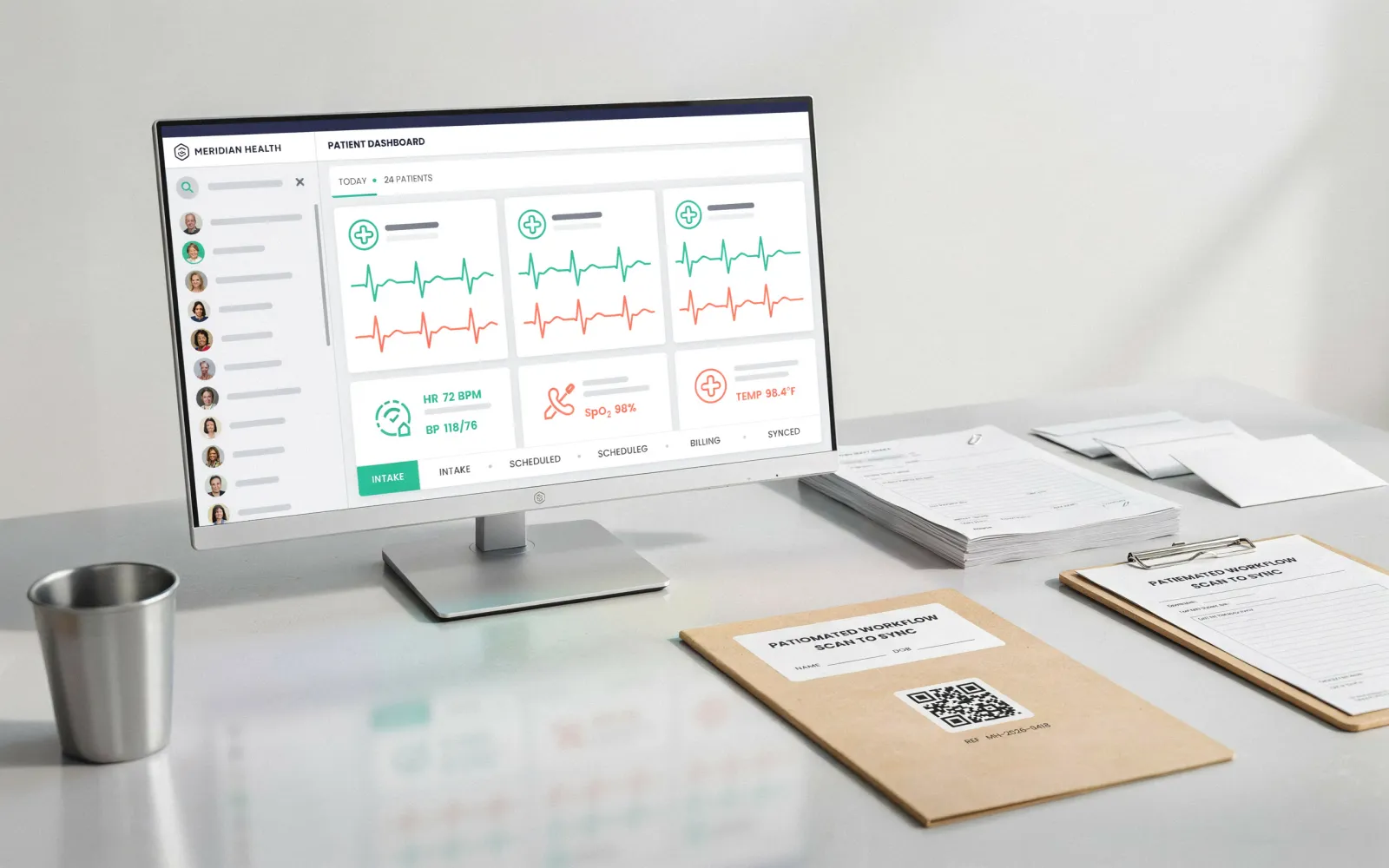
Imagine a primary‑care office where clinicians spend less time behind screens and more time with patients—this is the reality for a growing number of practices that are turning to automated workflows. A 2025 case study from the American Medical Association (AMA) found that clinics that adopted digital tools for appointment scheduling, patient intake, and billing cut administrative time and gave clinicians more opportunity to focus on care.
Administrative overload has long been blamed for clinician burnout. An AMA resource released in 2026 highlights that excessive paperwork can consume up to 30 % of a clinician’s time. The guide stresses that streamlining processes not only improves well‑being but also raises care quality. In the same year, the Commonwealth Fund’s primary‑care administrative burden brief pointed to a lack of workflow integration as a key barrier to efficient delivery.
Automated Teams, a practice‑automation vendor, reports that its solutions perform differently across primary‑care, specialty, and multi‑location settings, with results shaped by practice size and patient volume. All implementations remain HIPAA‑compliant, and the company stresses that automation is meant to fit existing clinical routines rather than replace them.
At the heart of many of these solutions is robotic process automation (RPA). RPA tools observe a user’s actions in a graphical user interface and then repeat those actions automatically. This lowers the barrier to automation for legacy systems that lack application programming interfaces (APIs). RPA can, for example, pull data from an email invoice and enter it into a bookkeeping system—an ability increasingly applied to clinical billing and coding.
Artificial intelligence (AI) also plays a role, especially in clinical decision support systems (CDSS). AI‑driven CDSS tools can offer alerts, reminders, and patient‑specific recommendations that fit seamlessly into a clinician’s workflow. However, research published in 2025 and 2026 shows that AI tools often fail to deliver benefits when they are not embedded in the existing care pathway. A 2025 LinkedIn post by a clinical informatics expert summed up the problem: “The biggest challenge in AI healthcare isn’t building the model—it’s fitting it into real clinical workflows.”
Redesigning workflows around human needs is therefore essential. A 2025 deepc webinar on NHS teams’ AI adoption highlighted that integration, clinical trust, and operational ownership determine whether AI solutions succeed in practice. The webinar also noted that without embedded action protocols, predictions do not translate into outcomes.
For many practices, the first step is to automate routine administrative tasks—patient intake, appointment reminders, and billing—using RPA and customer‑relationship‑management (CRM) systems. Healthcare CRM, which bundles sales, marketing, and service automation, helps reduce appointment no‑shows and streamlines onboarding. Once these processes are automated, clinicians can concentrate on the clinical encounter, improving patient satisfaction and potentially reducing errors.
Automation is part of a broader digital‑health transformation that includes electronic health records (EHR), telemedicine, and AI. A 2025 narrative review on digital healthcare transformation notes that integrating key technologies such as EHR and AI can improve care quality, but success depends on human‑centered design and workflow optimization.
In short, automation is reshaping healthcare practices by cutting administrative burdens and allowing clinicians to devote more time to patient care. The evidence from case studies and research underscores that technology alone is insufficient; workflow redesign and integration are critical for realizing the benefits of automation and AI in clinical settings. As more practices adopt these tools, the focus on human connection is likely to become a defining feature of modern healthcare delivery.
Administrative overload has long been blamed for clinician burnout. An AMA resource released in 2026 highlights that excessive paperwork can consume up to 30 % of a clinician’s time. The guide stresses that streamlining processes not only improves well‑being but also raises care quality. In the same year, the Commonwealth Fund’s primary‑care administrative burden brief pointed to a lack of workflow integration as a key barrier to efficient delivery.
Automated Teams, a practice‑automation vendor, reports that its solutions perform differently across primary‑care, specialty, and multi‑location settings, with results shaped by practice size and patient volume. All implementations remain HIPAA‑compliant, and the company stresses that automation is meant to fit existing clinical routines rather than replace them.
At the heart of many of these solutions is robotic process automation (RPA). RPA tools observe a user’s actions in a graphical user interface and then repeat those actions automatically. This lowers the barrier to automation for legacy systems that lack application programming interfaces (APIs). RPA can, for example, pull data from an email invoice and enter it into a bookkeeping system—an ability increasingly applied to clinical billing and coding.
Artificial intelligence (AI) also plays a role, especially in clinical decision support systems (CDSS). AI‑driven CDSS tools can offer alerts, reminders, and patient‑specific recommendations that fit seamlessly into a clinician’s workflow. However, research published in 2025 and 2026 shows that AI tools often fail to deliver benefits when they are not embedded in the existing care pathway. A 2025 LinkedIn post by a clinical informatics expert summed up the problem: “The biggest challenge in AI healthcare isn’t building the model—it’s fitting it into real clinical workflows.”
Redesigning workflows around human needs is therefore essential. A 2025 deepc webinar on NHS teams’ AI adoption highlighted that integration, clinical trust, and operational ownership determine whether AI solutions succeed in practice. The webinar also noted that without embedded action protocols, predictions do not translate into outcomes.
For many practices, the first step is to automate routine administrative tasks—patient intake, appointment reminders, and billing—using RPA and customer‑relationship‑management (CRM) systems. Healthcare CRM, which bundles sales, marketing, and service automation, helps reduce appointment no‑shows and streamlines onboarding. Once these processes are automated, clinicians can concentrate on the clinical encounter, improving patient satisfaction and potentially reducing errors.
Automation is part of a broader digital‑health transformation that includes electronic health records (EHR), telemedicine, and AI. A 2025 narrative review on digital healthcare transformation notes that integrating key technologies such as EHR and AI can improve care quality, but success depends on human‑centered design and workflow optimization.
In short, automation is reshaping healthcare practices by cutting administrative burdens and allowing clinicians to devote more time to patient care. The evidence from case studies and research underscores that technology alone is insufficient; workflow redesign and integration are critical for realizing the benefits of automation and AI in clinical settings. As more practices adopt these tools, the focus on human connection is likely to become a defining feature of modern healthcare delivery.





