Blab AI
Naver and Nvidia Announce Gigawatt-Scale AI Factory at Sejong Data Center
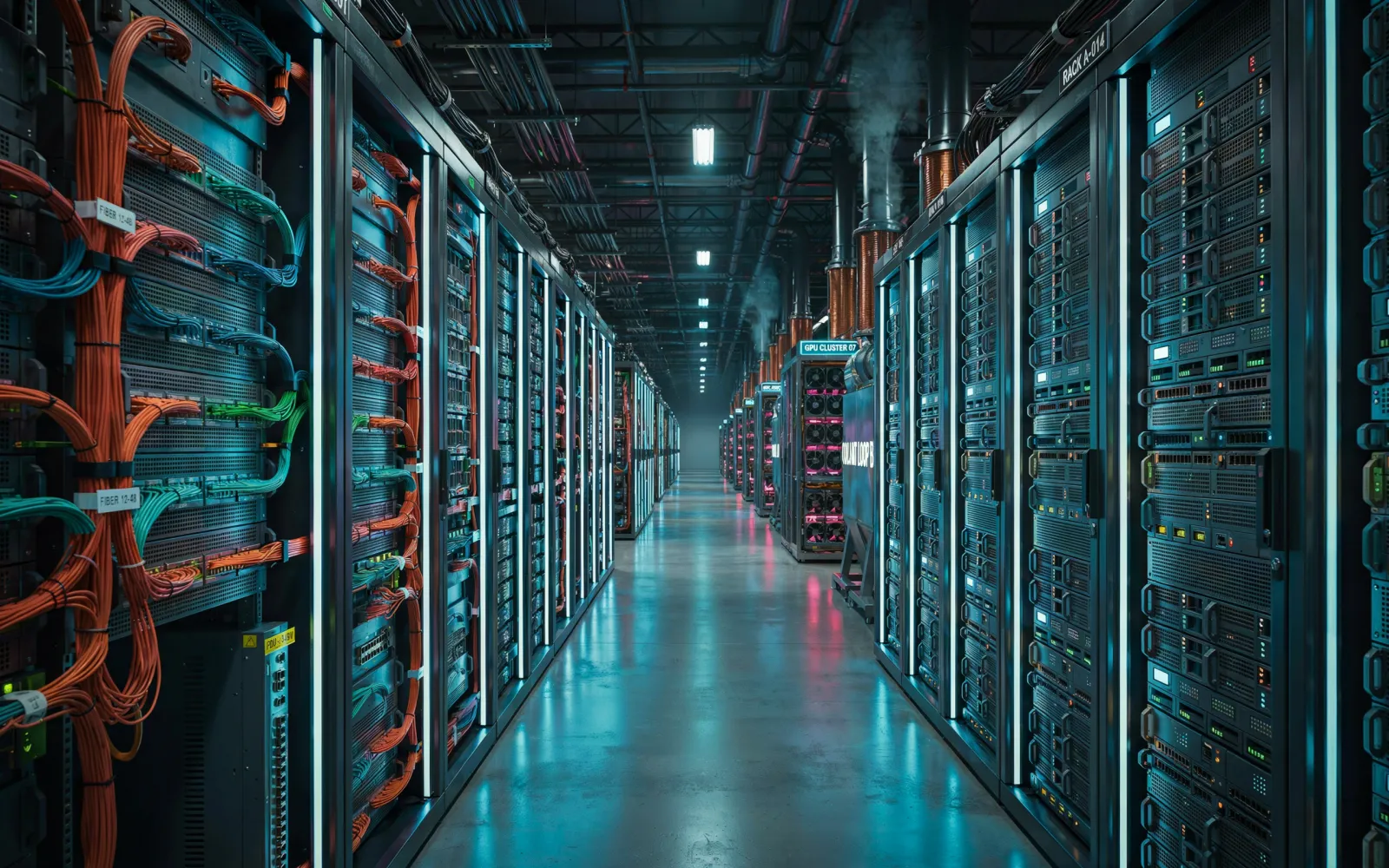
Naver Corp. and Nvidia Corp. have joined forces to construct a gigawatt‑scale artificial‑intelligence (AI) factory at Naver’s hyperscale data center in Gak Sejong, South Korea. The partnership, unveiled on June 8, 2026, will employ Nvidia’s DSX platform to design, build and run the facility.
The announcement came after a meeting at Naver’s 1,784 headquarters in Seongnam, just south of Seoul. Naver founder and board chairman Lee Hae‑jin and chief executive Choi Soo‑yeon welcomed Nvidia chief executive Jensen Huang. Huang, who greeted visitors with a grin and a Webtoon‑style banner reading “Don’t worry! I have GPUs!”, highlighted the collaboration’s ambition.
Under the agreement, Naver will act as a core partner, sharing both the rewards and risks. Construction will begin with a 55‑megawatt (MW) footprint in the first half of 2027, expand to 100 MW later that year, and reach 200 MW in 2028. The long‑term objective is a gigawatt‑level power plant that would rank among the world’s largest AI data centers.
The Gak Sejong site is intended to serve AI demand across South Korea, Asia, the Middle East and Europe. By combining Naver’s data‑center and GPU‑cluster operations with Nvidia’s DSX platform—which integrates chips, servers, software and data‑center operating technologies—the project aims to cut training and inference costs while speeding deployment.
Naver plans to leverage the new infrastructure to broaden its AI services for corporate, governmental and industrial clients. The partnership also covers joint work on AI models: Naver has been fine‑tuning its HyperCLOVA X large‑language model with Nvidia’s open Nemotron foundation model, and the two companies are developing a “Seoul world model” that fuses Nvidia’s Cosmos world foundation model with Naver’s street‑view and spatial‑modeling data.
The collaboration is expected to extend into physical AI, robotics and digital‑twins applications. The meeting followed a prior encounter between Lee and Huang at the Asia‑Pacific Economic Cooperation summit in Gyeongju, where they discussed cooperation on physical‑AI platforms. Naver’s 1,784 campus already showcases robotics, digital twins and cloud technologies, and Huang was slated to review potential expansion during his visit.
Naver’s broader strategy is to evolve beyond its internet‑services roots and become a global AI‑infrastructure provider. Nvidia highlighted Naver Cloud as a key partner in the global AI ecosystem during Nvidia’s GTC Taipei 2026 event, and Naver said the partnership will accelerate its sovereign AI and data‑center businesses.
The announcement had an immediate market impact. Naver shares closed at 279,000 won (about $181) on the Korea Exchange, up 9.20 % from the previous session, as analysts linked the rise to expectations for the large‑scale AI factory and Naver’s global expansion.
The project represents a substantial investment in AI infrastructure. Nvidia’s public statements note that the DSX platform offers validated architectures, digital‑twin simulation and power‑management software that can support up to 40 % more GPUs within a set power budget. The partnership also leverages Nvidia’s liquid‑cooling technologies to improve energy efficiency.
Naver’s HyperCLOVA X model, already deployed in Korean language applications, will benefit from the enhanced compute capacity. The company’s use of Nemotron, a family of reasoning models that includes the 500‑billion‑parameter Nemotron 3 Ultra, is expected to improve performance.
The collaboration signals a broader trend of AI‑infrastructure consolidation, as hyperscale operators build specialized data centers to meet growing training and inference workloads. The Naver‑Nvidia partnership is one of the largest joint AI‑infrastructure projects announced to date.
In summary, Naver and Nvidia have committed to building a gigawatt‑scale AI factory at Gak Sejong, using Nvidia’s DSX platform and Naver’s data‑center expertise. The facility will start at 55 MW in 2027 and grow to 200 MW in 2028, with a long‑term goal of gigawatt‑scale power. The partnership will support AI model development, including HyperCLOVA X and Nemotron, and expand services to enterprises, governments and industrial clients across multiple regions. The announcement has already boosted Naver’s share price and underscores the company’s shift toward global AI infrastructure provision.
The announcement came after a meeting at Naver’s 1,784 headquarters in Seongnam, just south of Seoul. Naver founder and board chairman Lee Hae‑jin and chief executive Choi Soo‑yeon welcomed Nvidia chief executive Jensen Huang. Huang, who greeted visitors with a grin and a Webtoon‑style banner reading “Don’t worry! I have GPUs!”, highlighted the collaboration’s ambition.
Under the agreement, Naver will act as a core partner, sharing both the rewards and risks. Construction will begin with a 55‑megawatt (MW) footprint in the first half of 2027, expand to 100 MW later that year, and reach 200 MW in 2028. The long‑term objective is a gigawatt‑level power plant that would rank among the world’s largest AI data centers.
The Gak Sejong site is intended to serve AI demand across South Korea, Asia, the Middle East and Europe. By combining Naver’s data‑center and GPU‑cluster operations with Nvidia’s DSX platform—which integrates chips, servers, software and data‑center operating technologies—the project aims to cut training and inference costs while speeding deployment.
Naver plans to leverage the new infrastructure to broaden its AI services for corporate, governmental and industrial clients. The partnership also covers joint work on AI models: Naver has been fine‑tuning its HyperCLOVA X large‑language model with Nvidia’s open Nemotron foundation model, and the two companies are developing a “Seoul world model” that fuses Nvidia’s Cosmos world foundation model with Naver’s street‑view and spatial‑modeling data.
The collaboration is expected to extend into physical AI, robotics and digital‑twins applications. The meeting followed a prior encounter between Lee and Huang at the Asia‑Pacific Economic Cooperation summit in Gyeongju, where they discussed cooperation on physical‑AI platforms. Naver’s 1,784 campus already showcases robotics, digital twins and cloud technologies, and Huang was slated to review potential expansion during his visit.
Naver’s broader strategy is to evolve beyond its internet‑services roots and become a global AI‑infrastructure provider. Nvidia highlighted Naver Cloud as a key partner in the global AI ecosystem during Nvidia’s GTC Taipei 2026 event, and Naver said the partnership will accelerate its sovereign AI and data‑center businesses.
The announcement had an immediate market impact. Naver shares closed at 279,000 won (about $181) on the Korea Exchange, up 9.20 % from the previous session, as analysts linked the rise to expectations for the large‑scale AI factory and Naver’s global expansion.
The project represents a substantial investment in AI infrastructure. Nvidia’s public statements note that the DSX platform offers validated architectures, digital‑twin simulation and power‑management software that can support up to 40 % more GPUs within a set power budget. The partnership also leverages Nvidia’s liquid‑cooling technologies to improve energy efficiency.
Naver’s HyperCLOVA X model, already deployed in Korean language applications, will benefit from the enhanced compute capacity. The company’s use of Nemotron, a family of reasoning models that includes the 500‑billion‑parameter Nemotron 3 Ultra, is expected to improve performance.
The collaboration signals a broader trend of AI‑infrastructure consolidation, as hyperscale operators build specialized data centers to meet growing training and inference workloads. The Naver‑Nvidia partnership is one of the largest joint AI‑infrastructure projects announced to date.
In summary, Naver and Nvidia have committed to building a gigawatt‑scale AI factory at Gak Sejong, using Nvidia’s DSX platform and Naver’s data‑center expertise. The facility will start at 55 MW in 2027 and grow to 200 MW in 2028, with a long‑term goal of gigawatt‑scale power. The partnership will support AI model development, including HyperCLOVA X and Nemotron, and expand services to enterprises, governments and industrial clients across multiple regions. The announcement has already boosted Naver’s share price and underscores the company’s shift toward global AI infrastructure provision.





