Blab AI
AI Workloads Drive Shift to Advanced Cooling in Data Centers
AI workloads are pushing data centers beyond the limits of conventional air‑cooling systems, prompting a rapid shift toward liquid‑based and high‑voltage fan technologies.
The heat generated by modern AI accelerators is far higher than that of traditional servers. A recent analysis of rack power densities shows that the global average rack now consumes around 12 kW, while AI‑specific servers can exceed 1,000 W of thermal design power (TDP). Conventional air‑cooling, which has served data centers for decades, cannot remove heat at these rates without excessive energy use or costly infrastructure upgrades.
To address the rising airflow demands, many operators are replacing 12‑volt fan drivers with 48‑volt units. The higher voltage reduces power losses in fan motors and improves overall energy efficiency. A LinkedIn post by a fan‑driver manufacturer notes that the shift to 48 V has become a standard in new server designs, helping to keep fan‑related power consumption below 1 % of total rack power.
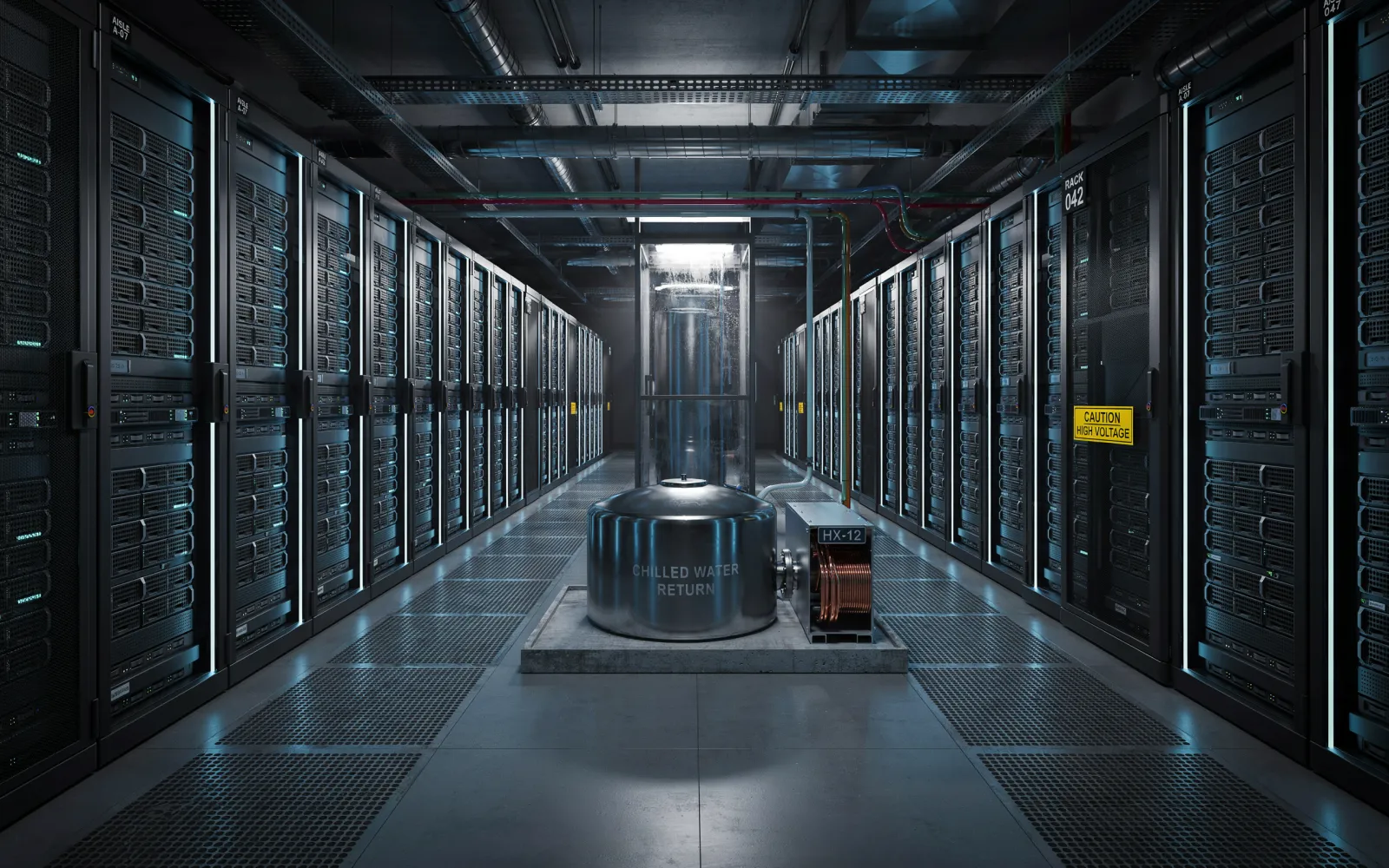
Liquid cooling is emerging as the most effective solution for the high heat densities of AI workloads. Direct‑to‑chip cooling (DTC) and immersion cooling systems allow coolant to contact processors directly, absorbing heat more efficiently than air. Two‑phase immersion cooling, which uses a dielectric fluid that boils at low temperatures, has been adopted by Microsoft for its AI facilities. The company’s system submerges server components in a low‑boiling fluid, enabling heat removal rates that exceed those of traditional air‑cooling by a factor of two.
Other industry players are following suit. Google, Facebook, and Nvidia have all deployed liquid‑cooling solutions in their hyperscale data centers. Nvidia’s DGX systems, for example, use cold plates that transfer heat from GPUs to a circulating coolant loop. Boyd Corporation’s “system‑level cooling” approach integrates cold plates, heat exchangers, and distribution units to manage heat from chip to facility. These solutions reduce the physical footprint of cooling equipment, allowing higher server densities and better use of floor space.
While liquid cooling offers clear performance and energy‑efficiency benefits, it also introduces higher upfront costs and operational complexity. The capital cost of pumps, heat exchangers, and fluid handling systems can be several times that of conventional air‑cooling. Moreover, the need for specialized monitoring and maintenance can increase operational expenses. As a result, many operators are adopting hybrid architectures that combine liquid cooling for the hottest components with air cooling for the rest of the rack.
The shift to more efficient cooling is occurring against a backdrop of growing environmental scrutiny. Data centers consumed an estimated 415 terawatt‑hours (TWh) of electricity in 2024, about 1.5 % of global electricity demand. Projections from the International Energy Agency suggest that consumption could double by 2030. The rapid expansion of AI workloads is straining local power grids and increasing water use for cooling. In the United States, opposition to new data‑center projects grew between May 2024 and June 2025, with several large projects delayed or halted due to community concerns about energy and water consumption.
Designing cooling as a first‑order constraint is becoming standard practice. Engineers now model airflow, thermal density, and liquid‑cooling loops during the early stages of facility planning, rather than retrofitting after construction. Simulation tools that incorporate computational fluid dynamics (CFD) and thermal‑management algorithms are being used to optimize rack layouts and cooling pathways.
In the near term, several new data‑center projects announced in 2026 will feature modular, high‑ambient‑rated cooling architectures from vendors such as Munters and Gottog Power. These systems are designed for edge deployments where space and energy budgets are tight. Meanwhile, large hyperscale operators are expanding their liquid‑cooling fleets, with Microsoft’s immersion‑cooling rollout slated for completion by the end of 2027.
The industry remains focused on balancing performance, cost, and environmental impact. While liquid and hybrid cooling solutions are proving effective, questions about long‑term reliability, fluid management, and scalability persist. Continued research into new dielectric fluids, pump technologies, and integration with data‑center infrastructure management (DCIM) tools will shape the next wave of cooling innovations.
Overall, AI workloads are forcing a fundamental reevaluation of data‑center cooling. The move to 48‑volt fan drivers, liquid‑cooling systems, and hybrid architectures reflects a broader trend toward higher efficiency and density. As the sector adapts, the pace of deployment and the evolution of best practices will determine how quickly the industry can meet the thermal demands of the next generation of AI applications.
The heat generated by modern AI accelerators is far higher than that of traditional servers. A recent analysis of rack power densities shows that the global average rack now consumes around 12 kW, while AI‑specific servers can exceed 1,000 W of thermal design power (TDP). Conventional air‑cooling, which has served data centers for decades, cannot remove heat at these rates without excessive energy use or costly infrastructure upgrades.
To address the rising airflow demands, many operators are replacing 12‑volt fan drivers with 48‑volt units. The higher voltage reduces power losses in fan motors and improves overall energy efficiency. A LinkedIn post by a fan‑driver manufacturer notes that the shift to 48 V has become a standard in new server designs, helping to keep fan‑related power consumption below 1 % of total rack power.
Liquid cooling is emerging as the most effective solution for the high heat densities of AI workloads. Direct‑to‑chip cooling (DTC) and immersion cooling systems allow coolant to contact processors directly, absorbing heat more efficiently than air. Two‑phase immersion cooling, which uses a dielectric fluid that boils at low temperatures, has been adopted by Microsoft for its AI facilities. The company’s system submerges server components in a low‑boiling fluid, enabling heat removal rates that exceed those of traditional air‑cooling by a factor of two.
Other industry players are following suit. Google, Facebook, and Nvidia have all deployed liquid‑cooling solutions in their hyperscale data centers. Nvidia’s DGX systems, for example, use cold plates that transfer heat from GPUs to a circulating coolant loop. Boyd Corporation’s “system‑level cooling” approach integrates cold plates, heat exchangers, and distribution units to manage heat from chip to facility. These solutions reduce the physical footprint of cooling equipment, allowing higher server densities and better use of floor space.
While liquid cooling offers clear performance and energy‑efficiency benefits, it also introduces higher upfront costs and operational complexity. The capital cost of pumps, heat exchangers, and fluid handling systems can be several times that of conventional air‑cooling. Moreover, the need for specialized monitoring and maintenance can increase operational expenses. As a result, many operators are adopting hybrid architectures that combine liquid cooling for the hottest components with air cooling for the rest of the rack.
The shift to more efficient cooling is occurring against a backdrop of growing environmental scrutiny. Data centers consumed an estimated 415 terawatt‑hours (TWh) of electricity in 2024, about 1.5 % of global electricity demand. Projections from the International Energy Agency suggest that consumption could double by 2030. The rapid expansion of AI workloads is straining local power grids and increasing water use for cooling. In the United States, opposition to new data‑center projects grew between May 2024 and June 2025, with several large projects delayed or halted due to community concerns about energy and water consumption.
Designing cooling as a first‑order constraint is becoming standard practice. Engineers now model airflow, thermal density, and liquid‑cooling loops during the early stages of facility planning, rather than retrofitting after construction. Simulation tools that incorporate computational fluid dynamics (CFD) and thermal‑management algorithms are being used to optimize rack layouts and cooling pathways.
In the near term, several new data‑center projects announced in 2026 will feature modular, high‑ambient‑rated cooling architectures from vendors such as Munters and Gottog Power. These systems are designed for edge deployments where space and energy budgets are tight. Meanwhile, large hyperscale operators are expanding their liquid‑cooling fleets, with Microsoft’s immersion‑cooling rollout slated for completion by the end of 2027.
The industry remains focused on balancing performance, cost, and environmental impact. While liquid and hybrid cooling solutions are proving effective, questions about long‑term reliability, fluid management, and scalability persist. Continued research into new dielectric fluids, pump technologies, and integration with data‑center infrastructure management (DCIM) tools will shape the next wave of cooling innovations.
Overall, AI workloads are forcing a fundamental reevaluation of data‑center cooling. The move to 48‑volt fan drivers, liquid‑cooling systems, and hybrid architectures reflects a broader trend toward higher efficiency and density. As the sector adapts, the pace of deployment and the evolution of best practices will determine how quickly the industry can meet the thermal demands of the next generation of AI applications.





